
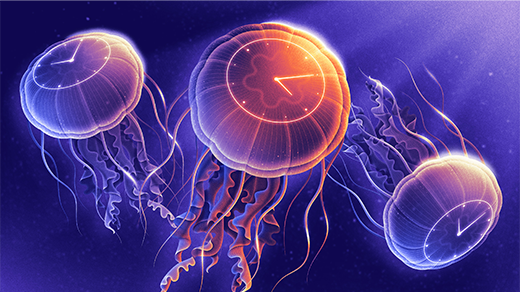
The Jellies That Evolved a Different Way To Keep Time
#circadian rhythms #jellyfish #biological clock #evolution #sunlight #hormones #metabolism
📌 Key Takeaways
- Some jellyfish species have evolved unique circadian rhythms independent of sunlight cues.
- Circadian rhythms regulate essential biological processes like hormone release and metabolism.
- Disruption of these natural cycles can negatively impact health and biological functions.
- Research on jellyfish offers insights into alternative timekeeping mechanisms in nature.
📖 Full Retelling
🏷️ Themes
Biological Rhythms, Evolution
Entity Intersection Graph
No entity connections available yet for this article.
Deep Analysis
Why It Matters
This news is important because it reveals fundamental insights into biological timekeeping, which affects all living organisms, including humans. Understanding alternative circadian mechanisms can inform medical research on sleep disorders, metabolic diseases, and mental health conditions linked to rhythm disruptions. It also highlights evolutionary diversity, showing how life adapts to environmental cycles in unexpected ways, which could inspire biotechnology or conservation strategies.
Context & Background
- Circadian rhythms are 24-hour biological cycles driven by environmental cues like light, regulating sleep, hormones, and metabolism in most organisms.
- Most studied circadian systems rely on molecular feedback loops involving clock genes, first discovered in fruit flies and later found in mammals, including humans.
- Jellyfish are ancient, simple animals that diverged early in animal evolution, offering a unique perspective on how timekeeping mechanisms evolved independently.
What Happens Next
Researchers will likely conduct further genetic and behavioral studies on jellyfish to pinpoint the exact mechanisms of their alternative timekeeping. Findings may be compared to other species with unusual rhythms, like deep-sea or cave-dwelling organisms. In the long term, this could lead to applied research in chronobiology, such as developing new treatments for circadian-related disorders by 2025-2030.
Frequently Asked Questions
Circadian rhythms are natural, roughly 24-hour biological cycles that regulate processes like sleep, metabolism, and hormone production in response to environmental cues like light and darkness. They are found in most living organisms, from plants to animals, and help maintain internal timing for optimal health and function.
Jellyfish are studied because they are evolutionarily ancient and may have developed different timekeeping mechanisms than more complex animals. This can reveal how circadian systems evolved independently, offering insights into the diversity of biological clocks and potential new models for research.
This research could help scientists understand the flexibility and evolution of circadian systems, potentially leading to new treatments for human disorders like insomnia, jet lag, or shift work-related health issues. It may also inform strategies to adapt to changing environments, such as artificial lighting or climate shifts.