
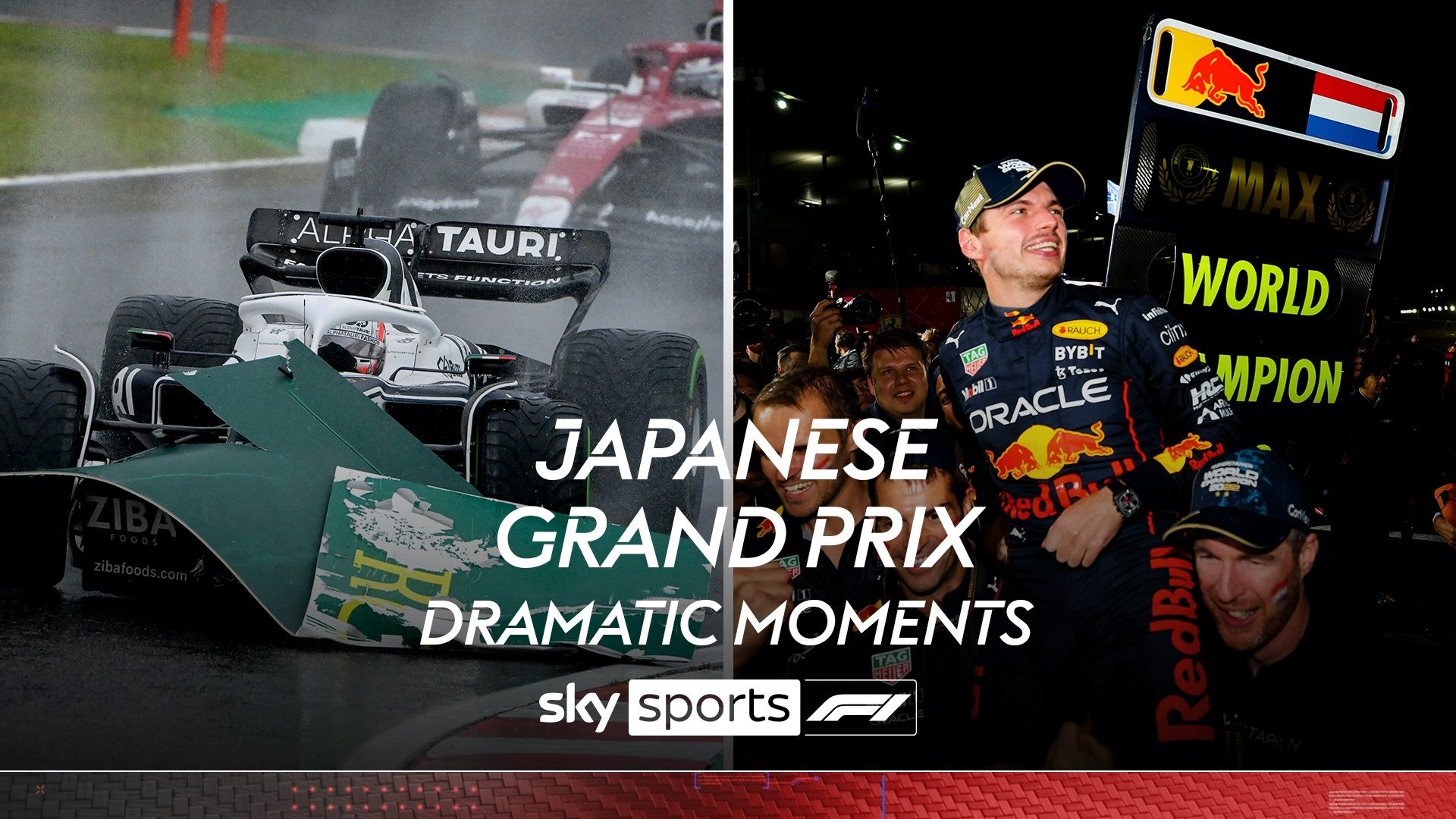
The most dramatic moments from the Japanese Grand Prix
#Japanese Grand Prix #Max Verstappen #Red Bull #Ferrari #podium #race incidents #championship #Suzuka
📌 Key Takeaways
- Max Verstappen secured victory at the Japanese Grand Prix, extending his championship lead.
- Sergio Perez finished second, contributing to a Red Bull 1-2 podium result.
- Carlos Sainz claimed third place for Ferrari, marking his third consecutive podium finish.
- The race featured intense battles and strategic tire management amid changing conditions.
- Several incidents, including collisions and retirements, added drama throughout the event.
🏷️ Themes
Formula 1 Racing, Sports Drama
📚 Related People & Topics
Red Bull
Brand of energy drinks
Red Bull is a brand of energy drinks created and owned by the Austrian company Red Bull GmbH. It had a global market share of 13% in the energy drink market in 2023 and was the third most valuable soft drink brand in 2021, behind Coca-Cola and Pepsi. Since its launch in 1987, more than 100 billion c...

Max Verstappen
Dutch and Belgian racing driver (born 1997)
Max Emilian Verstappen (Dutch pronunciation: [ˈmɑks fɛrˈstɑpə(n)]; born 30 September 1997) is a Dutch and Belgian racing driver who competes under the Dutch flag in Formula One for Red Bull Racing. Verstappen has won four Formula One World Drivers' Championship titles, which he won consecutively fro...

Ferrari
Italian luxury sports car manufacturer
Ferrari S.p.A. (; Italian: [ferˈraːri]) is an Italian luxury sports car manufacturer based in Maranello. Founded in 1939 by Enzo Ferrari (1898–1988), the company built its first car in 1940, adopted its current name in 1945, and began to produce its current line of road cars in 1947. Ferrari became ...

Japanese Grand Prix
Formula One Grand Prix
The Japanese Grand Prix (Japanese: 日本グランプリ, romanized: Nihon-guranpuri) is a motor racing event in the calendar of the Formula One World Championship. Historically, Japan has been one of the last races of the season, and as such the Japanese Grand Prix has been the venue for many title-deciding race...
Entity Intersection Graph
Connections for Suzuka:
View full profileMentioned Entities
Deep Analysis
Why It Matters
The Japanese Grand Prix is a crucial event in the Formula 1 championship, often determining championship outcomes and showcasing cutting-edge automotive technology. This analysis matters to motorsport fans worldwide, automotive manufacturers investing in racing technology, and sponsors who rely on global viewership. The dramatic moments highlight driver skill, team strategy, and safety considerations that influence future regulations and car designs.
Context & Background
- The Japanese Grand Prix has been part of the Formula 1 World Championship since 1976, though non-championship races date back to 1963
- Suzuka Circuit, the current venue, is known for its challenging figure-eight layout and has hosted the race since 1987, with Fuji Speedway also hosting intermittently
- The race has decided multiple World Championships, most famously in 1976 (James Hunt), 1989 (Alain Prost), 1990 (Ayrton Senna), and 2011 (Sebastian Vettel)
- Japan is home to major Formula 1 engine suppliers including Honda, which has powered multiple championship-winning teams
- The 2014 race was moved to October due to typhoon conditions, highlighting weather's significant impact on Asian Grand Prix events
What Happens Next
Teams will analyze performance data from Japan to prepare for upcoming races, particularly focusing on tire degradation and aerodynamic efficiency. The championship standings will be updated, influencing team strategies for remaining races. Formula 1 will review any incidents for potential rule changes or safety improvements ahead of the next Asian circuit events.
Frequently Asked Questions
The Japanese Grand Prix often occurs late in the season when championship decisions are made, and its challenging Suzuka Circuit tests driver skill and car performance more than many other tracks. The race has historically decided multiple world championships in dramatic fashion, creating legendary moments in F1 history.
Suzuka's unique figure-eight layout features demanding high-speed corners like the 130R and the Esses sequence that test aerodynamic downforce and driver precision. The circuit combines technical sections with high-speed straights, requiring balanced car setup and punishing mistakes severely due to limited runoff areas.
Autumn typhoon season can bring unpredictable rain that dramatically alters race strategy and car setup decisions. Variable conditions often create opportunities for strategic gambles with tire choices and can lead to unexpected race outcomes as teams adapt to changing track conditions.
Japanese companies like Honda have been major engine suppliers for decades, powering multiple championship-winning teams including McLaren and Red Bull. Other Japanese manufacturers participate through technical partnerships, while the country produces several drivers who have competed at the highest levels of motorsport.
With limited races remaining in the season, points earned in Japan can significantly alter the championship battle for both drivers and constructors. Teams may adjust their strategic approaches for remaining races based on performance gaps revealed at Suzuka's demanding circuit.