
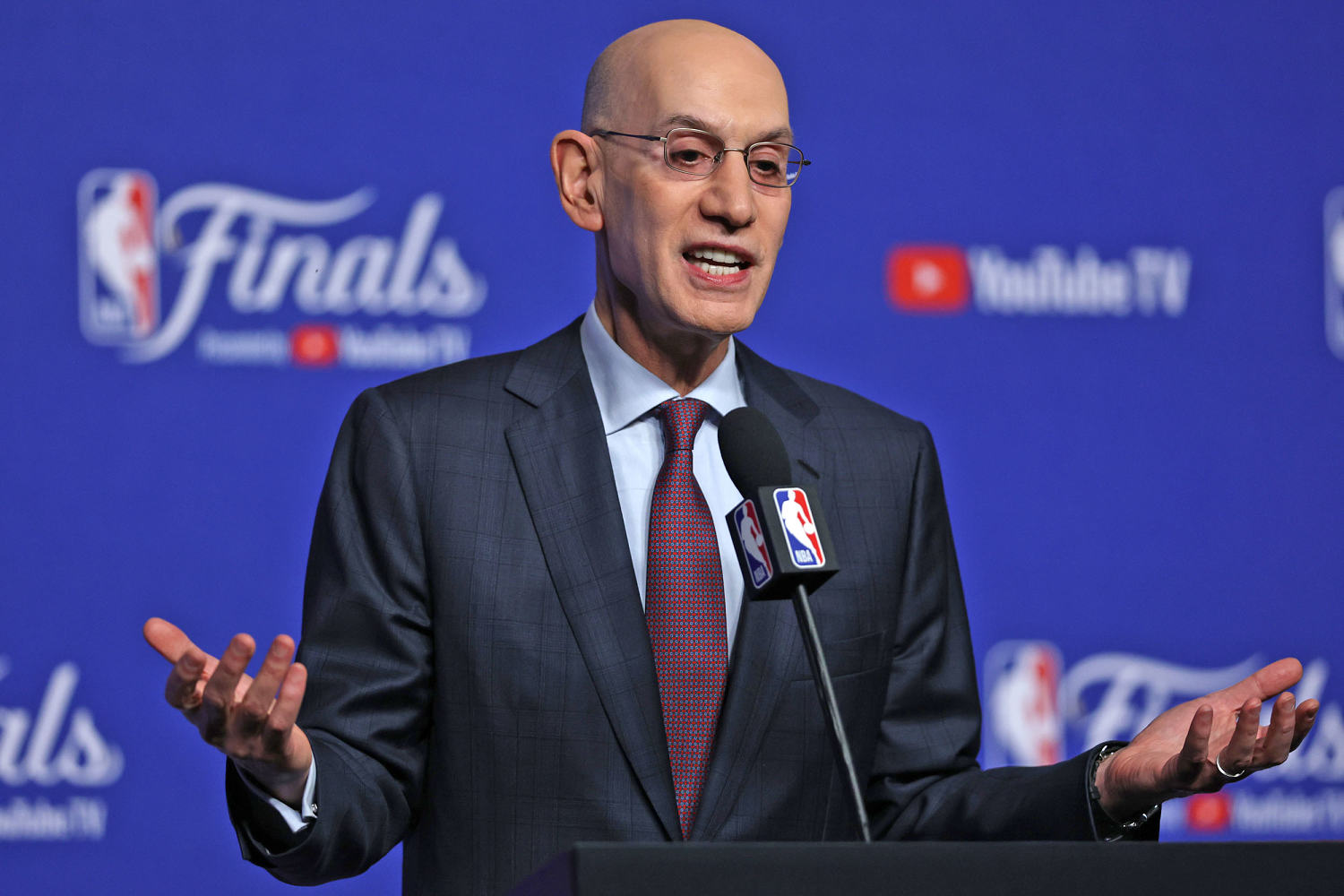
The NBA is planning a European basketball league. Investors think it's worth billions.
📖 Full Retelling
📚 Related People & Topics
National Basketball Association
North American professional basketball league
The National Basketball Association (NBA) is a professional basketball league in North America composed of 30 teams (29 in the United States and 1 in Canada). The NBA is one of the major professional sports leagues in the United States and Canada and is considered the premier professional basketball...
Entity Intersection Graph
Connections for National Basketball Association:
Mentioned Entities
Deep Analysis
Why It Matters
This news matters because it represents a major expansion of American professional sports into Europe, potentially creating a new multi-billion dollar sports enterprise. It affects European basketball leagues and clubs who may face competition for talent and viewership, NBA teams who could gain new revenue streams, and European basketball fans who might get access to higher-level competition. The move could reshape the global basketball landscape by creating direct competition with EuroLeague and potentially triggering talent migration between continents.
Context & Background
- The NBA has been expanding its global presence for decades through international games, merchandise sales, and broadcasting deals reaching over 200 countries.
- EuroLeague Basketball currently operates as Europe's premier professional basketball competition with 18 teams from 10 countries, but faces financial challenges compared to the NBA's revenue model.
- The NBA previously attempted European expansion in the 1990s with exhibition games and considered placing franchises in London and other cities, but never established a full league.
- European basketball has seen increasing talent flow to the NBA, with 125 international players from 40 countries on 2023-24 opening night rosters.
- The NBA's current media rights deal generates approximately $2.6 billion annually, while European basketball leagues collectively generate far less revenue.
What Happens Next
The NBA will likely announce specific European cities for initial franchises within 6-12 months, with London, Paris, Berlin, Madrid, and Milan as probable candidates. Expect formal partnership announcements with European investors by early 2025, followed by stadium construction or renovation plans. The league will need to negotiate with FIBA Europe and national federations regarding player eligibility and competition calendars, potentially leading to conflicts with existing European leagues.
Frequently Asked Questions
It would likely create direct competition for EuroLeague and national leagues, potentially drawing away top talent, sponsors, and television revenue. Existing European clubs might face pressure to join the new league or risk becoming secondary competitions, similar to how European soccer's proposed Super League threatened domestic leagues.
Initially, European teams would likely compete in their own conference or division, with potential intercontinental playoffs or championship games. The logistics of transatlantic travel and scheduling would require creative solutions, possibly with extended road trips or concentrated tournament-style play during certain periods.
Teams would likely have access to both European talent pools and American players through modified draft and free agency systems. Salary structures would need alignment with existing NBA frameworks while considering European market realities, potentially creating new pathways for international player development.
Major challenges include navigating different regulatory environments across European countries, securing appropriate venues, managing extensive travel logistics, and overcoming potential resistance from existing basketball organizations. Cultural differences in fan engagement and game presentation would also require adaptation of the NBA's successful entertainment model.
It could accelerate basketball's growth in Europe by providing higher-profile professional opportunities and increasing media exposure. However, it might also concentrate resources in major markets at the expense of smaller European leagues, potentially creating a two-tier system similar to European soccer's financial disparities.