
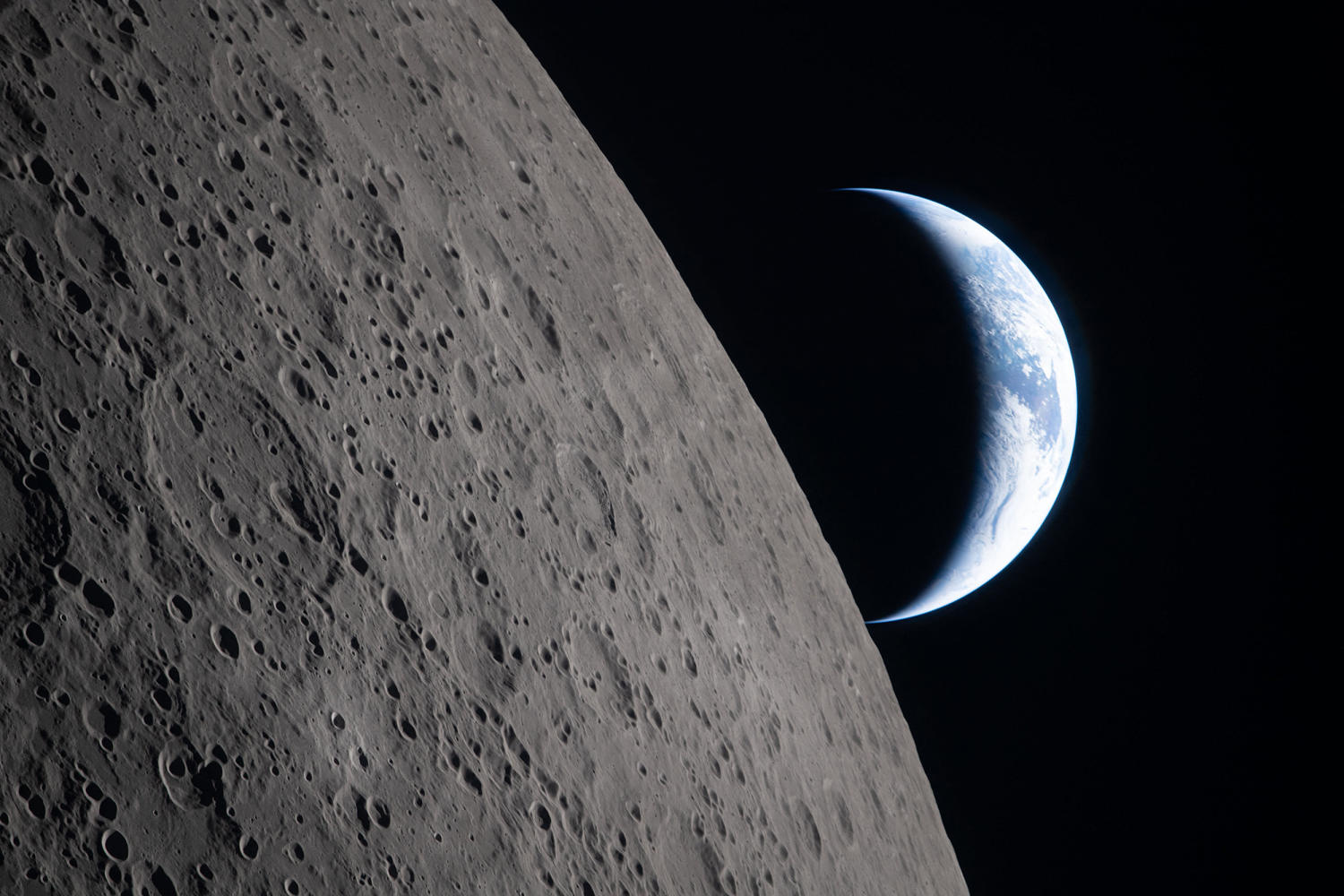
The riskiest moments of NASA's Artemis II mission may still be ahead
#NASA Artemis II #Orion spacecraft #heat shield #re-entry risk #lunar mission #spacecraft design #astronaut safety
📌 Key Takeaways
- The Artemis II crew's return to Earth on Friday involves a high-risk atmospheric re-entry phase.
- The Orion spacecraft's heat shield has known design flaws, evidenced by uneven erosion during the 2022 Artemis I test.
- NASA has not redesigned the shield but is relying on enhanced monitoring for the crewed mission.
- The success of the entire lunar flyby mission depends on surviving re-entry at 25,000 mph.
📖 Full Retelling
The four astronauts aboard NASA's Artemis II mission are scheduled to complete their lunar flyby and return to Earth on Friday, November 29, 2024, with a splashdown in the Pacific Ocean. However, mission officials and independent analysts emphasize that the spacecraft's re-entry through Earth's atmosphere represents one of the most perilous phases of the entire journey, compounded by known but unresolved design flaws in the Orion capsule's heat shield.
The primary concern centers on the Orion spacecraft's heat shield, which experienced unexpected and uneven erosion during the uncrewed Artemis I test flight in 2022. During that mission, charred material ablated from the shield in a manner not fully predicted by engineers, creating a risk that the underlying structure could be compromised during the far more intense heating of a crewed return from lunar velocities. NASA has conducted extensive analysis but has not implemented a redesign, opting instead for enhanced monitoring and modeling, leaving the Artemis II crew to rely on a system with a demonstrated anomaly.
This re-entry phase is critical because the Orion capsule will be traveling at approximately 25,000 miles per hour as it encounters the atmosphere, generating temperatures near 5,000 degrees Fahrenheit. Any failure in the heat shield's integrity could be catastrophic. The mission's success thus hinges on this final, high-stakes maneuver after a otherwise nominal journey around the Moon. NASA's approach reflects a calculated risk, prioritizing schedule momentum for the Artemis program while depending on engineering assessments that the current shield, despite its flaws, is sufficient for this crewed test.
🏷️ Themes
Space Exploration, Engineering Risk, NASA Programs
📚 Related People & Topics

Orion (spacecraft)
American crewed spacecraft for the Artemis program
Orion (Orion Multi-Purpose Crew Vehicle or Orion MPCV) is a partially reusable crewed spacecraft used in NASA's Artemis program. The spacecraft consists of a Crew Module (CM) space capsule designed by Lockheed Martin that is paired with a European Service Module (ESM) manufactured by Airbus Defence ...
Entity Intersection Graph
Connections for Orion (spacecraft):
🏢
NASA
47 shared
🌐
Artemis II
45 shared
👤
Space Launch System
5 shared
🌐
Artemis I
2 shared
🌐
Moon
2 shared
Mentioned Entities
Original Source
The astronauts on NASA's Artemis II moon mission are scheduled to land on Earth on Friday. But their re-entry is one of the riskiest parts of the mission, and the Orion spacecraft has known design flaws.
Read full article at source