
SP
BravenNow
Transcript: U.S. Trade Representative Jamieson Greer on "Face the Nation with Margaret Brennan," Feb. 22, 2026
| USA | general | ✓ Verified - cbsnews.com

Transcript: U.S. Trade Representative Jamieson Greer on "Face the Nation with Margaret Brennan," Feb. 22, 2026

#Tariffs #Supreme Court #Trade Representative #Section 122 #Section 301 #International Trade #Congress Authority #Global Tariff

📌 Key Takeaways

  • Supreme Court struck down tariffs under IEEPA, but other tariff authorities remain available
  • Administration plans to impose 15% global tariff under Section 122 while conducting Section 301 investigations
  • Tariff process under Section 301 involves hearings, public comment, and consultations taking approximately one year
  • Trade Representative engaged in conversations with international partners to reassure them about existing trade deals

📖 Full Retelling

U.S. Trade Representative Jamieson Greer discussed the administration's trade policy on CBS's 'Face the Nation with Margaret Brennan' on February 22, 2026, following the Supreme Court's ruling that struck down tariffs imposed under the International Emergency Economic Powers Act, with President Donald Trump announcing plans to implement 'legally permissible tariffs' including a 15% global tariff under Section 122 to address what he described as 'huge unfairness' in international trade. Greer clarified that while the Supreme Court had invalidated one authority for tariffs, other statutory powers remained available, including Section 301 authorities related to unfair trading practices, which would allow the administration to continue imposing tariffs through a more deliberative process involving hearings, public comment, and consultations with other countries. The trade representative emphasized that the administration would maintain continuity in its trade policy by conducting additional investigations under these existing tools, with tariffs already in place on China and several investigations already underway, despite the loss of flexibility previously provided by the emergency statute IEEPA.

🏷️ Themes

Trade Policy, Legal Authority, International Relations

📚 Related People & Topics
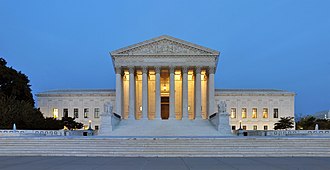
Supreme court

Supreme court

Highest court in a jurisdiction

In most legal jurisdictions, a supreme court, also known as a court of last resort, apex court, high (or final) court of appeal, and court of final appeal, is the highest court within the hierarchy of courts. Broadly speaking, the decisions of a supreme court are binding on all other courts in a nat...

View Profile → Wikipedia ↗
Tariff

Tariff

Goods import or export tax

A tariff or import tax is a duty imposed by a national government, customs territory, or supranational union on imports of goods and is paid by the importer. Exceptionally, an export tax may be levied on exports of goods or raw materials and is paid by the exporter. Besides being a source of revenue...

View Profile → Wikipedia ↗

International trade

Exchange across international borders

International trade is the exchange of capital, goods, and services across international borders or territories because there is a need or want of goods or services. In most countries, such trade represents a significant share of gross domestic product (GDP). While international trade has existed t...

View Profile → Wikipedia ↗

Trade office

Government office in a foreign locale

A trade office, sometimes known as a trade representation, commercial office, or trade mission, is an official establishment that promotes the commercial interests of a government (such as a city, state, or country) in a foreign capital. The head of such an establishment is typically called a trade ...

View Profile → Wikipedia ↗

Entity Intersection Graph

Connections for Supreme court:

👤 Donald Trump 19 shared
🌐 Tariff 15 shared
🌐 Tariffs in the Trump administration 12 shared
🌐 International Emergency Economic Powers Act 7 shared
🌐 Commercial policy 5 shared
View full profile

Deep Analysis

Why It Matters

This interview reveals the U.S. administration's strategy to maintain its tariff policy despite a Supreme Court ruling limiting presidential authority. It highlights ongoing trade tensions with international partners and internal political divisions, which could impact global economic stability and U.S. trade relations.

Context & Background

  • The Supreme Court ruled that using the International Emergency Economic Powers Act (IEEPA) for tariffs is illegal.
  • The president plans to use other legal authorities like Section 301 and Section 122 to impose tariffs.
  • There is political friction within the president's own party regarding tariff policy.
  • International trade partners are concerned and reviewing the situation.
  • The administration asserts that its trade policy has continuity and bipartisan support historically.

What Happens Next

The administration will proceed with tariffs under existing statutes like Section 122, which expires in five months, while conducting longer-term Section 301 investigations. The USTR will continue diplomatic talks with concerned trading partners to uphold existing deals.

Frequently Asked Questions

What legal authority is the president using for tariffs now?

The president is using authorities like Section 301 for unfair trade practices and Section 122 for temporary global tariffs, which Congress has previously delegated.

How are international trade partners reacting?

Partners like the EU and South Korea are holding emergency meetings, but the USTR is in active communication to reassure them that existing trade deals will stand.

Is there congressional support for the tariff policy?

The USTR claims growing Republican support for tariffs, citing their effectiveness, though some party members remain opposed.

Original Source
Face The Nation Transcripts Transcript: U.S. Trade Representative Jamieson Greer on "Face the Nation with Margaret Brennan," Feb. 22, 2026 February 22, 2026 / 11:11 AM EST / CBS News Add CBS News on Google The following is the transcript of the interview with U.S. Trade Representative Jamieson Greer that aired on "Face the Nation with Margaret Brennan" on Feb. 22, 2026. MARGARET BRENNAN: We turn now to the U.S. Trade Representative, Jamieson Greer, Ambassador. Welcome back to Face The Nation. JAMIESON GREER, UNITED STATES TRADE REPRESENTATIVE: Thank you. It's great to be on. MARGARET BRENNAN: So the president had imposed these tariffs using several different statutes, but the Supreme Court declared that invoking tariffs under the International Emergency Economic Powers Act was illegal because taxation is the authority of the Congress, but the president then said he is going to issue quote "legally permissible tariffs" and that he doesn't need to go to Congress. So can you clarify? Will you ask Congress to legislate tariffs? And if so, which ones? JAMIESON GREER: So again, thanks for having me on and right now, it's important to understand that over the years, Congress has delegated enormous tariff-setting authority to the president, depending on the situation. So even though the Supreme Court struck down tariffs under one authority, tariffs under other national security elements remain in place. Tariffs under what we call Section 301 related to unfair trading practices, remain in place. And so we of course, can conduct additional investigations under these tools to impose tariffs, to have continuity in the president's trade policy. MARGARET BRENNAN: But to be clear, those investigations, they have guardrails. They have processes. In fact, the 301s, they could take a year or so to complete those investigations before tariffs come in. You won't have the ability to move as quickly now that the court has ruled, correct? : So we don't have the same flexibility that IEEPA...
Read full article at source

Source

cbsnews.com

More from USA

News from Other Countries

🇬🇧 United Kingdom

🇺🇦 Ukraine