

Travis Scott, Young Thug Petition Supreme Court Over Use of Rap Lyrics in Death Sentence
#Travis Scott #Young Thug #Supreme Court #rap lyrics #death sentence #criminal trial #artistic expression #free speech
📌 Key Takeaways
- Travis Scott and Young Thug petition the Supreme Court regarding the use of rap lyrics in criminal trials.
- The case involves the use of rap lyrics as evidence in a death sentence conviction.
- The petition argues that rap lyrics are artistic expression and should not be used to prove guilt.
- This legal challenge highlights concerns about free speech and racial bias in the justice system.
🏷️ Themes
Legal Challenge, Free Speech
📚 Related People & Topics
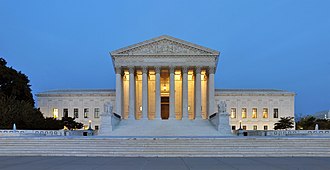
Supreme court
Highest court in a jurisdiction
In most legal jurisdictions, a supreme court, also known as a court of last resort, apex court, high (or final) court of appeal, and court of final appeal, is the highest court within the hierarchy of courts. Broadly speaking, the decisions of a supreme court are binding on all other courts in a nat...

Young Thug
American rapper (born 1991)
Jeffery Lamar Williams II (born August 16, 1991), known professionally as Young Thug, is an American rapper. Known for his eccentric vocal style and fashion, he is considered an influential figure in modern hip-hop and trap music, and a popularizer of the mumble rap microgenre. Williams began his mu...

Travis Scott
American rapper (born 1991)
Jacques Bermon Webster II (born April 30, 1991), known professionally as Travis Scott (formerly stylized as Travi$ Scott), is an American rapper, singer, songwriter, and record producer. Scott has had five number-one hits on the U.S. Billboard Hot 100 chart, along with a total of over one hundred ch...
Entity Intersection Graph
Connections for Supreme court:
Mentioned Entities
Deep Analysis
Why It Matters
This case challenges the legal practice of using artistic expression as evidence in criminal trials, potentially affecting First Amendment protections for musicians and artists nationwide. It directly impacts hip-hop artists whose lyrics often contain fictional narratives that prosecutors may misinterpret as autobiographical confessions. The outcome could establish important precedents about how creative works are treated in courtrooms, affecting not just rap music but all artistic expression. This matters to the music industry, criminal justice reform advocates, and anyone concerned about free speech protections in the legal system.
Context & Background
- Rap lyrics have been used as evidence in criminal trials since at least the 1990s, with prosecutors arguing they demonstrate criminal intent or knowledge
- Young Thug (Jeffery Lamar Williams) is currently facing RICO charges in Georgia where his lyrics have been cited as evidence of gang activity
- The 'art on trial' debate extends beyond rap to other genres, but hip-hop faces disproportionate scrutiny due to stereotypes about the genre
- Previous legal challenges to lyric admissibility have had mixed results, with some courts allowing lyrics as evidence while others recognize their artistic nature
- The Supreme Court has not previously ruled specifically on whether rap lyrics should be admissible as criminal evidence
- Travis Scott (Jacques Webster) is not a defendant in the death penalty case but is joining the petition due to broader concerns about artistic expression
What Happens Next
The Supreme Court will decide whether to hear the case, with a decision likely within the next 3-6 months. If they accept the case, arguments would be scheduled for the 2024-2025 term with a ruling by June 2025. Regardless of the Supreme Court's decision, state legislatures may consider bills limiting the use of artistic expression as evidence, with California already passing such legislation in 2022. The underlying death penalty case will continue in lower courts while this constitutional challenge proceeds.
Frequently Asked Questions
They are petitioning as concerned artists and advocates for First Amendment protections, not as parties to the specific criminal case. Their involvement brings celebrity attention to what they view as a systemic issue affecting hip-hop artists broadly, not just the defendant in this particular trial.
They argue that using artistic lyrics as evidence violates First Amendment free speech protections by punishing creative expression. They contend that fictional lyrics shouldn't be treated as factual confessions, and that this practice disproportionately targets hip-hop artists due to racial bias and genre stereotypes.
Yes, multiple state and federal courts have considered lyric admissibility with inconsistent rulings. Some courts have allowed lyrics as evidence of state of mind or criminal knowledge, while others have excluded them as prejudicial or protected speech. No uniform national standard exists currently.
If the Supreme Court declines to hear the petition, the current practice of allowing lyrics as evidence would continue in jurisdictions where it's permitted. However, the attention from this petition may still influence lower courts and state legislatures to reconsider their approaches to artistic evidence.
Research shows prosecutors have used rap lyrics in hundreds of criminal cases over the past three decades, particularly in gang-related and violent crime prosecutions. A 2019 study found rap lyrics were introduced as evidence in court more frequently than lyrics from any other music genre.
A favorable ruling could establish new constitutional protections for artistic expression in courtrooms, potentially limiting how prosecutors use lyrics as evidence nationwide. This could lead to retrials in cases where lyrics played a significant role and influence how judges instruct juries about interpreting artistic works as evidence.