
Trump administration asks Supreme Court to end TPS for Haitians
#Trump administration #Supreme Court #TPS #Haitians #immigration #humanitarian protection #legal status
📌 Key Takeaways
- The Trump administration has requested the Supreme Court to terminate Temporary Protected Status (TPS) for Haitian nationals.
- This move could affect thousands of Haitian immigrants currently protected under TPS in the United States.
- The request is part of broader efforts by the administration to restrict immigration and end humanitarian protections.
- The Supreme Court's decision will have significant implications for the legal status and future of affected Haitians.
📖 Full Retelling
🏷️ Themes
Immigration Policy, Legal Action
📚 Related People & Topics

Haitians
Inhabitants of Haiti and their descendants in the Haitian diaspora
Haitians (Haitian Creole: Ayisyen, French: Haïtiens) are the citizens and nationals of Haiti. The Haitian people have their origins in West and Central Africa with the most spoken language being Haitian Creole. The larger Haitian diaspora includes individuals that trace ancestry to Haiti and self-id...
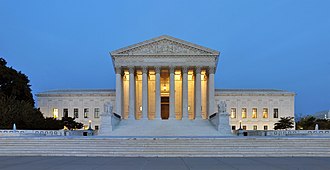
Supreme court
Highest court in a jurisdiction
In most legal jurisdictions, a supreme court, also known as a court of last resort, apex court, high (or final) court of appeal, and court of final appeal, is the highest court within the hierarchy of courts. Broadly speaking, the decisions of a supreme court are binding on all other courts in a nat...
Presidency of Donald Trump
Index of articles associated with the same name
Presidency of Donald Trump may refer to:
Entity Intersection Graph
Connections for Haitians:
Mentioned Entities
Deep Analysis
Why It Matters
This legal action directly affects approximately 55,000 Haitian TPS recipients who could face deportation if the Supreme Court rules in favor of the administration. The case has significant implications for immigration policy and could set precedent for how future administrations handle humanitarian protections. It also impacts Haitian-American communities and families with mixed immigration status, potentially separating parents from U.S.-born children. The timing is particularly sensitive given Haiti's ongoing political instability and natural disasters.
Context & Background
- Temporary Protected Status (TPS) was created by Congress in 1990 to provide temporary humanitarian protection to foreign nationals whose home countries are unsafe due to armed conflict, natural disasters, or other extraordinary conditions.
- Haiti was designated for TPS in 2010 following a devastating earthquake that killed over 200,000 people and displaced millions, with the program being extended multiple times under both Obama and Trump administrations.
- The Trump administration announced in 2017 it would terminate Haiti's TPS designation, citing improved conditions, but faced multiple legal challenges that have kept the program in place through court injunctions.
- Haiti continues to face severe challenges including political violence, gang control of territory, economic collapse, and the aftermath of the 2021 earthquake that killed over 2,000 people.
What Happens Next
The Supreme Court will decide whether to hear the case in its upcoming term, with a decision likely by June 2024 if they take the case. If the Court rules in favor of the administration, Haitian TPS holders would have their protected status terminated, though they would likely receive a wind-down period before facing potential deportation. The Biden administration could potentially intervene with new policies if the Court rules against maintaining TPS, but would face political and legal constraints.
Frequently Asked Questions
TPS is a temporary immigration status granted to eligible nationals of designated countries facing dangerous conditions. It provides protection from deportation and work authorization but does not lead to permanent residency or citizenship on its own.
The administration argues that conditions in Haiti have improved sufficiently since the 2010 earthquake and that TPS was always intended to be temporary. They cite assessments suggesting Haiti can safely receive returning nationals.
They would lose legal status and work authorization, becoming subject to deportation unless they qualify for other immigration relief. Many have lived in the U.S. for over a decade and have U.S.-citizen children.
This is part of broader efforts to end TPS for several countries including El Salvador, Honduras, and Sudan. Court decisions on Haiti could influence outcomes for approximately 300,000 TPS holders from other nations.
Yes, a new administration could redesignate Haiti for TPS or create alternative protections, but would need to follow proper procedures and might face legal challenges from immigration restriction groups.