

Trump administration to stop collecting Supreme Court-blocked tariffs at midnight
📌 Key Takeaways
- {"type":"skipped","reason":"older_than_3_days"}
📖 Full Retelling
📚 Related People & Topics
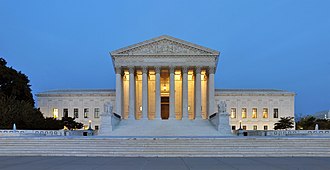
Supreme court
Highest court in a jurisdiction
In most legal jurisdictions, a supreme court, also known as a court of last resort, apex court, high (or final) court of appeal, and court of final appeal, is the highest court within the hierarchy of courts. Broadly speaking, the decisions of a supreme court are binding on all other courts in a nat...
Entity Intersection Graph
Connections for Supreme court:
Mentioned Entities
Deep Analysis
Why It Matters
The Supreme Court decision invalidated President Trump's blanket tariffs imposed under IEEPA, limiting executive power over trade. The administration's halt in collection signals a shift in enforcement and potential financial impact for businesses. It also underscores the judiciary's role in checking executive overreach.
Context & Background
- Supreme Court ruled IEEPA tariffs unconstitutional
- Tariffs could total $175 billion in refunds
- CBP will stop collecting tariffs at midnight
- Business groups demand prompt refunds
- Other tariffs under Trade Act remain
What Happens Next
Lower courts will decide refund procedures, potentially leading to a wave of claims. The administration may issue guidance on how companies can recover funds. Meanwhile, the new 15 percent tariffs under the Trade Act will be in effect for 150 days.
Frequently Asked Questions
Because the Supreme Court found that using IEEPA to impose blanket tariffs overstepped Congress's authority over taxation.
No, the administration has said refunds will be handled by lower courts and not automatically.
Tariffs imposed under the Trade Act of 1974 at 15 percent will remain for 150 days.
The timeline is unclear; courts will determine the process and timing.