

Trump Aides Project Confidence on Tariffs After Court Loss
#Trump tariffs #Supreme Court #Section 122 #Section 301 #Trade Act 1974 #Protectionism #Trade policy #Tariffs
📌 Key Takeaways
- Trump officials remain confident about implementing tariffs despite Supreme Court loss
- New plan includes 15% across-the-board tariff under rarely used Section 122
- Administration will also use Section 301 to investigate unfair trade practices
- Novel legal approaches may face additional challenges
- Tariff strategy reflects administration's protectionist trade agenda
📖 Full Retelling
🏷️ Themes
Trade Policy, Legal Strategy, Protectionism
📚 Related People & Topics
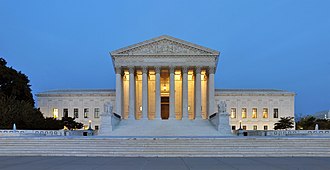
Supreme court
Highest court in a jurisdiction
In most legal jurisdictions, a supreme court, also known as a court of last resort, apex court, high (or final) court of appeal, and court of final appeal, is the highest court within the hierarchy of courts. Broadly speaking, the decisions of a supreme court are binding on all other courts in a nat...

Commercial policy
Government's policy governing international trade
A commercial policy (also referred to as a trade policy or international trade policy) is a government's policy governing international trade. Commercial policy is an all encompassing term that is used to cover topics which involve international trade. Trade policy is often described in terms of a ...

Protectionism
Economic policy of restricting imports
Protectionism, sometimes referred to as trade protectionism, is the economic policy of restricting imports from other countries through methods such as tariffs on imported goods, import quotas, and a variety of other government regulations. Proponents argue that protectionist policies shield the pro...

Tariff
Goods import or export tax
A tariff or import tax is a duty imposed by a national government, customs territory, or supranational union on imports of goods and is paid by the importer. Exceptionally, an export tax may be levied on exports of goods or raw materials and is paid by the exporter. Besides being a source of revenue...
Tariffs in the Trump administration
Topics referred to by the same term
Tariffs in the Trump administration could refer to:
Entity Intersection Graph
Connections for Supreme court:
Mentioned Entities
Deep Analysis
Why It Matters
This development matters because it signals a significant escalation in U.S. trade policy, potentially triggering widespread economic retaliation from trading partners. The use of a previously unused legal authority sets a new precedent for presidential power over international commerce.
Context & Background
- Trump administration proposes a 15% across-the-board tariff
- Tariff authority comes from Section 122 of the Trade Act of 1974
- Section 122 has never been used in this manner before
- Administration also plans to initiate Section 301 investigations
What Happens Next
The administration will likely proceed with implementing the tariffs for the proposed 150-day period. Trading partners are expected to respond with countermeasures, potentially leading to increased trade tensions and legal challenges.
Frequently Asked Questions
Section 122 is a provision of the Trade Act of 1974 that allows the president to impose temporary tariffs to address balance of payments issues.
The tariffs could remain in place for up to 150 days under the current proposal.
Section 301 investigations are used to examine foreign trade practices that may be unfair or discriminatory against U.S. commerce.