
Trump asks Supreme Court to let it end legal protections for 350,000 Haitians
#Trump #Supreme Court #Haitians #Temporary Protected Status #deportation #immigration #legal protections
📌 Key Takeaways
- Trump administration seeks Supreme Court approval to terminate Temporary Protected Status for Haitians
- Approximately 350,000 Haitian immigrants could lose legal protections and face deportation
- The case centers on whether the administration followed proper procedures in its decision
- Outcome could set a precedent for TPS holders from other countries
📖 Full Retelling
🏷️ Themes
Immigration Policy, Legal Challenge
📚 Related People & Topics

Haitians
Inhabitants of Haiti and their descendants in the Haitian diaspora
Haitians (Haitian Creole: Ayisyen, French: Haïtiens) are the citizens and nationals of Haiti. The Haitian people have their origins in West and Central Africa with the most spoken language being Haitian Creole. The larger Haitian diaspora includes individuals that trace ancestry to Haiti and self-id...
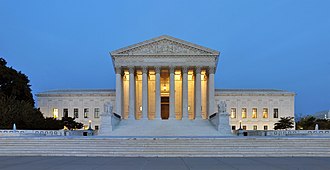
Supreme court
Highest court in a jurisdiction
In most legal jurisdictions, a supreme court, also known as a court of last resort, apex court, high (or final) court of appeal, and court of final appeal, is the highest court within the hierarchy of courts. Broadly speaking, the decisions of a supreme court are binding on all other courts in a nat...
Temporary protected status
Temporary status for eligible nationals who reside in the United States
Temporary protected status (TPS) is given by the United States government to eligible nationals of designated countries, as determined by the Secretary of Homeland Security, who are present in the United States. In general, the Secretary of Homeland Security may grant temporary protected status to p...

Donald Trump
President of the United States (2017–2021; since 2025)
Donald John Trump (born June 14, 1946) is an American politician, media personality, and businessman who is the 47th president of the United States. A member of the Republican Party, he served as the 45th president from 2017 to 2021. Born into a wealthy New York City family, Trump graduated from the...
Entity Intersection Graph
Connections for Haitians:
Mentioned Entities
Deep Analysis
Why It Matters
This legal challenge directly affects the lives of 350,000 Haitian immigrants who could face deportation if Temporary Protected Status (TPS) is terminated. The outcome will shape U.S. immigration policy regarding humanitarian protections and set precedents for how the executive branch can modify immigration programs. This case also highlights ongoing tensions between presidential authority and judicial oversight in immigration matters, with significant implications for immigrant communities and U.S. foreign relations with Haiti.
Context & Background
- Temporary Protected Status (TPS) was established by Congress in 1990 to provide temporary humanitarian protection to nationals of countries experiencing armed conflict, natural disasters, or other extraordinary conditions
- Haitians were granted TPS following the devastating 2010 earthquake that killed approximately 250,000 people and displaced millions
- The Trump administration announced in 2017 it would terminate TPS for Haitians, citing improved conditions in Haiti, but multiple courts have blocked this termination
- TPS has been extended multiple times for Haitians since 2010, with current protections set through October 2024
- Approximately 400,000 immigrants from 16 countries currently hold TPS status in the United States
What Happens Next
The Supreme Court will decide whether to hear the case, potentially issuing a ruling by June 2025 if they accept it. Lower court injunctions will remain in place during Supreme Court review, maintaining TPS protections for Haitians. The decision could influence similar TPS cases involving immigrants from El Salvador, Honduras, Nicaragua, and Sudan that are working through the courts.
Frequently Asked Questions
TPS is a temporary immigration status granted to nationals of designated countries facing dangerous conditions like natural disasters or armed conflict. It allows recipients to live and work legally in the U.S. but does not provide a path to permanent residency or citizenship.
The administration argues conditions in Haiti have improved sufficiently since the 2010 earthquake, making the temporary protection no longer necessary. They contend TPS was always meant to be temporary and extended protections have exceeded their original humanitarian purpose.
Approximately 350,000 Haitians would lose legal status and work authorization, becoming subject to deportation. Many have lived in the U.S. for over a decade, established families, businesses, and community ties during their protected status.
Multiple federal courts have blocked TPS terminations, finding the administration's justifications were arbitrary and violated administrative procedures. Judges have cited ongoing political instability, violence, and natural disasters in Haiti as reasons to maintain protections.
Advocates point to continued political turmoil, gang violence, economic collapse, and natural disasters in Haiti that make safe return impossible. They also emphasize the significant contributions TPS holders make to U.S. communities and economies.