
Trump attends Supreme Court arguments on birthright citizenship
📖 Full Retelling
📚 Related People & Topics
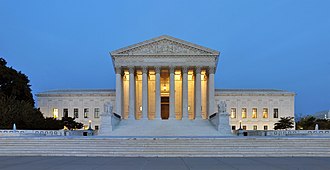
Supreme court
Highest court in a jurisdiction
In most legal jurisdictions, a supreme court, also known as a court of last resort, apex court, high (or final) court of appeal, and court of final appeal, is the highest court within the hierarchy of courts. Broadly speaking, the decisions of a supreme court are binding on all other courts in a nat...

Donald Trump
President of the United States (2017–2021; since 2025)
Donald John Trump (born June 14, 1946) is an American politician, media personality, and businessman who is the 47th president of the United States. A member of the Republican Party, he served as the 45th president from 2017 to 2021. Born into a wealthy New York City family, Trump graduated from the...
Entity Intersection Graph
Connections for Supreme court:
Mentioned Entities
Deep Analysis
Why It Matters
This case directly challenges the 14th Amendment's guarantee that all persons born in the United States are citizens, which has been constitutional bedrock since 1868. The outcome could affect millions of children born to undocumented immigrants, potentially creating a permanent underclass without citizenship rights. It matters to immigrant communities, constitutional scholars, and politicians debating immigration reform, as it could reshape American demographics and legal status for generations.
Context & Background
- The 14th Amendment's Citizenship Clause was ratified in 1868 to guarantee citizenship to formerly enslaved African Americans.
- The Supreme Court affirmed birthright citizenship in the 1898 United States v. Wong Kim Ark case involving a child of Chinese immigrants.
- Previous attempts to challenge birthright citizenship through legislation have failed due to constitutional concerns.
- Donald Trump has long advocated ending birthright citizenship, calling it 'the biggest magnet for illegal immigration.'
- The current case involves specific plaintiffs challenging whether children of certain undocumented immigrants qualify under 'subject to the jurisdiction' language.
What Happens Next
The Supreme Court will likely issue its ruling by June 2025. If the Court restricts birthright citizenship, Congress may attempt to pass clarifying legislation. Either outcome will trigger immediate legal challenges and affect pending immigration cases nationwide. State governments may begin adjusting birth certificate policies based on the ruling.
Frequently Asked Questions
Birthright citizenship, or jus soli, is the legal principle that any child born within a country's territory automatically gains citizenship. In the U.S., this stems from the 14th Amendment's statement that 'all persons born or naturalized in the United States, and subject to the jurisdiction thereof, are citizens.'
The Supreme Court cannot directly overturn a constitutional amendment, but it can interpret its meaning and scope. The Court would be deciding whether the 14th Amendment's language applies to children of undocumented immigrants, potentially narrowing who qualifies for birthright citizenship.
Approximately 300,000-400,000 children are born to undocumented immigrants annually in the U.S. Changing birthright citizenship would affect these children plus potentially millions already born, creating complex legal status issues for families.
As a former president and current presidential candidate who has made ending birthright citizenship a key policy position, Trump's attendance signals the political importance of this case. It demonstrates his continued focus on immigration issues and may influence public debate.
Most Western Hemisphere countries practice birthright citizenship, while most European and Asian countries do not. The U.S., Canada, and Mexico are among approximately 30 countries worldwide that grant citizenship based solely on birthplace.