
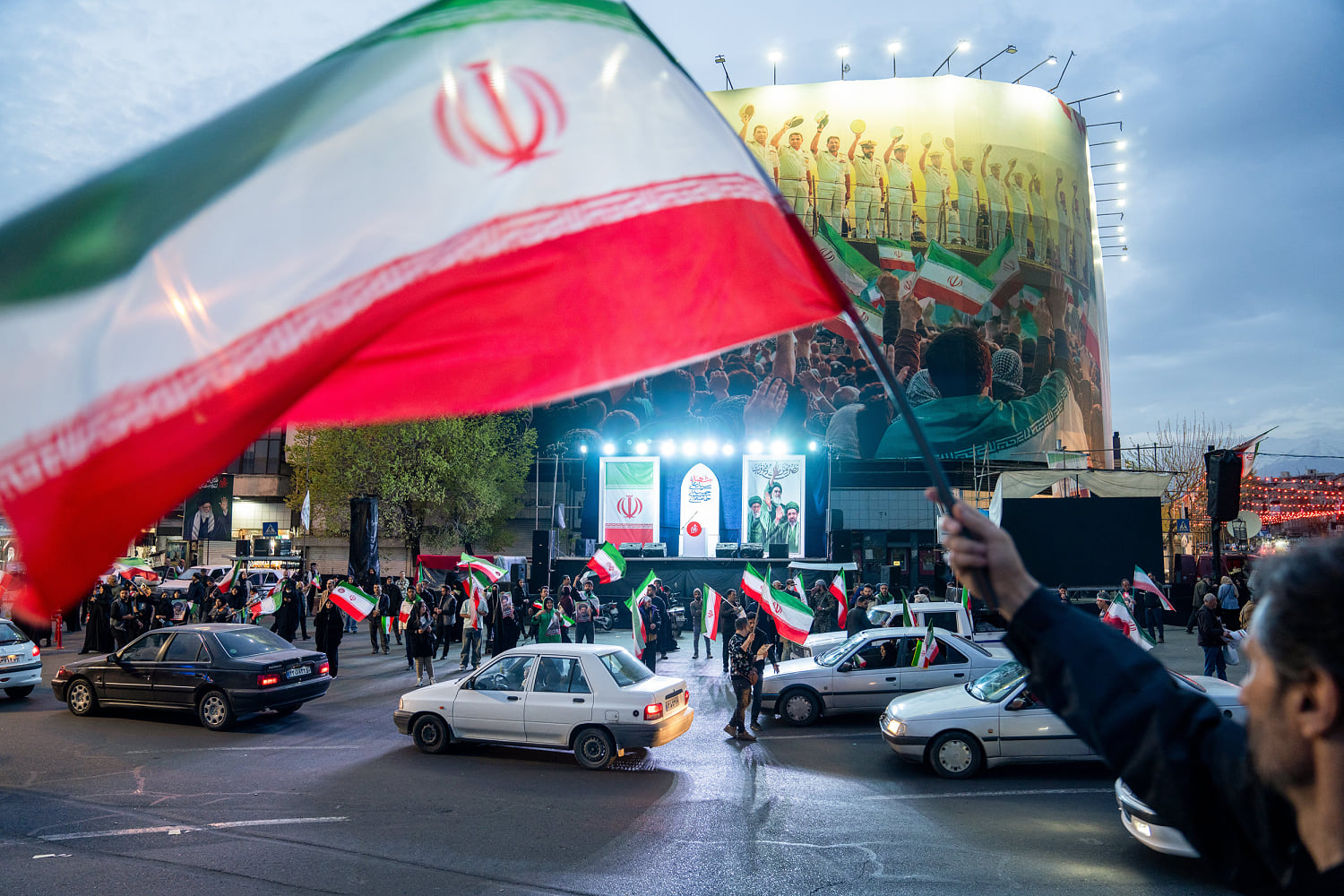
Trump backs off escalation but Iran war goes on amid 'productive' talks
#Trump #Iran #de-escalation #military conflict #diplomatic talks #U.S. foreign policy #Middle East
📌 Key Takeaways
- President Trump has decided against further military escalation with Iran.
- Despite de-escalation, underlying tensions and conflict with Iran continue.
- Recent diplomatic talks between the U.S. and Iran are described as 'productive'.
- The situation remains volatile despite the shift from immediate military action.
📖 Full Retelling
🏷️ Themes
Geopolitical Tensions, Diplomacy
📚 Related People & Topics

Iran
Country in West Asia
# Iran **Iran**, officially the **Islamic Republic of Iran** and historically known as **Persia**, is a sovereign country situated in West Asia. It is a major regional power, ranking as the 17th-largest country in the world by both land area and population. Combining a rich historical legacy with a...

Middle East
Transcontinental geopolitical region
The Middle East is a geopolitical region encompassing the Arabian Peninsula, Egypt, Iran, Iraq, the Levant, and Turkey. The term came into widespread usage by Western European nations in the early 20th century as a replacement of the term Near East (both were in contrast to the Far East). The term ...

Donald Trump
President of the United States (2017–2021; since 2025)
Donald John Trump (born June 14, 1946) is an American politician, media personality, and businessman who is the 47th president of the United States. A member of the Republican Party, he served as the 45th president from 2017 to 2021. Born into a wealthy New York City family, Trump graduated from the...
Entity Intersection Graph
Connections for Iran:
Mentioned Entities
Deep Analysis
Why It Matters
This development matters because it signals a potential de-escalation in U.S.-Iran tensions that have brought the region to the brink of war multiple times in recent years. It affects global oil markets, regional stability in the Middle East, and international security alliances. The continuation of 'productive' talks suggests diplomatic channels remain open despite ongoing hostilities, which could prevent miscalculations that might trigger broader conflict.
Context & Background
- The U.S. and Iran have been in a tense standoff since 2018 when Trump withdrew from the Iran nuclear deal (JCPOA) and reimposed sanctions
- Tensions escalated dramatically in January 2020 with the U.S. assassination of Iranian General Qasem Soleimani, followed by Iranian missile strikes on U.S. bases in Iraq
- Iran has continued to advance its nuclear program while facing severe economic pressure from U.S. sanctions, creating ongoing regional proxy conflicts
What Happens Next
Expect continued indirect negotiations through intermediaries, possibly leading to incremental confidence-building measures. The Vienna nuclear talks may resume with renewed urgency, though a comprehensive agreement remains unlikely before the U.S. election. Regional proxy conflicts in Yemen, Syria, and Iraq will likely continue but with increased efforts to avoid direct U.S.-Iran military confrontation.
Frequently Asked Questions
It likely refers to indirect communications through intermediaries like Oman or Switzerland, where both sides are exploring de-escalation options without formal negotiations. These talks focus on prisoner exchanges, limited sanctions relief, or regional security arrangements while avoiding public commitments.
Domestic political considerations ahead of elections, desire to avoid another Middle East war, and recognition that maximum pressure hasn't achieved desired policy outcomes. There may also be behind-the-scenes assurances from Iran about limiting nuclear advances or regional activities.
It creates space for potential interim arrangements but doesn't signal a return to the original JCPOA. Any progress would likely involve limited sanctions relief for temporary nuclear freeze measures, with both sides maintaining core positions until after U.S. elections.
Continued proxy conflicts risk miscalculation and unintended escalation, especially through attacks on shipping or U.S. forces. The absence of direct communication channels increases the danger that localized incidents could spiral into broader military confrontation despite diplomatic talks.