
Trump becomes first sitting U.S. president to attend Supreme Court arguments
📖 Full Retelling
📚 Related People & Topics
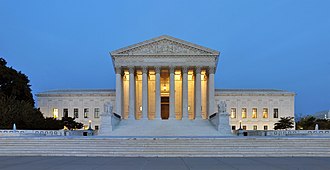
Supreme court
Highest court in a jurisdiction
In most legal jurisdictions, a supreme court, also known as a court of last resort, apex court, high (or final) court of appeal, and court of final appeal, is the highest court within the hierarchy of courts. Broadly speaking, the decisions of a supreme court are binding on all other courts in a nat...

Donald Trump
President of the United States (2017–2021; since 2025)
Donald John Trump (born June 14, 1946) is an American politician, media personality, and businessman who is the 47th president of the United States. A member of the Republican Party, he served as the 45th president from 2017 to 2021. Born into a wealthy New York City family, Trump graduated from the...
Entity Intersection Graph
Connections for Supreme court:
Mentioned Entities
Deep Analysis
Why It Matters
This event matters because it represents a significant break from presidential tradition regarding the separation of powers, potentially signaling a more direct presidential interest in judicial proceedings. It affects the Supreme Court's perceived independence, as the presence of the executive branch's head during arguments could be seen as political pressure. The legal community and political observers will analyze whether this sets a new precedent for executive-judicial relations.
Context & Background
- U.S. presidents traditionally avoid attending Supreme Court arguments to maintain separation of powers and judicial independence.
- Presidents occasionally file amicus briefs or make public statements about cases but avoid physical presence during proceedings.
- The Supreme Court is currently hearing several cases with significant political implications during an election year.
- Previous presidents have visited the Supreme Court for ceremonial occasions like swearing-in ceremonies or funerals, but not for regular arguments.
What Happens Next
Legal analysts will examine whether other presidents follow this precedent in future administrations. The Supreme Court may face increased scrutiny about political independence in upcoming decisions. Media will likely investigate which specific case arguments Trump attended and analyze potential connections to his administration's legal positions.
Frequently Asked Questions
This breaks over two centuries of tradition where sitting presidents avoided attending Supreme Court arguments to maintain the appearance of judicial independence from executive influence.
The article doesn't specify which case, but this would be important context since different cases would carry different political implications for presidential attendance.
Justices may feel additional pressure or scrutiny during arguments, and some legal experts worry it could undermine public perception of the Court's independence from political influence.
Yes, President Franklin Roosevelt famously attempted to 'pack' the Court with additional justices in 1937 after unfavorable rulings, representing a different type of executive pressure on the judiciary.