

Trump Doubles Down on Closing Tax Loophole on Cheap Imports
#Trump #Tax Loophole #Cheap Imports #De Minimis #Supreme Court #Tariffs #Exemption
📌 Key Takeaways
- Trump maintains position on closing tax loophole for cheap imports
- Supreme Court decision challenged legal basis for Trump's policy
- De minimis exemption allows $800 or less packages to enter duty-free
- Policy aims to protect domestic businesses but faces legal hurdles
📖 Full Retelling
🏷️ Themes
Trade Policy, Taxation, Legal Challenges
📚 Related People & Topics
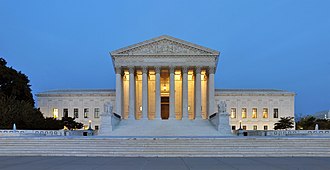
Supreme court
Highest court in a jurisdiction
In most legal jurisdictions, a supreme court, also known as a court of last resort, apex court, high (or final) court of appeal, and court of final appeal, is the highest court within the hierarchy of courts. Broadly speaking, the decisions of a supreme court are binding on all other courts in a nat...

Donald Trump
President of the United States (2017–2021; since 2025)
Donald John Trump (born June 14, 1946) is an American politician, media personality, and businessman who is the 47th president of the United States. A member of the Republican Party, he served as the 45th president from 2017 to 2021. Born into a wealthy New York City family, Trump graduated from the...
Entity Intersection Graph
Connections for Supreme court:
Mentioned Entities
Deep Analysis
Why It Matters
The Supreme Court ruling undermines the legal basis for the Trump administration's move to close a tax loophole that allowed cheap imports to enter duty-free, potentially allowing those shipments to return. It highlights the tension between executive policy and judicial review and could affect trade and tax revenue.
Context & Background
- Tax loophole allowed duty-free imports
- Trump administration closed the loophole in 2021
- Supreme Court decision challenges the closure
What Happens Next
The decision may prompt Congress to revisit the exemption, and importers could resume shipping inexpensive goods without paying duties, pending further legal or legislative action. It could also lead to new regulations to close the loophole again.
Frequently Asked Questions
It was a provision that allowed certain low‑value imports to enter the United States without paying customs duties.
The administration argued the loophole was exploited for tax evasion and wanted to increase revenue and protect domestic producers.
It invalidated one of the legal grounds the administration used to justify closing the loophole, opening the possibility for duty‑free imports to resume.
Congress may draft new legislation to close the loophole again, or courts may further refine the legal framework governing low‑value imports.