
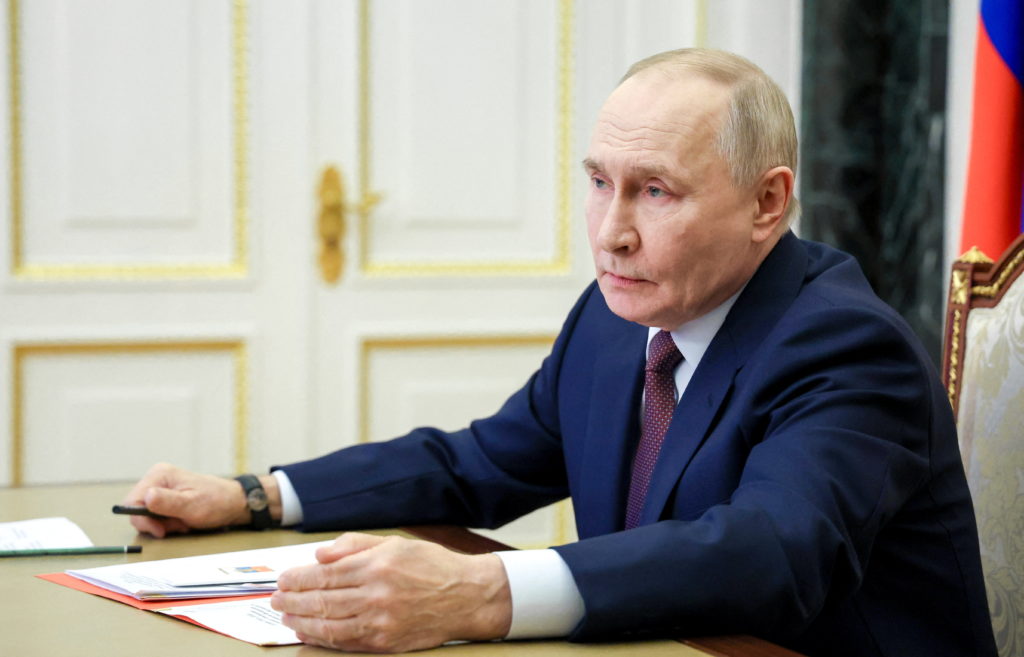
Trump has call with Putin to discuss Iran war, Kremlin says
#Trump #Putin #Iran #Kremlin #diplomacy #war #call
📌 Key Takeaways
- Trump and Putin held a call to discuss the Iran conflict.
- The Kremlin confirmed the conversation's occurrence.
- The primary topic was the ongoing war involving Iran.
- The call signifies high-level diplomatic engagement between the U.S. and Russia on a major international issue.
📖 Full Retelling
🏷️ Themes
Diplomacy, Iran Conflict
📚 Related People & Topics

Kremlin
Fortified complex in Moscow, Russia
The Moscow Kremlin, commonly known as just the Kremlin, is a fortified complex in Moscow, Russia. Located in the centre of the country's capital city, the Moscow Kremlin comprises five palaces, four cathedrals, and the enclosing Kremlin Wall along with the Kremlin towers. In the complex is the Grand...

Iran
Country in West Asia
# Iran **Iran**, officially the **Islamic Republic of Iran** and historically known as **Persia**, is a sovereign country situated in West Asia. It is a major regional power, ranking as the 17th-largest country in the world by both land area and population. Combining a rich historical legacy with a...

Vladimir Putin
President of Russia (2000–2008; since 2012)
Vladimir Vladimirovich Putin (born 7 October 1952) is a Russian politician and former intelligence officer who has served as President of Russia since 2012, having previously served from 2000 to 2008. Putin also served as Prime Minister of Russia from 1999 to 2000 and again from 2008 to 2012. He has...

Donald Trump
President of the United States (2017–2021; since 2025)
Donald John Trump (born June 14, 1946) is an American politician, media personality, and businessman who is the 47th president of the United States. A member of the Republican Party, he served as the 45th president from 2017 to 2021. Born into a wealthy New York City family, Trump graduated from the...
Entity Intersection Graph
Connections for Kremlin:
Mentioned Entities
Deep Analysis
Why It Matters
This conversation matters because it represents direct communication between two nuclear powers during a volatile Middle East conflict, potentially shaping international response to the Iran-Israel tensions. It affects global security dynamics, Middle Eastern stability, and diplomatic relations between the U.S., Russia, and their respective allies. The call could influence military de-escalation efforts or reveal diverging strategic interests in the region.
Context & Background
- U.S.-Russia relations have been strained since 2014 over Ukraine, Syria, and election interference allegations
- Iran has been a key Russian ally in the Middle East, with Moscow providing military and diplomatic support
- The U.S. and Israel have coordinated closely on Iran policy, particularly regarding nuclear concerns and regional proxies
- Previous Trump-Putin communications have often bypassed traditional diplomatic channels, creating uncertainty among allies
What Happens Next
Expect increased diplomatic activity at UN Security Council meetings this week, potential follow-up calls between U.S./Russian defense officials, and possible joint statements on de-escalation. Watch for reactions from Israel, Saudi Arabia, and European allies who weren't party to the discussion. The conversation may lead to renewed negotiations on Iran's nuclear program or affect upcoming Middle East peace initiatives.
Frequently Asked Questions
Russia and the U.S. maintain significant military presence and influence in the Middle East, making bilateral coordination crucial during crises. Both leaders have historically preferred direct communication over multilateral diplomacy, though this approach often concerns allies who prefer transparent, collective security discussions.
The discussion could either facilitate renewed negotiations by aligning U.S.-Russian positions or complicate them if disagreements emerge. Russia's continued support for Iran's nuclear program rights may conflict with U.S./Israeli demands for stricter limitations and verification measures.
Russia maintains military bases in Syria and coordinates with Iranian-backed forces there, giving Moscow leverage with Tehran. However, Russia also maintains working relations with Israel, often serving as an intermediary and attempting to balance these competing interests in the region.
Kremlin statements about leader communications are generally factual regarding occurrence but may emphasize aspects favorable to Russian interests. The U.S. typically releases its own readout, allowing comparison of differing emphases and interpretations of the same conversation.
While unlikely given current tensions, both powers have cooperated on limited Middle East issues previously. Any joint initiative would require overcoming significant trust deficits and addressing concerns from regional allies about increased Russian influence in U.S.-led security arrangements.