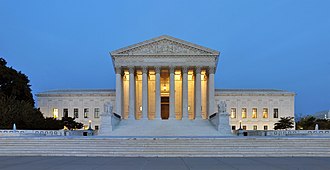
Supreme Court struck down Trump's tariffs under IEEPA
Trump replaced with 10% tariff under Section 122 and threatened 15% increase
Existing trade deals thrown into confusion as legal basis changed
Multiple countries pausing or reassessing trade agreements with US
📖 Full Retelling
President Donald Trump defended his tariff agenda during his State of the Union address on Tuesday, even as a Supreme Court ruling striking down his emergency tariffs cast fresh confusion over trade deals negotiated with global partners, following the court's decision that he had exceeded his authority under the International Emergency Economic Powers Act. The court ruled Friday that Trump had improperly imposed tariffs on goods from nearly every country, prompting the president to immediately replace them with a 10% tariff under Section 122 of the Trade Act of 1974, while threatening to increase them to 15% in the future. This legal upheaval has thrown into question bilateral trade agreements structured around the now-invalidated IEEPA tariff rates, with foreign governments scrambling to reassess their positions and concessions made in previous negotiations. Countries that had struck deals early with the United States after last year's tariffs are now facing uncertainty, while those that resisted initial demands may feel vindicated, according to trade analysts.
🏷️ Themes
Trade Policy, International Relations, Legal Authority
In most legal jurisdictions, a supreme court, also known as a court of last resort, apex court, high (or final) court of appeal, and court of final appeal, is the highest court within the hierarchy of courts. Broadly speaking, the decisions of a supreme court are binding on all other courts in a nat...
The International Emergency Economic Powers Act (IEEPA), Title II of Pub. L. 95–223, 91 Stat. 1626, enacted December 28, 1977, is a United States federal law authorizing the president to regulate international commerce after declaring a national emergency in response to any unusual and extraordinary...
President Donald Trump defended his tariff agenda during his State of the Union address Tuesday, even as a Supreme Court ruling striking down his emergency tariffs cast fresh confusion over the raft of trade deals negotiated with global partners. The court ruled Friday that the president had exceeded his authority by imposing tariffs on goods from nearly every country in the world under the International Emergency Economic Powers Act . Trump has said he planned to do so again within the bounds of the law. Almost immediately after, Trump replaced it with a 10% tariff under Section 122 of the Trade Act of 1974 that took effect on Tuesday. He had also threatened to increase it to 15% tariffs under Section 122, but it is unclear when they would take effect. The ruling has raised questions about bilateral trade agreements structured around IEEPA tariff rates, prompting foreign governments to reassess their positions. ″[Trading partners] made concessions in exchange for specific tariff treatment that was grounded in IEEPA. That legal basis no longer exists," said Johannes Fritz, CEO of the St.Gallen Endowment for Prosperity through Trade. "Whether the administration can reconstruct those deals under Section 301 or other authorities, remains to be seen, but that will take time and new legal processes," Fritz added. Section 301 of the Trade Act of 1974 requires the U.S. Trade Representative to conduct a formal trade investigation into unfair trade practices before imposing tariffs. watch now VIDEO 4:07 04:07 U.S. tariff shocks add urgency to India's multi-alignment strategy: Strategist Inside India "Those countries that were early in striking deals with the United States after the Liberation Day tariffs of last year have been sort of left holding the bag," Sarang Shidore, director of the Global South Program at the Quincy Institute, told CNBC "Inside India" on Monday. "Whereas those other countries that resisted, like Brazil and others, in agreeing to any demands from the U...