
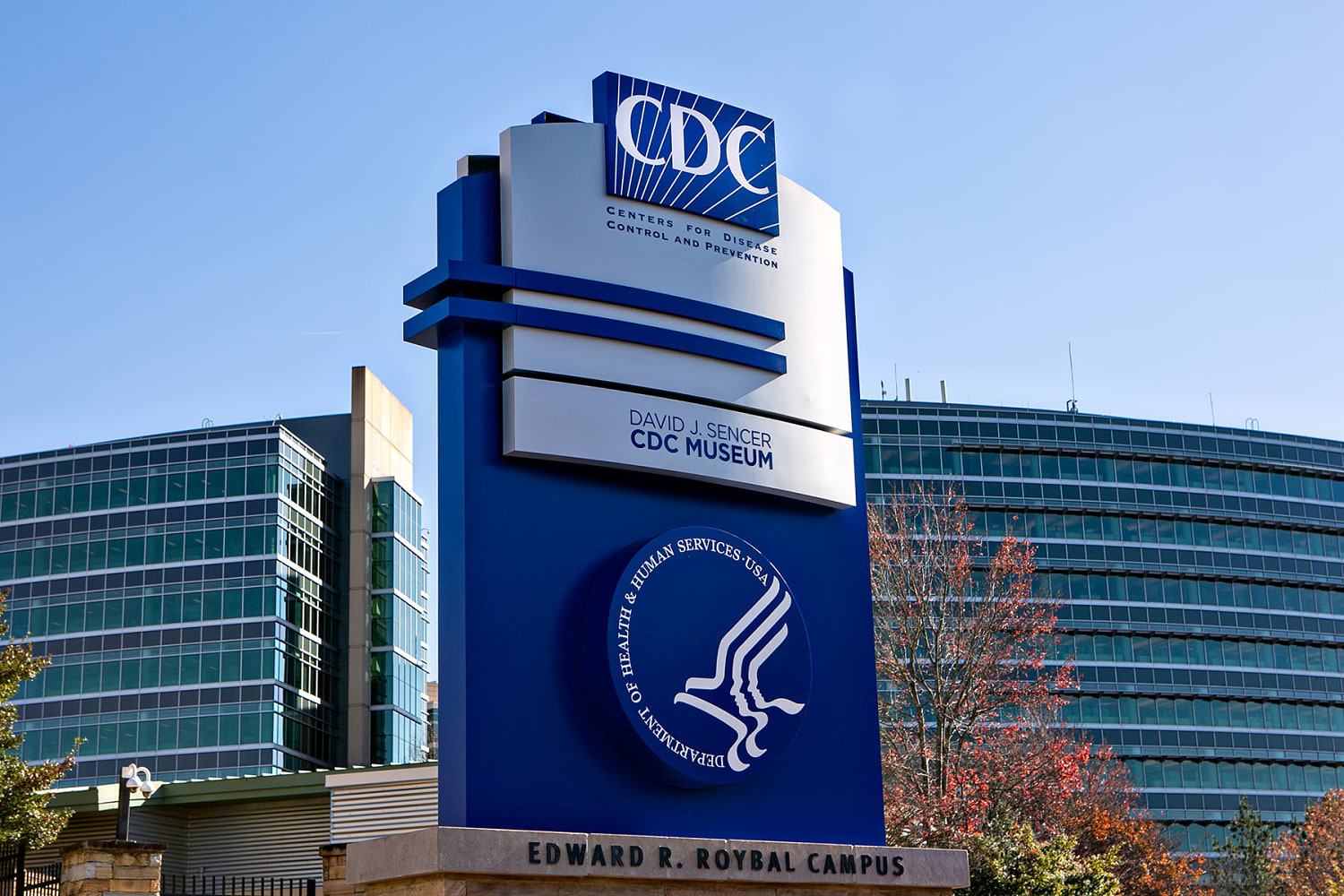
Trump is expected to name a new CDC head. ‘We don’t need a TV personality," one expert said.
📖 Full Retelling
📚 Related People & Topics

Centers for Disease Control and Prevention
United States government public health agency
The Centers for Disease Control and Prevention (CDC) is the national public health agency of the United States. It is a United States federal agency under the Department of Health and Human Services (HHS), and is headquartered in Atlanta, Georgia. The agency's main goal is the protection of public h...

Donald Trump
President of the United States (2017–2021; since 2025)
Donald John Trump (born June 14, 1946) is an American politician, media personality, and businessman who is the 47th president of the United States. A member of the Republican Party, he served as the 45th president from 2017 to 2021. Born into a wealthy New York City family, Trump graduated from the...
Entity Intersection Graph
Connections for Centers for Disease Control and Prevention:
Mentioned Entities
Deep Analysis
Why It Matters
This news is important because the CDC director plays a critical role in shaping public health policy, guiding national responses to health crises like pandemics, and maintaining public trust in scientific institutions. It affects all Americans, particularly those reliant on accurate health information and disease prevention programs, as well as healthcare professionals and policymakers who depend on CDC guidance. The appointment could influence the agency's independence, scientific integrity, and effectiveness in addressing ongoing and future health threats.
Context & Background
- The CDC (Centers for Disease Control and Prevention) is the leading national public health agency in the U.S., responsible for disease control, prevention, and health promotion.
- Previous CDC directors have typically been medical doctors or public health experts with extensive scientific backgrounds, such as Dr. Rochelle Walensky, who served from 2021 to 2023.
- The Trump administration has previously faced criticism for political interference in public health agencies, including during the COVID-19 pandemic when messaging sometimes conflicted with scientific advice.
- The CDC has been involved in controversies over its recommendations and transparency, impacting its public credibility and operational effectiveness in recent years.
What Happens Next
Trump is expected to announce the nominee soon, possibly within weeks, followed by a Senate confirmation process that could involve hearings and debates over the candidate's qualifications. If confirmed, the new director will likely set priorities for the CDC, potentially shifting focus areas like pandemic preparedness, vaccine policies, or health equity initiatives. Ongoing public and expert scrutiny will assess the appointee's actions and their alignment with scientific evidence in the coming months.
Frequently Asked Questions
Experts worry that a TV personality may lack the scientific expertise and public health experience needed to lead the CDC effectively, potentially prioritizing media presence over evidence-based decision-making. This could undermine the agency's credibility and its ability to respond to health emergencies with accurate, trusted guidance.
CDC directors are usually medical doctors, epidemiologists, or public health experts with advanced degrees and extensive experience in healthcare, research, or government health agencies. They need a strong background in science to oversee complex health initiatives and emergency responses.
The president nominates a candidate, who must then be confirmed by the Senate through hearings and a vote. The process evaluates the nominee's qualifications, potential conflicts of interest, and vision for public health, with input from health committees and stakeholders.
The appointment could influence CDC policies on issues like disease outbreaks, vaccination programs, and health disparities, affecting everything from individual healthcare decisions to national preparedness. A director with strong scientific credentials may bolster public trust, while a politically aligned appointee could lead to controversies or policy shifts.
Yes, during his first term, Trump appointed some officials with limited direct health expertise to key positions, such as political allies in advisory roles, which sometimes led to tensions with career scientists and concerns over politicization of health agencies.