
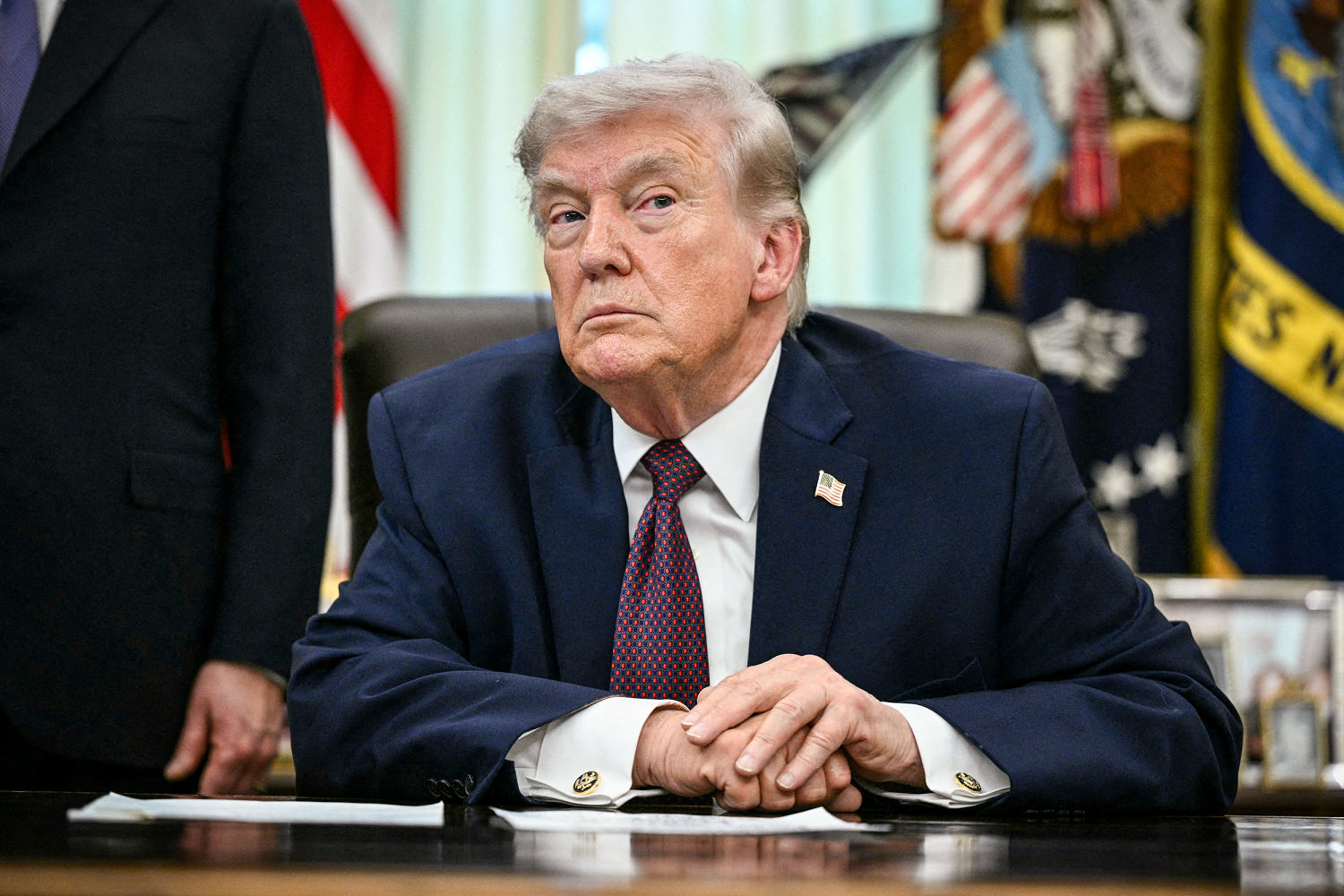
Trump plans to attend oral arguments in Supreme Court birthright citizenship case
#Trump #Supreme Court #birthright citizenship #14th Amendment #oral arguments #immigration policy #constitutional interpretation
📌 Key Takeaways
- Trump will attend Supreme Court oral arguments on birthright citizenship.
- The case challenges the 14th Amendment's guarantee of citizenship to those born in the U.S.
- Trump's presence highlights the political significance of the issue.
- The outcome could impact immigration policy and constitutional interpretation.
📖 Full Retelling
🏷️ Themes
Immigration, Constitutional Law
📚 Related People & Topics
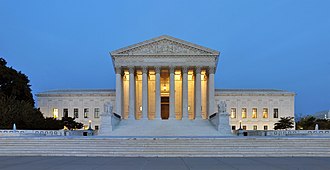
Supreme court
Highest court in a jurisdiction
In most legal jurisdictions, a supreme court, also known as a court of last resort, apex court, high (or final) court of appeal, and court of final appeal, is the highest court within the hierarchy of courts. Broadly speaking, the decisions of a supreme court are binding on all other courts in a nat...

Donald Trump
President of the United States (2017–2021; since 2025)
Donald John Trump (born June 14, 1946) is an American politician, media personality, and businessman who is the 47th president of the United States. A member of the Republican Party, he served as the 45th president from 2017 to 2021. Born into a wealthy New York City family, Trump graduated from the...
Entity Intersection Graph
Connections for Supreme court:
Mentioned Entities
Deep Analysis
Why It Matters
This development matters because it signals former President Trump's continued involvement in shaping constitutional interpretation and immigration policy, potentially influencing the Court's consideration of a foundational citizenship principle. It affects millions of children born to undocumented immigrants who currently gain automatic citizenship under the 14th Amendment's birthright clause. The case could redefine American citizenship criteria and has significant implications for future immigration debates and family reunification policies.
Context & Background
- The 14th Amendment's Citizenship Clause, ratified in 1868, states 'All persons born or naturalized in the United States, and subject to the jurisdiction thereof, are citizens of the United States.'
- Birthright citizenship has been interpreted for over a century to grant automatic citizenship to nearly all children born on U.S. soil, regardless of parents' immigration status.
- Trump first proposed ending birthright citizenship through executive order in 2018, though legal scholars widely questioned its constitutionality without a constitutional amendment.
- The Supreme Court has never directly ruled whether children of undocumented immigrants qualify under the 'subject to the jurisdiction' language of the 14th Amendment.
- Previous attempts to challenge birthright citizenship have failed to reach the Supreme Court, making this potential case particularly significant.
What Happens Next
If Trump attends oral arguments, it will likely occur during the Supreme Court's next term starting October 2024, assuming the Court agrees to hear the case. Legal briefs from both sides will be filed in the coming months, with amicus briefs from advocacy groups, states, and legal scholars. A decision would likely come by June 2025, potentially during the early stages of the 2024 presidential campaign season.
Frequently Asked Questions
Most constitutional scholars argue that ending birthright citizenship would require a constitutional amendment, not just executive action or legislation. The 14th Amendment's language is generally considered to grant Congress, not the president, authority over naturalization rules.
Approximately 300,000-400,000 children are born annually to undocumented immigrants in the U.S. who would lose automatic citizenship. Millions of existing citizens could face questions about their status if the ruling were applied retroactively.
A former president attending Supreme Court arguments is unusual and signals the political importance of this issue. His presence could influence public perception and media coverage, potentially putting pressure on conservative justices.
The United States and Canada are among few developed nations with unconditional birthright citizenship. Most European and Asian countries require at least one parent to be a citizen or legal resident for a child to gain citizenship at birth.
Proponents argue the 14th Amendment's 'subject to the jurisdiction' language excludes children of undocumented immigrants, citing historical context about the amendment's original intent regarding Native Americans and foreign diplomats.