

Trump says he will likely go to Supreme Court personally for birthright citizenship case
#Trump #Supreme Court #birthright citizenship #14th Amendment #immigration policy #constitutional challenge #legal precedent
📌 Key Takeaways
- Trump plans to personally present a birthright citizenship case to the Supreme Court.
- The case challenges the 14th Amendment's guarantee of citizenship to those born in the U.S.
- Trump's involvement signals a high-profile push to reinterpret constitutional provisions.
- The move could have significant implications for immigration policy and legal precedent.
🏷️ Themes
Immigration, Constitutional Law
📚 Related People & Topics
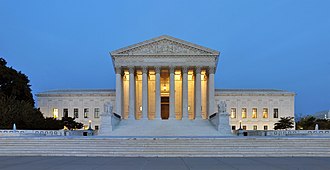
Supreme court
Highest court in a jurisdiction
In most legal jurisdictions, a supreme court, also known as a court of last resort, apex court, high (or final) court of appeal, and court of final appeal, is the highest court within the hierarchy of courts. Broadly speaking, the decisions of a supreme court are binding on all other courts in a nat...

Donald Trump
President of the United States (2017–2021; since 2025)
Donald John Trump (born June 14, 1946) is an American politician, media personality, and businessman who is the 47th president of the United States. A member of the Republican Party, he served as the 45th president from 2017 to 2021. Born into a wealthy New York City family, Trump graduated from the...
Entity Intersection Graph
Connections for Supreme court:
Mentioned Entities
Deep Analysis
Why It Matters
This news matters because it involves a potential direct challenge to the 14th Amendment's citizenship clause, which has been settled constitutional law for over 150 years. It affects millions of children born to undocumented immigrants in the U.S., who currently gain automatic citizenship. The case could reshape immigration policy and constitutional interpretation, with significant implications for future immigration debates and family reunification policies.
Context & Background
- The 14th Amendment, ratified in 1868, states that 'all persons born or naturalized in the United States, and subject to the jurisdiction thereof, are citizens of the United States.'
- Birthright citizenship has been upheld by the Supreme Court since the 1898 case United States v. Wong Kim Ark, which affirmed citizenship for children born to non-citizen parents.
- Previous attempts to challenge birthright citizenship through executive action or legislation have consistently failed due to constitutional constraints.
- The issue has been politically contentious for decades, with some conservatives arguing the amendment doesn't apply to children of undocumented immigrants.
- Trump previously attempted to end birthright citizenship through executive order in 2018, but legal experts widely considered this unconstitutional.
What Happens Next
Trump would need to file a formal petition with the Supreme Court, which would then decide whether to hear the case. If accepted, oral arguments would be scheduled, likely in the Court's next term. A ruling could come by June 2025, potentially during the next presidential administration. The case would face significant procedural hurdles first, including whether Trump has proper legal standing to bring such a challenge.
Frequently Asked Questions
Yes, presidents have occasionally argued cases before the Supreme Court, though it's extremely rare. The most famous example is President John Quincy Adams, who successfully argued the Amistad case in 1841. However, modern presidents typically rely on the Solicitor General and legal teams.
Millions of people born in the U.S. to undocumented parents could potentially lose citizenship status, creating legal uncertainty and possible deportation risks. It would fundamentally change immigration policy and likely trigger numerous legal challenges regarding the status of affected individuals.
The Court receives thousands of petitions annually but accepts only about 1-2% of cases. Given the constitutional significance and political controversy, the justices might consider it, but they typically avoid cases where the legal standing is questionable or where the issue isn't properly presented through lower courts.
He would likely argue that the 14th Amendment's 'subject to the jurisdiction thereof' clause excludes children of undocumented immigrants. Supporters of this view claim the framers intended citizenship only for those whose parents owed allegiance to the U.S., not temporary residents or those in violation of immigration laws.
If the Court ruled against birthright citizenship, it's unclear whether the decision would apply retroactively. Most constitutional rulings apply prospectively, but citizenship revocation could create complex legal questions about millions of existing citizens' status, potentially requiring congressional action to address.