
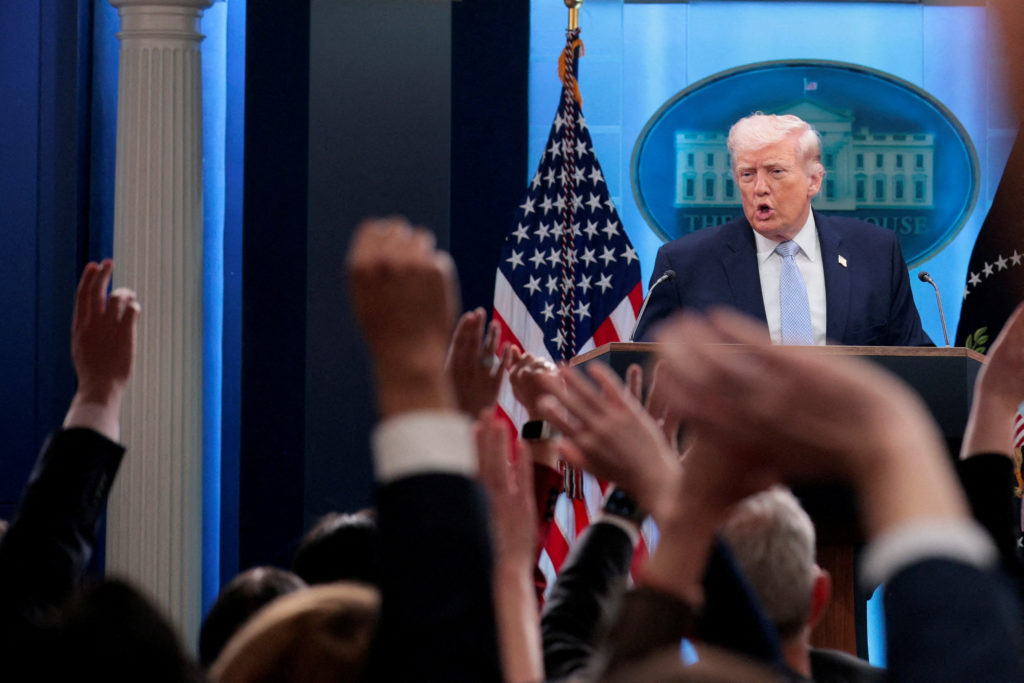
Trump says Israeli strikes on Lebanon a 'separate skirmish' not part of Iran ceasefire
#Donald Trump #Israel Lebanon conflict #U.S. Iran ceasefire #Middle East diplomacy #Hezbollah #regional escalation #conflict isolation
📌 Key Takeaways
- Trump described Israel-Lebanon conflict as separate from U.S.-Iran ceasefire
- Administration attempting to compartmentalize Middle Eastern conflicts
- Strategy aims to prevent regional escalation from undermining diplomacy
- Comments reflect balancing act between supporting Israel and protecting Iran agreement
📖 Full Retelling
🏷️ Themes
Middle East Diplomacy, Conflict Compartmentalization, U.S. Foreign Policy
📚 Related People & Topics
Hezbollah
Islamist movement and militant group based in Lebanon
Hezbollah is a Shia Islamist Lebanese political party and paramilitary group. Hezbollah's paramilitary wing is the Jihad Council, and its political wing is the Loyalty to the Resistance Bloc party in the Lebanese Parliament. Its armed strength was assessed to be equivalent to that of a medium-sized ...
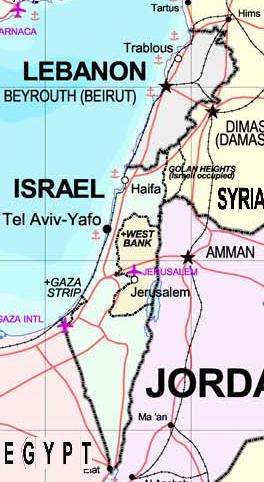
Israeli–Lebanese conflict
Conflict involving Israel and Lebanon-based paramilitary groups
The Israeli–Lebanese conflict, or the South Lebanon conflict, is a long-running conflict involving Israel, Lebanon-based paramilitary groups, and sometimes Syria. The conflict peaked during the Lebanese Civil War. In response to Palestinian attacks from Lebanon, Israel invaded the country in 1978 an...

Donald Trump
President of the United States (2017–2021; since 2025)
Donald John Trump (born June 14, 1946) is an American politician, media personality, and businessman who is the 47th president of the United States. A member of the Republican Party, he served as the 45th president from 2017 to 2021. Born into a wealthy New York City family, Trump graduated from the...
Entity Intersection Graph
Connections for Hezbollah:
View full profileMentioned Entities
Deep Analysis
Why It Matters
This development is critical as it tests the U.S. administration's ability to manage complex, interconnected proxy wars in the Middle East without triggering a broader regional conflict. It directly impacts the stability of the fragile U.S.-Iran truce and the security of civilians in northern Israel and southern Lebanon. Furthermore, the success or failure of this strategy could define future diplomatic approaches to dealing with Iran-backed militias in the region.
Context & Background
- Hezbollah is a Shia Islamist political party and militant group based in Lebanon that is widely recognized as a proxy for Iran.
- The U.S. and Iran have experienced periods of high tension, often playing out through proxy forces in countries like Syria, Iraq, and Lebanon.
- Israel and Hezbollah have a long history of conflict, including a major war in 2006 and frequent cross-border skirmishes.
- Southern Lebanon is a volatile region where Hezbollah operates extensively, often launching rockets into Israeli territory.
- Ceasefire agreements between global powers often rely on the assumption that proxies will also stand down, though this is rarely guaranteed.
What Happens Next
Diplomatic efforts will likely focus on pressuring both sides to limit the engagement in Lebanon to avoid drawing Iran directly into the fight. Observers will be watching closely for any statements from Tehran indicating they view the Lebanon conflict as a violation of the ceasefire, which would signal a dangerous escalation.
Frequently Asked Questions
The administration wants to preserve the ceasefire agreement with Iran and prevent a localized border dispute between Israel and Hezbollah from exploding into a full-scale regional war.
The main risk is that Iran views the attacks on its proxy, Hezbollah, as an attack on itself, which could compel Tehran to abandon the ceasefire and retaliate against U.S. or Israeli interests.
The article states that Israeli forces were targeting Hezbollah positions in response to rocket attacks launched from Lebanese territory.