
Trump tariffs take effect at 10% after Supreme Court defeat
#Trump tariffs #Supreme Court #Trade war #Import duties #Section 122 #Trade Act 1974 #FedEx lawsuit #Market volatility
📌 Key Takeaways
- Trump's tariffs took effect at 10% after Supreme Court ruling against his earlier tariff implementation
- The tariffs apply to all imported goods unless exempted and will last 150 days until July 24, 2026
- FedEx and other companies are suing for refunds of duties paid under the now-illegal tariffs
- Multiple countries are seeking clarity on the ruling's implications for existing trade deals
📖 Full Retelling
🏷️ Themes
Trade Policy, Legal Challenges, Market Impact
📚 Related People & Topics
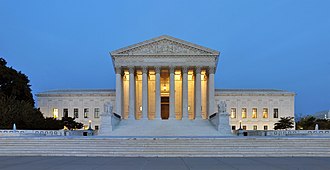
Supreme court
Highest court in a jurisdiction
In most legal jurisdictions, a supreme court, also known as a court of last resort, apex court, high (or final) court of appeal, and court of final appeal, is the highest court within the hierarchy of courts. Broadly speaking, the decisions of a supreme court are binding on all other courts in a nat...
Trade war
Economic conflict using tariffs or other trade barriers
# Trade War A **trade war** is an economic conflict typically resulting from extreme protectionism. It occurs when sovereign states implement or escalate tariffs and other trade barriers against one another as a component of their commercial policies. These actions are generally retaliatory, functi...

Tariff
Goods import or export tax
A tariff or import tax is a duty imposed by a national government, customs territory, or supranational union on imports of goods and is paid by the importer. Exceptionally, an export tax may be levied on exports of goods or raw materials and is paid by the exporter. Besides being a source of revenue...
Tariffs in the Trump administration
Topics referred to by the same term
Tariffs in the Trump administration could refer to:
Entity Intersection Graph
Connections for Supreme court:
Mentioned Entities
Deep Analysis
Why It Matters
The implementation of new tariffs creates significant uncertainty in global trade and markets, affecting businesses and international relations. The Supreme Court's ruling limits presidential authority on trade policy, shifting power back to Congress. Legal challenges from companies like FedEx could set important precedents for government trade actions.
Context & Background
- Supreme Court ruled Trump overstepped authority using International Emergency Economic Powers Act for tariffs
- New 10% tariff issued under Section 122 of Trade Act of 1974
- Tariff applies to all imported goods unless exempted for 150 days
- Trump previously suspended de minimis exemption for low-value imports
- Previous tariff revenue estimated over $160 billion
What Happens Next
The White House may attempt to raise the tariff to 15% as previously indicated. Congress will need to approve tariff extension after 150 days when the current authorization expires. More companies are likely to file lawsuits seeking refunds for tariffs deemed illegal.
Frequently Asked Questions
A 10% tariff on all goods imported to the U.S. unless specifically exempt.
The tariffs are valid for 150 days, until July 24, 2026, unless extended by Congress.
The Court ruled President Trump overstepped his authority by using the International Emergency Economic Powers Act to impose tariffs.