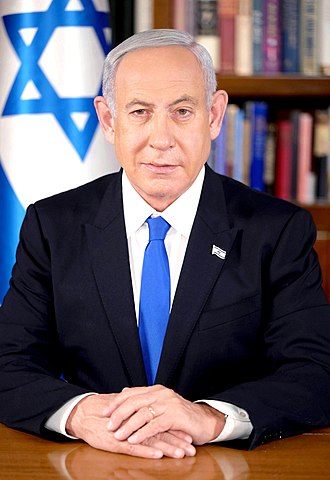
Trump tells Netanyahu to pull back on Israel's barrage on Lebanon
#Donald Trump#Benjamin Netanyahu#Israel Lebanon strikes#US Iran ceasefire#Middle East diplomacy#Hezbollah#regional conflict
📌 Key Takeaways
President Trump directed PM Netanyahu to reduce Israeli strikes in Lebanon.
The order aims to safeguard a new, fragile U.S.-Iran ceasefire agreement.
Iran has stated the ceasefire includes regional stability conditions.
Israeli military action risks triggering a wider conflict and undermining diplomacy.
📖 Full Retelling
President Donald Trump confirmed on Thursday that he instructed Israeli Prime Minister Benjamin Netanyahu to scale back Israel's ongoing military strikes in Lebanon, a directive issued to protect a fragile two-week ceasefire agreement between the United States and Iran that was reached earlier in the week. The U.S. President's intervention highlights the complex geopolitical balancing act in the Middle East, where Washington is attempting to manage relations with its key ally, Israel, while simultaneously engaging in delicate diplomacy with its regional adversary, Iran. The ceasefire, which reportedly includes provisions related to regional conflicts, is seen as a tentative step toward de-escalation following heightened tensions.
The request for restraint comes amid a significant Israeli military operation in southern Lebanon, targeting what it describes as Iranian-backed Hezbollah positions. This barrage has raised fears of a broader regional conflict that could derail the nascent U.S.-Iran truce. Iran's foreign ministry has explicitly linked the ceasefire's sustainability to a cessation of hostilities involving its proxies, placing Israel's actions directly at the center of the diplomatic equation. Trump's personal involvement underscores the high stakes, as a collapse of the agreement could swiftly reignite direct confrontations between American and Iranian forces, which have recently been on a knife's edge.
Analysts suggest this episode reveals the Trump administration's priority of securing a foreign policy win through the Iran ceasefire, even if it requires pressuring a traditionally steadfast ally. The directive to Netanyahu may strain the U.S.-Israel relationship, particularly with a government in Jerusalem that has consistently advocated for a hardline stance against Iranian influence in Lebanon and Syria. The situation remains volatile, with the success of the ceasefire heavily dependent on the compliance of multiple actors across the region and the willingness of Israel to curtail its military campaign for broader strategic American interests.
Prime Minister of Israel (1996–1999; 2009–2021; since 2022)
Benjamin "Bibi" Netanyahu (born 21 October 1949) is an Israeli politician and diplomat who has served as Prime Minister of Israel since 2022. Having previously held office from 1996 to 1999 and from 2009 to 2021, Netanyahu is Israel's longest-serving prime minister.
Born in Tel Aviv, Netanyahu was r...
President of the United States (2017–2021; since 2025)
Donald John Trump (born June 14, 1946) is an American politician, media personality, and businessman who is the 47th president of the United States. A member of the Republican Party, he served as the 45th president from 2017 to 2021.
Born into a wealthy New York City family, Trump graduated from the...
President Trump on Thursday confirmed he told Israeli Prime Minister Benjamin Netanyahu to scale back on a barrage of strikes Israel is conducting in Lebanon as that operation stands to threaten a fragile ceasefire between the U.S. and Iran. Iran has indicated that a two-week ceasefire agreement reached on Tuesday with the U.S. includes the...