
Trump to address nation on Iran war. And, SCOTUS considers birthright citizenship
#Trump #Iran withdrawal #Supreme Court #birthright citizenship #national address #constitutional arguments #foreign policy
📌 Key Takeaways
- Trump will address the nation regarding U.S. withdrawal from Iran within 2-3 weeks.
- The president will attend Supreme Court arguments on birthright citizenship today.
- The speech and court case highlight major foreign and domestic policy actions.
- Both events involve significant constitutional and international implications.
📖 Full Retelling
🏷️ Themes
Foreign Policy, Constitutional Law
📚 Related People & Topics
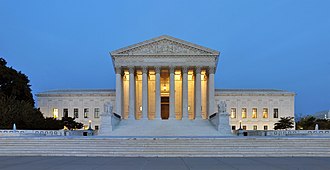
Supreme court
Highest court in a jurisdiction
In most legal jurisdictions, a supreme court, also known as a court of last resort, apex court, high (or final) court of appeal, and court of final appeal, is the highest court within the hierarchy of courts. Broadly speaking, the decisions of a supreme court are binding on all other courts in a nat...

Donald Trump
President of the United States (2017–2021; since 2025)
Donald John Trump (born June 14, 1946) is an American politician, media personality, and businessman who is the 47th president of the United States. A member of the Republican Party, he served as the 45th president from 2017 to 2021. Born into a wealthy New York City family, Trump graduated from the...
Entity Intersection Graph
Connections for Supreme court:
Mentioned Entities
Deep Analysis
Why It Matters
This news matters because it involves two major policy shifts with significant domestic and international implications. President Trump's announcement about withdrawing from Iran could reshape Middle East geopolitics and affect global oil markets, while the Supreme Court's consideration of birthright citizenship challenges a constitutional principle dating back to 1868. These developments impact U.S. foreign policy, immigration law, and constitutional interpretation, affecting millions of Americans, immigrants, and international allies. The simultaneous timing suggests a coordinated approach to controversial policy areas during an election year.
Context & Background
- The 14th Amendment's Citizenship Clause (1868) states 'All persons born or naturalized in the United States... are citizens,' establishing birthright citizenship
- The U.S. has maintained military presence in the Middle East since 9/11, with recent tensions with Iran escalating after the 2018 withdrawal from the Iran nuclear deal
- Previous Supreme Court cases like United States v. Wong Kim Ark (1898) affirmed birthright citizenship for children of legal immigrants
- The Trump administration has pursued 'America First' foreign policy, withdrawing from multiple international agreements including the Paris Accord and Trans-Pacific Partnership
- Birthright citizenship exists in approximately 30 countries worldwide, including Canada and Mexico, but most developed nations have more restrictive citizenship policies
What Happens Next
The Supreme Court will hear oral arguments on birthright citizenship this week, with a decision expected by June 2024. Military commanders will begin planning the Iran withdrawal timeline over the next 2-3 weeks. Congress may hold hearings on both issues, particularly regarding war powers authorization for any continued Middle East operations. Legal challenges are likely regardless of the Supreme Court's ruling, potentially reaching the Court again on related immigration cases.
Frequently Asked Questions
Children born in the U.S. to undocumented immigrants or certain visa holders would no longer automatically receive citizenship, potentially creating a class of stateless individuals. This would require new legislation to determine citizenship pathways and could trigger immediate legal challenges regarding the interpretation of the 14th Amendment.
The administration cites reduced threats and a desire to avoid 'endless wars' as primary reasons, though critics argue it could destabilize the region. The timing may relate to election-year politics and ongoing negotiations with Iran about nuclear capabilities, though details remain unclear.
Most constitutional scholars believe changing birthright citizenship would require a constitutional amendment, not just executive action. The Supreme Court case will determine whether certain interpretations of the 14th Amendment allow for exceptions that could be implemented through legislation or executive order.
Withdrawal could create power vacuums that Iran or other regional actors might fill, potentially increasing instability. It would also affect U.S. counterterrorism operations and require repositioning of troops and equipment, with logistical challenges over the 2-3 week timeline.
Most legal experts believe any change would not be retroactive, meaning current citizens would retain their status. However, future births would be affected, and there could be challenges to documentation processes and state-level enforcement variations.
Source Scoring
Detailed Metrics
Key Claims Verified
This is a direct statement from the article.
The time frame is mentioned but needs confirmation from official sources.
The Supreme Court's involvement is mentioned in the article.