
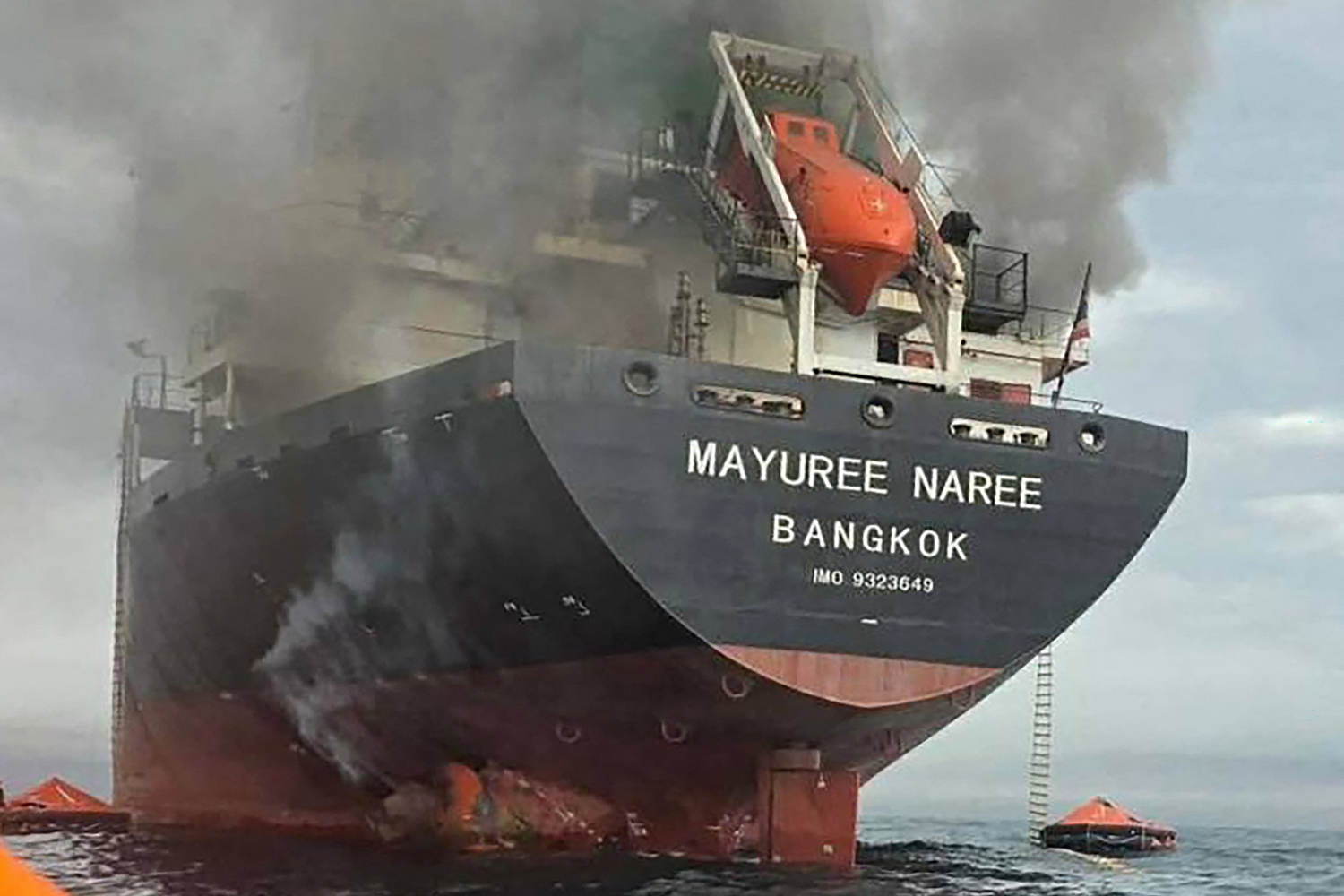
Trump wants other countries to help reopen the Strait of Hormuz. That won't be easy.
#Trump #Strait of Hormuz #reopen #international cooperation #oil transit #maritime security #geopolitics
📌 Key Takeaways
- President Trump seeks international assistance to reopen the Strait of Hormuz.
- The effort faces significant challenges and complexities.
- The strait is a critical global oil transit route.
- Achieving cooperation from other nations may prove difficult.
📖 Full Retelling
🏷️ Themes
International Relations, Maritime Security
📚 Related People & Topics

Strait of Hormuz
Strait between the Gulf of Oman and the Persian Gulf
The Strait of Hormuz ( Persian: تنگهٔ هُرمُز Tangeh-ye Hormoz , Arabic: مَضيق هُرمُز Maḍīq Hurmuz) is a strait between the Persian Gulf and the Gulf of Oman. It provides the only sea passage from the Persian Gulf to the open ocean and is one of the world's most strategically important choke points. ...

Donald Trump
President of the United States (2017–2021; since 2025)
Donald John Trump (born June 14, 1946) is an American politician, media personality, and businessman who is the 47th president of the United States. A member of the Republican Party, he served as the 45th president from 2017 to 2021. Born into a wealthy New York City family, Trump graduated from the...
Entity Intersection Graph
Connections for Strait of Hormuz:
Mentioned Entities
Deep Analysis
Why It Matters
This news matters because the Strait of Hormuz is a critical global chokepoint for oil shipments, with about 20% of the world's oil passing through it. Any disruption threatens global energy security, potentially spiking oil prices and affecting economies worldwide. It also highlights geopolitical tensions in the Middle East, involving the U.S., Iran, and regional allies, which could escalate into broader conflict.
Context & Background
- The Strait of Hormuz is a narrow waterway between Iran and Oman, essential for transporting oil from the Persian Gulf to global markets.
- Tensions have risen due to U.S.-Iran conflicts, including the U.S. withdrawal from the Iran nuclear deal in 2018 and subsequent sanctions.
- Iran has previously threatened to close the strait in response to sanctions, and there have been incidents of tanker seizures and attacks in the area.
- The U.S. has historically led naval patrols in the region, such as through Combined Task Force 152, to ensure freedom of navigation.
- Regional allies like Saudi Arabia and the UAE depend heavily on the strait for oil exports, making its security a top priority.
What Happens Next
In the coming weeks, the U.S. may seek to form a multinational naval coalition, similar to past initiatives, but could face challenges in securing commitments from allies wary of escalation with Iran. Diplomatic efforts might intensify, with potential talks involving European powers or the UN to de-escalate tensions. If disruptions persist, oil markets could see increased volatility, possibly leading to emergency releases from strategic petroleum reserves.
Frequently Asked Questions
The Strait of Hormuz is vital because it is a major maritime chokepoint through which approximately 20% of the world's oil supply flows, linking oil-producing countries in the Persian Gulf to global markets. Its closure would severely disrupt energy supplies, leading to economic instability worldwide.
Challenges include geopolitical resistance from Iran, which views control of the strait as a strategic lever, and reluctance from some U.S. allies to join a coalition due to fears of escalating conflict. Logistical and security risks, such as mine threats or naval confrontations, also complicate efforts.
Any significant disruption in the Strait of Hormuz could cause oil prices to spike due to supply concerns, impacting consumers and industries globally. In response, countries might tap into strategic reserves or seek alternative routes, but volatility is likely until stability is restored.
Countries like the UK, France, and regional allies such as Saudi Arabia and the UAE may be called upon to contribute naval assets or diplomatic support. However, their involvement depends on balancing economic interests with avoiding direct confrontation with Iran.
The strait has never been fully closed, but there have been periods of heightened tension, such as during the Iran-Iraq War in the 1980s when attacks on shipping occurred. More recently, Iran has conducted military exercises and seized tankers to assert control, though full closure remains a threat rather than a reality.