

Two Supreme Court Justices Debate Handling of Trump Emergency Cases
#Supreme Court #emergency cases #shadow docket #Clarence Thomas #Sonia Sotomayor #Donald Trump #judicial restraint #constitutional law
📌 Key Takeaways
- Justices Clarence Thomas and Sonia Sotomayor publicly disagreed on the Court's approach to emergency cases involving former President Trump.
- The debate centers on the 'shadow docket' process, where urgent matters are decided without full briefing or oral arguments.
- Thomas criticized the Court for intervening too frequently in politically sensitive emergency cases, arguing it undermines judicial restraint.
- Sotomayor defended the Court's role in addressing urgent constitutional questions, emphasizing the need to prevent irreparable harm.
- The disagreement highlights ongoing tensions within the Court over procedural norms and its role in high-stakes political disputes.
📖 Full Retelling
🏷️ Themes
Judicial Process, Political Controversy
📚 Related People & Topics
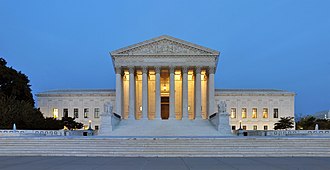
Supreme court
Highest court in a jurisdiction
In most legal jurisdictions, a supreme court, also known as a court of last resort, apex court, high (or final) court of appeal, and court of final appeal, is the highest court within the hierarchy of courts. Broadly speaking, the decisions of a supreme court are binding on all other courts in a nat...

Sonia Sotomayor
US Supreme Court justice since 2009
Sonia Maria Sotomayor ( , Spanish: [ˈsonja sotomaˈʝoɾ]; born June 25, 1954) is an American lawyer and jurist who serves as an associate justice of the Supreme Court of the United States. She was nominated by President Barack Obama on May 26, 2009, and has served since August 8, 2009. She is the firs...

Clarence Thomas
US Supreme Court justice since 1991
Clarence Thomas (born June 23, 1948) is an American lawyer and jurist who has served since 1991 as an associate justice of the Supreme Court of the United States. President George H. W. Bush nominated him to succeed Thurgood Marshall. After Marshall, Thomas is the second African American to serve on...

Donald Trump
President of the United States (2017–2021; since 2025)
Donald John Trump (born June 14, 1946) is an American politician, media personality, and businessman who is the 47th president of the United States. A member of the Republican Party, he served as the 45th president from 2017 to 2021. Born into a wealthy New York City family, Trump graduated from the...
Entity Intersection Graph
Connections for Supreme court:
Mentioned Entities
Deep Analysis
Why It Matters
This debate between Supreme Court justices reveals internal tensions about how the nation's highest court handles emergency requests involving former President Trump, which could affect the timing and outcome of critical cases. The discussion matters because emergency rulings often bypass normal judicial processes and can have immediate political consequences. It affects Trump's legal strategy, potential voters in upcoming elections, and public confidence in the Court's perceived impartiality regarding politically charged cases.
Context & Background
- The Supreme Court's 'shadow docket' refers to emergency orders and decisions made without full briefing or oral arguments, which have become increasingly controversial.
- The Court has recently handled several Trump-related emergency requests, including cases about presidential immunity, election interference, and document disputes.
- Justices have publicly disagreed before about emergency procedures, notably in cases involving abortion restrictions and COVID-19 policies during the pandemic.
What Happens Next
The Court will likely face more emergency requests from Trump as his criminal trials progress, forcing continued internal debate about procedures. Specific upcoming dates include potential rulings on immunity claims before the 2024 election. The justices may issue more public statements or dissents explaining their approaches to these high-profile emergency matters.
Frequently Asked Questions
Emergency cases, sometimes called the 'shadow docket,' involve urgent requests for the Court to intervene before lower courts complete their full review. These decisions often come without detailed explanations and can have significant immediate impacts.
While the article doesn't specify names, recent public disagreements have involved Justices like Sonia Sotomayor, Elena Kagan, and Samuel Alito. Conservative and liberal justices have differed on how quickly to intervene in politically sensitive emergency matters.
How the Court handles emergency requests can determine whether Trump's trials proceed before the 2024 election or get delayed. Quick rulings could resolve key legal questions about presidential immunity, while delays might push trials past the election date.
Critics argue the Court uses emergency procedures too frequently for significant decisions, avoiding normal transparency and deliberation. Supporters say these procedures are necessary for truly urgent matters requiring immediate resolution.