
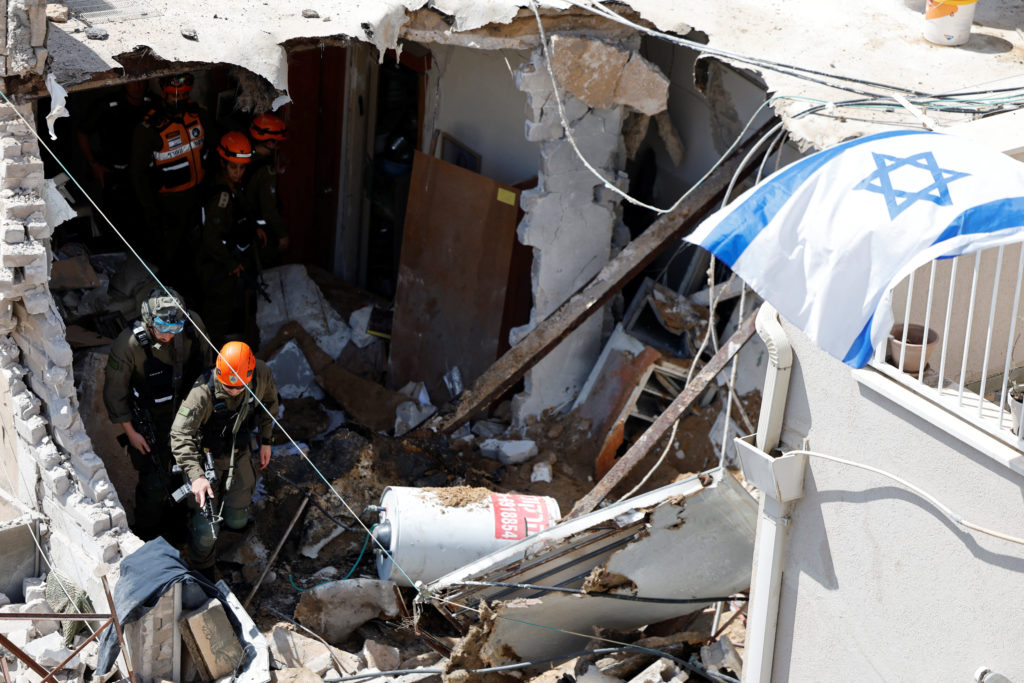
U.S. and Iran threaten to expand the war to the region's power plants
#U.S. #Iran #war #power plants #Middle East #infrastructure #escalation
📌 Key Takeaways
- U.S. and Iran are threatening to target power plants in the region, escalating conflict.
- The expansion of war could disrupt critical energy infrastructure across the Middle East.
- This move signals a potential shift from direct military engagements to strategic infrastructure attacks.
- Regional stability is at risk as key facilities become potential military targets.
📖 Full Retelling
🏷️ Themes
Geopolitical Conflict, Energy Security
📚 Related People & Topics

Iran
Country in West Asia
# Iran **Iran**, officially the **Islamic Republic of Iran** and historically known as **Persia**, is a sovereign country situated in West Asia. It is a major regional power, ranking as the 17th-largest country in the world by both land area and population. Combining a rich historical legacy with a...

Middle East
Transcontinental geopolitical region
The Middle East is a geopolitical region encompassing the Arabian Peninsula, Egypt, Iran, Iraq, the Levant, and Turkey. The term came into widespread usage by Western European nations in the early 20th century as a replacement of the term Near East (both were in contrast to the Far East). The term ...
Entity Intersection Graph
Connections for Iran:
Mentioned Entities
Deep Analysis
Why It Matters
This development matters because it signals a dangerous escalation in regional tensions that could disrupt energy infrastructure critical to millions of civilians across the Middle East. Targeting power plants would represent a shift from military to civilian infrastructure, potentially violating international humanitarian law and causing widespread humanitarian suffering. The threats affect not only U.S. and Iranian interests but also neighboring countries' stability, global energy markets, and international diplomatic efforts to contain regional conflicts.
Context & Background
- The U.S. and Iran have been engaged in a long-standing proxy conflict across the Middle East, particularly in Syria, Iraq, Yemen, and through Iranian support for groups like Hezbollah.
- Iran has previously threatened to target critical infrastructure in response to perceived U.S. aggression, including after the 2020 assassination of Qasem Soleimani.
- The region's power grids are often interconnected, meaning attacks on plants in one country could cause cascading blackouts across borders.
- Previous conflicts in the region have seen attacks on energy infrastructure, such as Saudi oil facilities hit by drones in 2019, which Iran-backed Houthis claimed responsibility for.
- The U.S. maintains military bases across the Middle East that rely on local power infrastructure, making them potentially vulnerable to such threats.
What Happens Next
Diplomatic channels will likely be activated to de-escalate, possibly through intermediaries like Oman or Qatar. If threats materialize, we may see targeted strikes on power infrastructure followed by retaliatory measures, potentially drawing neighboring countries into the conflict. The UN Security Council may convene emergency sessions, and there could be increased naval patrols near strategic energy facilities in the Persian Gulf.
Frequently Asked Questions
Power plants are critical infrastructure that support military operations, civilian life, and economic activity. Disabling them can cripple a nation's defense capabilities, create humanitarian crises, and demonstrate an adversary's ability to inflict widespread damage without direct military confrontation.
Attacks on Middle Eastern power infrastructure would likely cause immediate spikes in global oil prices due to fears of supply disruptions. The region accounts for nearly one-third of global oil production, and instability often triggers market volatility and increased risk premiums.
Targeting civilian infrastructure like power plants could violate the Geneva Conventions' principles of distinction and proportionality, which require combatants to distinguish between military and civilian objects and avoid excessive civilian harm. Such attacks might constitute war crimes if intentionally directed at civilian populations.
Gulf Cooperation Council states like Saudi Arabia and UAE would probably enhance their air defense systems and seek U.S. security guarantees. Israel might view this as an opportunity to counter Iranian influence, while Turkey could position itself as a mediator given its relations with both Washington and Tehran.
While both sides have historically avoided direct confrontation, attacks on critical infrastructure increase miscalculation risks. A major strike could trigger retaliatory cycles that escalate beyond proxy warfare into direct military engagement, particularly if U.S. casualties occur or strategic assets are damaged.