
SP
BravenNow
US and Israel Launch Strikes Against Iran
| USA | technology | ✓ Verified - wired.com

US and Israel Launch Strikes Against Iran

#Iran #Military Strikes #Donald Trump #Benjamin Netanyahu #Middle East #Nuclear Program #Diplomatic Negotiations #Tehran

📌 Key Takeaways

  • US and Israel launched coordinated military strikes against Iran on February 28, 2026
  • President Trump declared the operation a 'major combat operation' aimed at overthrowing the Iranian government
  • The strikes follow failed diplomatic negotiations and weeks of military buildup in the region
  • Tensions escalated due to Iran's crackdown on protests and nuclear program negotiations
  • Previous military operation 'Midnight Hammer' last year failed to eliminate Iran's nuclear capabilities

📖 Full Retelling

US President Donald Trump and Israeli forces launched military strikes against Iran in the early hours of Saturday morning ET, February 28, 2026, with Trump declaring a 'major combat operation' aimed at overthrowing the Iranian government and eliminating what he called imminent threats to the American people. Explosions were recorded in the capital city Tehran with smoke rising above the city shortly after the attacks began, with both nations quickly claiming responsibility for the coordinated action. In an eight-minute video posted to Truth Social and X, Trump explained that the operation's objective was to 'defend the American people by eliminating imminent threats from the Iranian regime,' while Israeli Prime Minister Benjamin Netanyahu separately confirmed the military operation and stated that Israel aimed to 'remove the existential threat posed' by Iran. The strikes follow weeks of US military buildup in the region, including the movement of fighter jets, cargo planes, and the USS Abraham Lincoln aircraft carrier into position, and come after diplomatic negotiations in Geneva appeared to show progress before abruptly collapsing. The military action represents a significant escalation in tensions that have been building since January, when Iranian forces killed thousands of anti-government protesters during a widespread internet blackout, prompting Trump to warn that 'time is running out' and that any US military strike could be 'far worse' than last year's 'Midnight Hammer' operation against Iranian nuclear facilities.

🏷️ Themes

Middle East Conflict, Diplomatic Relations, Military Action, Nuclear Proliferation

📚 Related People & Topics

Iran

Iran

Country in West Asia

# Iran **Iran**, officially the **Islamic Republic of Iran** and historically known as **Persia**, is a sovereign country situated in West Asia. It is a major regional power, ranking as the 17th-largest country in the world by both land area and population. Combining a rich historical legacy with a...

View Profile → Wikipedia ↗
Middle East

Middle East

Transcontinental geopolitical region

The Middle East is a geopolitical region encompassing the Arabian Peninsula, Egypt, Iran, Iraq, the Levant, and Turkey. The term came into widespread usage by Western European nations in the early 20th century as a replacement of the term Near East (both were in contrast to the Far East). The term ...
View Profile → Wikipedia ↗
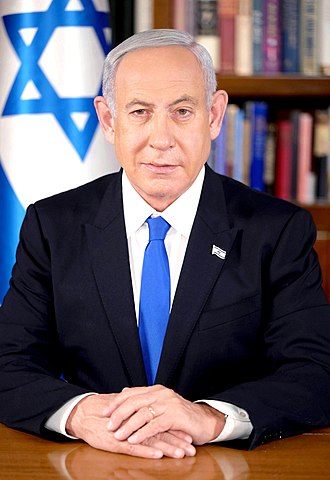
Benjamin Netanyahu

Benjamin Netanyahu

Prime Minister of Israel (1996–1999; 2009–2021; since 2022)

Benjamin "Bibi" Netanyahu (born 21 October 1949) is an Israeli politician and diplomat who has served as Prime Minister of Israel since 2022. Having previously held office from 1996 to 1999 and from 2009 to 2021, Netanyahu is Israel's longest-serving prime minister. Born in Tel Aviv, Netanyahu was r...

View Profile → Wikipedia ↗
Donald Trump

Donald Trump

President of the United States (2017–2021; since 2025)

Donald John Trump (born June 14, 1946) is an American politician, media personality, and businessman who is the 47th president of the United States. A member of the Republican Party, he served as the 45th president from 2017 to 2021. Born into a wealthy New York City family, Trump graduated from the...

View Profile → Wikipedia ↗

Entity Intersection Graph

Connections for Iran:

👤 Donald Trump 30 shared
🌐 Middle East 13 shared
🏢 Diplomacy 5 shared
👤 State of the Union 5 shared
🌐 United States 4 shared
View full profile

Mentioned Entities

Iran

Iran

Country in West Asia

Middle East

Middle East

Transcontinental geopolitical region

Benjamin Netanyahu

Benjamin Netanyahu

Prime Minister of Israel (1996–1999; 2009–2021; since 2022)

Donald Trump

Donald Trump

President of the United States (2017–2021; since 2025)

Deep Analysis

Why It Matters

The US and Israel's joint strikes against Iran represent a significant escalation in the ongoing regional conflict. This action carries the risk of wider instability and could dramatically alter the dynamics of the nuclear program negotiations. It also signals a hardening stance by the US and Israel against Iran's perceived threats.

Context & Background

  • Rising tensions between the US and Iran since January due to protests and nuclear negotiations.
  • Recent diplomatic efforts in Geneva aimed at reviving the Iran nuclear deal, showing limited progress.
  • Weeks of US military build-up in the Middle East preceding the strikes.

What Happens Next

The immediate future will likely involve monitoring Iran's response and assessing the extent of the damage inflicted by the strikes. Diplomatic efforts to de-escalate the situation will be crucial, but their success is uncertain. The international community will be closely watching for further escalation.

Frequently Asked Questions

What were the stated objectives of the strikes?

The US and Israel stated their objectives were to defend the American people by eliminating imminent threats from the Iranian regime and to remove the existential threat posed by Iran, respectively.

What was the diplomatic situation leading up to the strikes?

Recent diplomatic negotiations in Geneva had yielded only lukewarm results, with negotiators reporting limited progress despite some optimism expressed by Oman's foreign minister. US officials also advised embassy staff to leave Israel.

What is the significance of the USS Abraham Lincoln's presence?

The deployment of the USS Abraham Lincoln aircraft carrier, one of the world's largest warships, signifies a substantial military escalation and underscores the seriousness with which the US views the threat from Iran.

}
Original Source
Matt Burgess Security Feb 28, 2026 4:42 AM US and Israel Launch Strikes Against Iran US president Donald Trump said a “major combat operation” against Iran had begun as he called for the country’s government to be overthrown. Photograph: ATTA KENARE/Getty Images Save this story Save this story United States and Israeli forces have launched military strikes against Iran, with President Donald Trump calling the attacks a “major combat operation” against the Iranian regime. Explosions within Iran were first recorded in the early hours of Saturday morning ET, with smoke rising above the capital city Tehran. Shortly after the first reports of the attacks emerged, both the US and Israel claimed responsibility for the strikes. In an eight-minute video posted to Truth Social and X, Trump said the operation’s objective was to “defend the American people by eliminating imminent threats from the Iranian regime.” Israeli Prime Minister Benjamin Netanyahu issued a statement confirming the military operation and said Israel was aiming to “remove the existential threat posed” by Iran. Shortly after confirming launching the attacks, the Israel Defense Forces also said it had “identified” Iranian missiles being launched towards Israel. The US and Iran have participated in three recent rounds of mediated diplomatic negotiations billed as an effort to forge an agreement on Iran's nuclear program and avert armed conflict. Reports out of meetings in Geneva on Thursday seemed lukewarm, with negotiators sharing vaguely positive reactions with journalists and on social media. For example, Oman’s foreign minister Badr Albusaidi wrote in a post on X that there had been "significant progress" and that technical teams would meet for further discussion next week in Vienna. In a follow up on Friday, he posted that he had met with US Vice President JD Vance and that he expected "further and decisive progress in the coming days." He added, "Peace is within our reach." However, also on Friday, US o...
Read full article at source

Source

wired.com

More from USA

News from Other Countries

🇬🇧 United Kingdom

🇺🇦 Ukraine