
US Supreme Court to hear constitutional test of birthright citizenship
📖 Full Retelling
📚 Related People & Topics
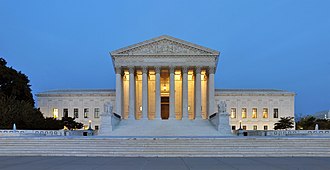
Supreme court
Highest court in a jurisdiction
In most legal jurisdictions, a supreme court, also known as a court of last resort, apex court, high (or final) court of appeal, and court of final appeal, is the highest court within the hierarchy of courts. Broadly speaking, the decisions of a supreme court are binding on all other courts in a nat...
Entity Intersection Graph
Connections for Supreme court:
Mentioned Entities
Deep Analysis
Why It Matters
This case challenges the foundational principle of birthright citizenship established by the 14th Amendment, which could reshape American immigration policy and affect millions of children born to undocumented immigrants. The outcome could redefine who qualifies as a citizen from birth, potentially creating a new class of stateless individuals within the United States. This decision would have profound implications for immigration enforcement, family unity, and the legal status of future generations born on American soil.
Context & Background
- The 14th Amendment's Citizenship Clause, ratified in 1868, states 'All persons born or naturalized in the United States, and subject to the jurisdiction thereof, are citizens of the United States.'
- Birthright citizenship has been interpreted for over 150 years to grant automatic citizenship to nearly all children born on U.S. soil, regardless of parents' immigration status.
- Previous challenges to birthright citizenship have been rejected by lower courts, but this case represents the first serious constitutional test to reach the Supreme Court in decades.
- The case specifically examines whether children born to parents who entered the country illegally are 'subject to the jurisdiction' of the United States as required by the 14th Amendment.
What Happens Next
The Supreme Court will hear oral arguments in the coming months, with a decision expected by June 2025. If the Court rules against birthright citizenship, Congress would likely need to pass legislation establishing new citizenship criteria. State governments may begin implementing different documentation requirements for birth certificates depending on the ruling. Legal challenges would immediately follow any significant change to current interpretation.
Frequently Asked Questions
The case challenges whether children born to undocumented immigrants automatically qualify for citizenship under the 14th Amendment's 'subject to the jurisdiction' requirement. Plaintiffs argue that unauthorized immigrants owe allegiance to other nations and therefore their children aren't fully under U.S. jurisdiction.
Approximately 300,000-400,000 children are born to undocumented immigrants in the U.S. annually. A ruling against birthright citizenship could affect millions of current citizens and create uncertainty for future generations born to non-citizen parents.
The ruling would likely apply prospectively, meaning current citizens wouldn't lose their status. However, it would create a two-tier system where future children born under similar circumstances wouldn't receive automatic citizenship, potentially leading to complex legal challenges.
Most developed nations, including European countries, don't have unconditional birthright citizenship. The United States currently joins Canada and a few Latin American nations in maintaining this policy, making the U.S. somewhat unique among developed economies.
Legal scholars disagree on this point. Some argue Congress could define 'subject to the jurisdiction' through legislation, while others maintain only a constitutional amendment could change the 14th Amendment's citizenship guarantee.