

US Supreme Court to hear Exxon bid for compensation from Cuba
📌 Key Takeaways
- {"type":"skipped","reason":"older_than_3_days"}
📚 Related People & Topics
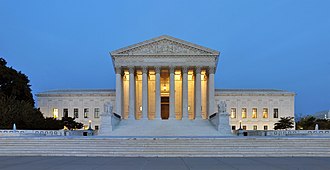
Supreme court
Highest court in a jurisdiction
In most legal jurisdictions, a supreme court, also known as a court of last resort, apex court, high (or final) court of appeal, and court of final appeal, is the highest court within the hierarchy of courts. Broadly speaking, the decisions of a supreme court are binding on all other courts in a nat...
Entity Intersection Graph
Connections for Supreme court:
Mentioned Entities
Deep Analysis
Why It Matters
The Supreme Court decision will determine whether U.S. companies can recover damages for assets seized by Cuba under the Helms‑Burton Act, affecting future U.S. foreign investment and trade policy. It also signals how aggressively the U.S. will enforce its sanctions regime against Cuba.
Context & Background
- The Helms‑Burton Act allows U.S. lawsuits against entities trafficking in Cuban confiscated property.
- Exxon seeks over $1 billion in compensation for oil and gas assets seized in 1960.
- The case is backed by the Trump administration, which has intensified pressure on Cuba.
What Happens Next
If the Court upholds the claims, it could open the door for more U.S. companies to sue Cuban state entities, potentially increasing diplomatic tensions. A ruling against the claims would reinforce Cuba’s immunity and limit future litigation.
Frequently Asked Questions
It is a 1996 U.S. law that allows American companies to sue entities that traffic in property confiscated by Cuba after the 1959 revolution.
Exxon claims its oil and gas assets were seized by Cuba in 1960 and seeks damages that now exceed the original $70 million loss due to interest and enhanced damages.
The administration has declared Cuba an extraordinary threat, lifted a previous suspension of the Helms‑Burton Act, and supports Exxon’s lawsuit.
A ruling that upholds the lawsuit could hold cruise operators liable for using Cuban docks, while a contrary ruling would protect them from liability.