
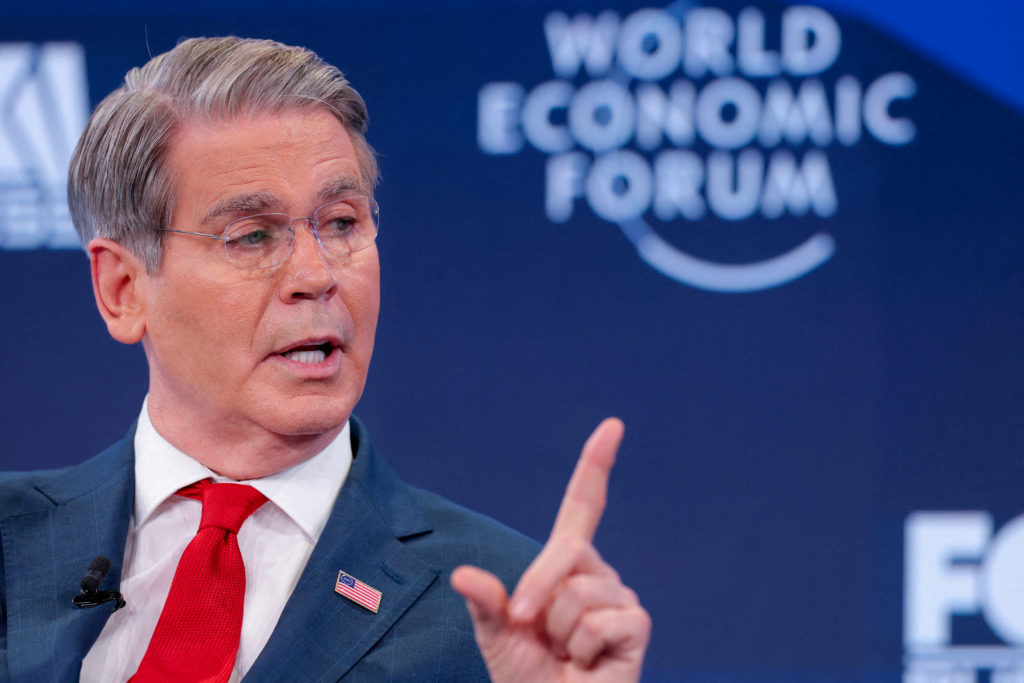
U.S. Treasury Secretary will meet China's vice premier in Paris ahead of Trump's visit to Beijing
#U.S. Treasury Secretary #China vice premier #Paris meeting #Trump Beijing visit #U.S.-China relations
📌 Key Takeaways
- U.S. Treasury Secretary to meet China's vice premier in Paris
- Meeting scheduled ahead of President Trump's visit to Beijing
- High-level diplomatic engagement between U.S. and China
- Focus likely on economic and trade relations
📖 Full Retelling
🏷️ Themes
Diplomacy, Trade
📚 Related People & Topics

United States Secretary of the Treasury
Head of the United States Department of the Treasury
The United States secretary of the treasury is the head of the United States Department of the Treasury, and is the chief financial officer of the federal government of the United States. The secretary of the treasury serves as the principal advisor to the president of the United States on all matte...
Entity Intersection Graph
Connections for United States Secretary of the Treasury:
Mentioned Entities
Deep Analysis
Why It Matters
This meeting is significant because it represents high-level economic diplomacy between the world's two largest economies amid ongoing trade tensions. It affects global markets, multinational corporations, and consumers worldwide who are impacted by U.S.-China trade policies. The timing ahead of Trump's Beijing visit suggests both sides are attempting to lay groundwork for potential agreements or to manage expectations for the presidential summit.
Context & Background
- The U.S. and China have been engaged in trade disputes since early 2018, with both countries imposing tariffs on billions of dollars worth of each other's goods.
- Previous high-level meetings between U.S. and Chinese officials have often preceded major trade announcements or temporary truces in the ongoing economic conflict.
- Paris serves as a neutral location for such meetings, having hosted previous international economic discussions including G20 finance minister gatherings.
- The U.S. Treasury Secretary plays a key role in international economic policy and currency matters, which are central to U.S.-China economic relations.
What Happens Next
Following the Paris meeting, attention will shift to Trump's visit to Beijing where substantive trade discussions are expected. Market observers will watch for announcements regarding tariff reductions, currency agreements, or intellectual property protections. The outcomes could influence Federal Reserve decisions on interest rates and global economic forecasts for 2024.
Frequently Asked Questions
Paris provides a neutral location that avoids the political symbolism of meeting in either capital. It also coincides with other international economic events in Europe, allowing for efficient scheduling of this high-level discussion.
Key topics will include ongoing trade disputes, tariff reductions, currency exchange rates, intellectual property protections, and market access for U.S. companies in China. Both sides may also discuss broader economic cooperation frameworks.
Positive signals from the meeting could boost global stock markets and reduce volatility, while negative outcomes might trigger market uncertainty. Currency markets particularly would react to any hints about yuan-dollar exchange rate policies.
This allows economic officials to work out technical details and identify potential agreements before the presidential meeting, increasing the chances of substantive outcomes. It also helps manage expectations and prevent diplomatic surprises during the high-profile visit.
Economic discussions represent one of the few areas where both countries maintain regular high-level dialogue despite tensions over technology, security, and human rights. Successful economic talks can sometimes create positive momentum in other aspects of the relationship.