

Voting Rights Groups Raise Alarms About Case Before the Supreme Court
#voting rights #Supreme Court #legal case #activism #elections
📌 Key Takeaways
- Voting rights groups express concern over a Supreme Court case
- The case could impact future voting rights protections
- Groups are mobilizing to raise public awareness
- Legal experts debate potential outcomes and implications
📖 Full Retelling
🏷️ Themes
Voting Rights, Supreme Court
📚 Related People & Topics
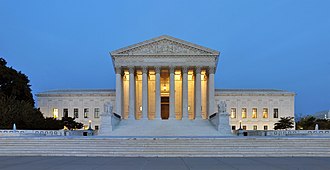
Supreme court
Highest court in a jurisdiction
In most legal jurisdictions, a supreme court, also known as a court of last resort, apex court, high (or final) court of appeal, and court of final appeal, is the highest court within the hierarchy of courts. Broadly speaking, the decisions of a supreme court are binding on all other courts in a nat...
Entity Intersection Graph
Connections for Supreme court:
Mentioned Entities
Deep Analysis
Why It Matters
This case could fundamentally reshape how federal elections are conducted in the United States by potentially removing judicial oversight of state legislatures' election rules. It affects every American voter by threatening to enable partisan gerrymandering and restrictive voting laws without federal court intervention. The outcome could undermine decades of voting rights protections and create a patchwork of election rules across states, potentially impacting election outcomes and democratic representation nationwide.
Context & Background
- The case involves the 'independent state legislature theory' which argues state legislatures have exclusive authority over federal elections without oversight from state courts or governors
- This theory gained attention after the 2020 election when some legislators cited it to justify overturning election results
- The Voting Rights Act of 1965 established federal protections against discriminatory voting practices that this case could undermine
- Previous Supreme Court decisions like Shelby County v. Holder (2013) weakened parts of the Voting Rights Act, making this case part of a broader trend
- State courts have historically played a crucial role in checking legislative overreach in election administration
What Happens Next
The Supreme Court will hear oral arguments in the coming months with a decision expected by June 2023. Regardless of the outcome, the ruling will likely trigger immediate legislative responses in multiple states. Voting rights organizations are preparing for either outcome with potential new litigation strategies or state constitutional amendment campaigns. The decision may also influence how states approach the 2024 presidential election procedures.
Frequently Asked Questions
It's a legal theory claiming that state legislatures have nearly unlimited power to set rules for federal elections without interference from state courts, governors, or state constitutions. Proponents argue the U.S. Constitution's Elections Clause gives this exclusive authority, while opponents say it would create unchecked legislative power over voting.
If the Supreme Court adopts this theory, state legislatures could implement voting restrictions, gerrymandered maps, or even potentially reject election results without judicial review. This could lead to more partisan election administration and make it harder to challenge voting rules that disproportionately affect minority communities.
States with divided governments (where different parties control legislature and governorship) would see the biggest immediate impact, as legislatures could bypass governors' vetoes on election bills. States with strong voting protections in their constitutions would also be affected since those protections could become unenforceable for federal elections.
Organizations are filing amicus briefs, organizing public education campaigns, and preparing litigation strategies for either outcome. They're also working with state legislators to propose constitutional amendments and backup legislation to protect voting rights regardless of the Supreme Court's decision.
The Court has previously rejected extreme versions of this theory but has never fully resolved the question. In Bush v. Gore (2000), three justices endorsed a version of the theory in a concurring opinion, but it wasn't the majority position. The current case represents the first time the Court will directly rule on its validity.
Some legislators cited this theory when attempting to overturn 2020 election results or appoint alternative electors. While those efforts failed, this case could provide legal justification for similar actions in future elections by removing judicial checks on legislative power over election outcomes.