
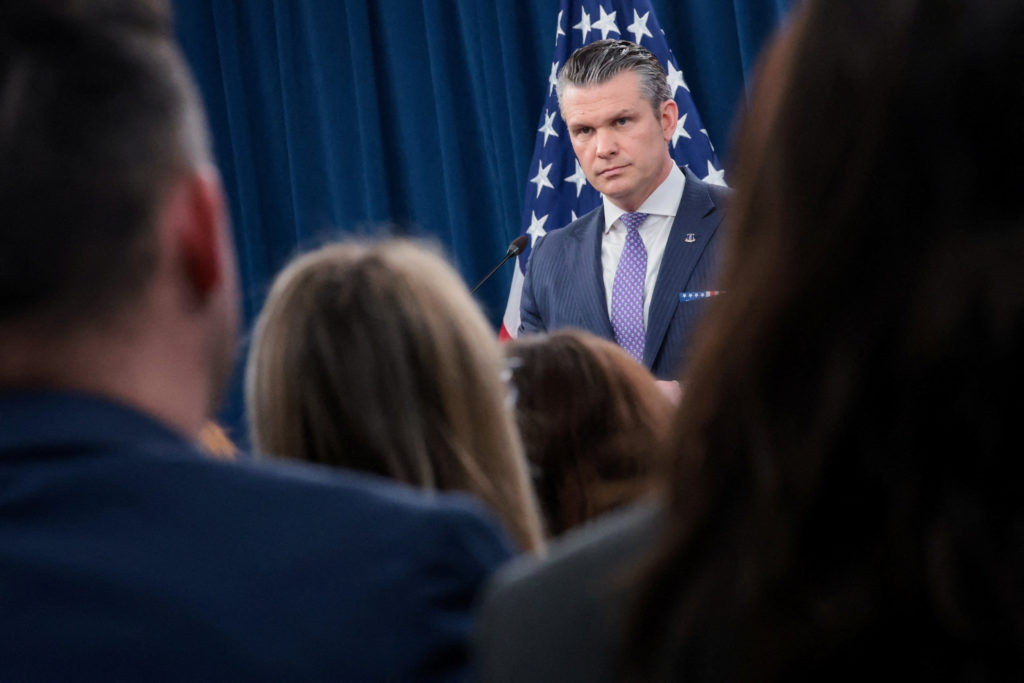
WATCH: Hegseth won't say if U.S. will send ground troops into Iran
📚 Related People & Topics

Pete Hegseth
American government official and television personality (born 1980)
Peter Brian Hegseth (born June 6, 1980) is an American government official and former television personality who has served as the 29th United States secretary of defense since 2025. Hegseth studied politics at Princeton University, where he was the publisher of The Princeton Tory, a conservative st...

Iran
Country in West Asia
# Iran **Iran**, officially the **Islamic Republic of Iran** and historically known as **Persia**, is a sovereign country situated in West Asia. It is a major regional power, ranking as the 17th-largest country in the world by both land area and population. Combining a rich historical legacy with a...
Entity Intersection Graph
Connections for Pete Hegseth:
Mentioned Entities
Deep Analysis
Why It Matters
This news matters because it highlights ongoing ambiguity in U.S. military strategy toward Iran, which affects national security planning, regional stability in the Middle East, and diplomatic relations with allies and adversaries. The refusal to clarify troop deployment plans creates uncertainty for military families, defense contractors, and international partners who must prepare for potential conflict scenarios. It also impacts oil markets and global security as tensions with Iran have historically influenced energy prices and geopolitical alignments.
Context & Background
- The U.S. and Iran have had hostile relations since the 1979 Iranian Revolution and subsequent hostage crisis at the U.S. embassy in Tehran.
- Recent tensions escalated after the U.S. withdrawal from the Iran nuclear deal (JCPOA) in 2018 and the 2020 U.S. drone strike that killed Iranian General Qasem Soleimani.
- Iran has continued uranium enrichment and supported proxy groups in the region, while the U.S. maintains sanctions and military presence in the Middle East.
What Happens Next
Congressional hearings may be scheduled to press administration officials for clearer Iran policy. The Pentagon will likely continue contingency planning while monitoring Iran's nuclear activities and regional proxy actions. Diplomatic efforts through intermediaries or renewed nuclear talks could emerge, especially if regional tensions escalate further.
Frequently Asked Questions
Ground troops might be considered if diplomatic efforts fail to curb Iran's nuclear program or if Iran attacks U.S. interests or allies. Such deployment would likely aim to destroy nuclear facilities or counter Iranian military aggression, though it would risk major regional war.
Risks include high casualties due to Iran's large military and rugged terrain, potential for broader Middle East conflict involving proxies, and global economic disruption from oil supply shocks. It could also strain U.S. military resources and alliances.
It could divert resources from other priorities like China or Ukraine, requiring adjustments in global force posture. Existing Middle East deployments in Syria, Iraq, and naval forces might be reinforced as deterrents or precursors to any Iran action.