
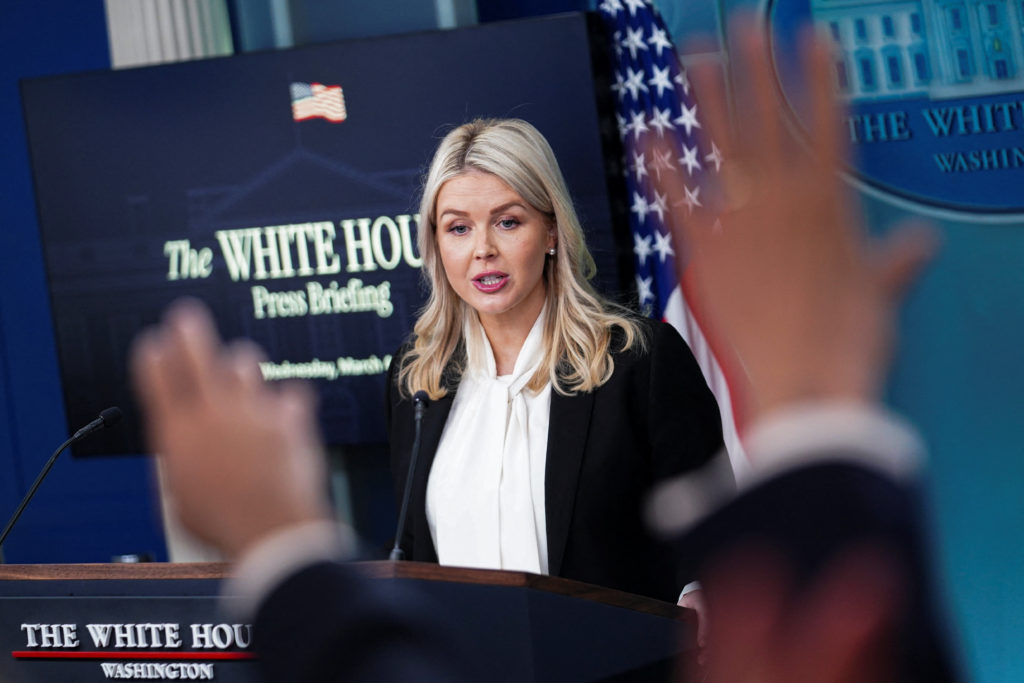
WATCH LIVE: White House holds briefing as U.S. announces 'most intense' day of strikes on Iran
#White House #U.S. strikes #Iran #military escalation #live briefing #national security #Middle East
📌 Key Takeaways
- U.S. announces its most intense day of strikes against Iran-related targets
- White House holds a live briefing to address the military actions
- The strikes signify a major escalation in U.S. military operations
- The briefing provides official details and context for the ongoing situation
📖 Full Retelling
🏷️ Themes
Military Conflict, Diplomatic Briefing
📚 Related People & Topics

Iran
Country in West Asia
# Iran **Iran**, officially the **Islamic Republic of Iran** and historically known as **Persia**, is a sovereign country situated in West Asia. It is a major regional power, ranking as the 17th-largest country in the world by both land area and population. Combining a rich historical legacy with a...

Middle East
Transcontinental geopolitical region
The Middle East is a geopolitical region encompassing the Arabian Peninsula, Egypt, Iran, Iraq, the Levant, and Turkey. The term came into widespread usage by Western European nations in the early 20th century as a replacement of the term Near East (both were in contrast to the Far East). The term ...

White House
Residence and workplace of the US president
# The White House The **White House** is the official residence and principal workplace of the president of the United States. Located at **1600 Pennsylvania Avenue NW** in Washington, D.C., it stands as one of the most recognizable symbols of the American presidency and the United States governmen...
Entity Intersection Graph
Connections for Iran:
Mentioned Entities
Deep Analysis
Why It Matters
This development represents a significant escalation in U.S.-Iran tensions with potential regional and global consequences. It directly affects U.S. military personnel in the Middle East, Iranian-backed militia groups, and regional allies like Israel and Saudi Arabia. The strikes could trigger retaliatory actions that endanger commercial shipping in the Persian Gulf and global energy markets. This escalation also impacts diplomatic efforts to contain regional conflicts and nuclear negotiations.
Context & Background
- The U.S. and Iran have been engaged in proxy conflicts across the Middle East for decades, particularly in Iraq, Syria, and Yemen
- Tensions escalated sharply after the U.S. withdrawal from the Iran nuclear deal (JCPOA) in 2018 and the 2020 assassination of Iranian General Qasem Soleimani
- Iran-backed militias have conducted over 160 attacks on U.S. forces in the region since October 2023, linked to the Israel-Hamas conflict
- The U.S. maintains approximately 45,000 troops across the Middle East, primarily in Iraq, Syria, and naval forces in the Persian Gulf
- Previous U.S. strikes against Iranian proxies have followed a pattern of measured retaliation rather than sustained campaigns
What Happens Next
Immediate Iranian-backed militia retaliation is likely within 24-72 hours, potentially targeting U.S. bases or commercial shipping. The U.S. will monitor for escalation to direct Iranian military involvement. Diplomatic channels will be activated through intermediaries like Oman or Qatar to prevent full-scale conflict. Additional U.S. military assets may be deployed to the region within the next week as a deterrent.
Frequently Asked Questions
The strikes represent an escalation in response to recent attacks by Iranian-backed militias that killed three U.S. service members in Jordan. The Biden administration is signaling stronger deterrence after previous limited strikes failed to stop militia attacks.
While both sides have shown restraint to avoid direct conflict, the increased intensity raises risks of miscalculation. Neither government appears to want full-scale war, but proxy conflicts could spiral if communications break down or significant casualties occur.
Oil prices typically spike during Middle East tensions, especially when Persian Gulf shipping is threatened. Markets will watch for Iranian responses that could disrupt the Strait of Hormuz, through which 20% of global oil passes daily.
The U.S. cites self-defense under Article 51 of the UN Charter and the 2001/2002 Authorizations for Use of Military Force. The administration argues strikes are necessary to protect American personnel from imminent threats.
Gulf states like Saudi Arabia and UAE privately support weakening Iranian proxies but publicly call for de-escalation. Israel welcomes pressure on Iran, while Iraq's government condemns violations of sovereignty despite hosting U.S. troops.