
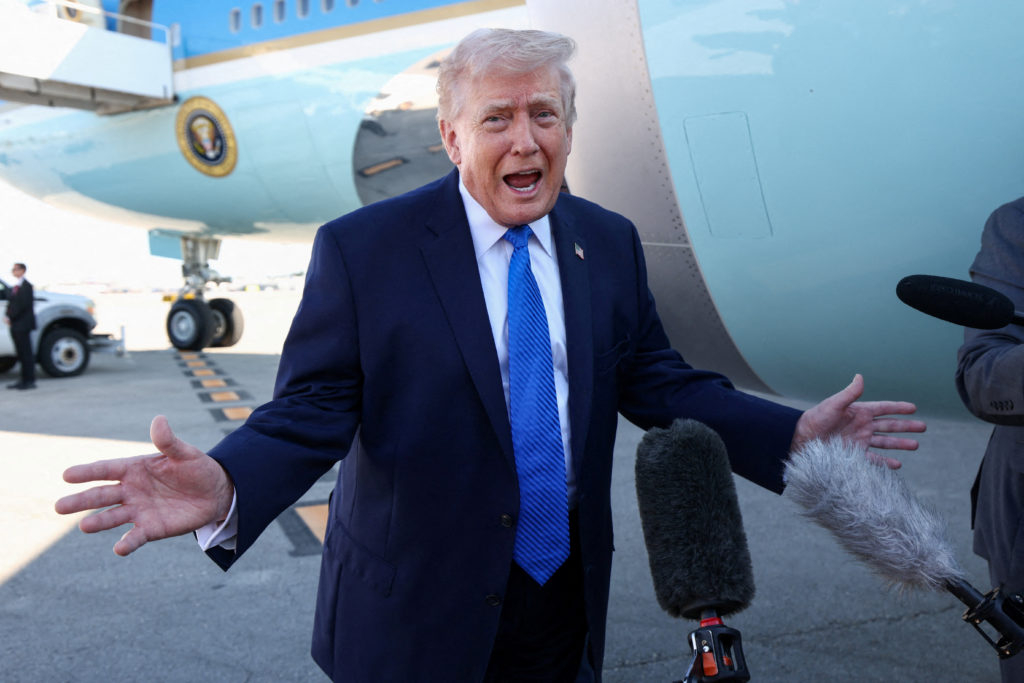
WATCH: Trump claims U.S. and Iran are holding talks, Iran wants 'to make a deal'
#Trump #Iran #talks #deal #negotiations #U.S. #diplomacy
📌 Key Takeaways
- Trump asserts that the U.S. and Iran are currently engaged in negotiations.
- Iran is described as wanting to reach a deal with the United States.
- The claim is made by Trump, but specific details or verification are not provided in the article.
- The statement suggests a potential shift in diplomatic relations between the two countries.
📖 Full Retelling
🏷️ Themes
Diplomacy, International Relations
📚 Related People & Topics

Iran
Country in West Asia
# Iran **Iran**, officially the **Islamic Republic of Iran** and historically known as **Persia**, is a sovereign country situated in West Asia. It is a major regional power, ranking as the 17th-largest country in the world by both land area and population. Combining a rich historical legacy with a...

Donald Trump
President of the United States (2017–2021; since 2025)
Donald John Trump (born June 14, 1946) is an American politician, media personality, and businessman who is the 47th president of the United States. A member of the Republican Party, he served as the 45th president from 2017 to 2021. Born into a wealthy New York City family, Trump graduated from the...
Entity Intersection Graph
Connections for Iran:
Mentioned Entities
Deep Analysis
Why It Matters
This news matters because it suggests potential diplomatic engagement between two long-time adversaries, which could significantly impact Middle East stability, global oil markets, and nuclear non-proliferation efforts. It affects U.S. and Iranian citizens, regional allies like Israel and Saudi Arabia, and international stakeholders invested in the 2015 nuclear deal framework. If talks are genuinely occurring, they could represent a major foreign policy shift with implications for sanctions, regional proxy conflicts, and global security architecture.
Context & Background
- The U.S. and Iran have had no formal diplomatic relations since the 1979 Iranian Revolution and hostage crisis
- The 2015 Joint Comprehensive Plan of Action (JCPOA) nuclear deal was abandoned by the Trump administration in 2018, leading to renewed sanctions
- Tensions escalated dramatically in 2020 with the U.S. drone strike that killed Iranian General Qasem Soleimani
- Iran has been steadily enriching uranium to near-weapons-grade levels since the collapse of the nuclear agreement
- Multiple rounds of indirect talks have occurred in recent years through European intermediaries with limited success
What Happens Next
If talks are confirmed, we can expect initial meetings through intermediaries in neutral locations like Oman or Switzerland. Key developments to watch include potential prisoner exchanges, temporary sanctions relief gestures, and whether discussions expand beyond nuclear issues to include Iran's regional activities and missile programs. The 2024 U.S. election timeline creates pressure for any substantive agreements within the next year, while Iran's own domestic politics and ongoing protests create complications for their negotiating position.
Frequently Asked Questions
Iran faces severe economic pressure from sanctions, with inflation exceeding 50% and currency depreciation making basic goods unaffordable for many citizens. Additionally, ongoing domestic protests and regional isolation have increased pressure on the government to seek economic relief through diplomatic channels.
Trump's claims should be treated cautiously as he is currently a presidential candidate rather than an officeholder, and such statements could serve political purposes. Verification would require confirmation from current administration officials, Iranian representatives, or international mediators involved in any actual talks.
Any new agreement would likely center on nuclear limitations in exchange for sanctions relief, but would probably be narrower than the 2015 JCPOA. Additional elements might include restrictions on Iran's ballistic missile program, addressing regional proxy activities, and mechanisms for more rigorous inspections and verification.
Israel and Gulf states like Saudi Arabia have historically opposed U.S.-Iran rapprochement, fearing it would empower Iranian regional influence. These allies would likely seek assurances about their security and want any agreement to address Iran's support for militant groups across the region.
Major obstacles include deep mutual distrust built over decades, domestic political opposition in both countries, differing priorities (nuclear vs. regional behavior), and the complexity of unwinding layered sanctions. The upcoming U.S. election also creates uncertainty about any agreement's longevity.