
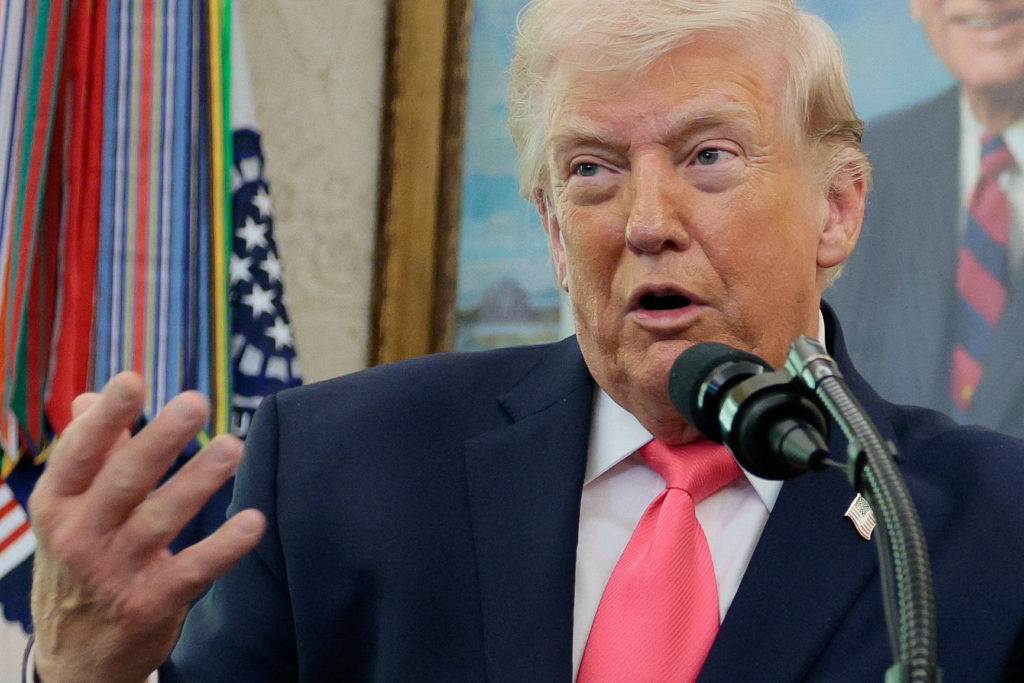
WATCH: Trump says Iran's new leaders 'gave us a present' related to oil and Strait of Hormuz
#Trump #Iran #oil #Strait of Hormuz #diplomacy #leadership #security
📌 Key Takeaways
- Trump claims Iran's new leadership offered a 'present' regarding oil and the Strait of Hormuz.
- The statement suggests potential diplomatic or strategic shifts in U.S.-Iran relations.
- The focus is on oil security and maritime passage through the critical Strait of Hormuz.
- Trump's remarks imply a positive development from Iran's new administration.
📖 Full Retelling
🏷️ Themes
Geopolitics, Energy Security
📚 Related People & Topics

Iran
Country in West Asia
# Iran **Iran**, officially the **Islamic Republic of Iran** and historically known as **Persia**, is a sovereign country situated in West Asia. It is a major regional power, ranking as the 17th-largest country in the world by both land area and population. Combining a rich historical legacy with a...

Strait of Hormuz
Strait between the Gulf of Oman and the Persian Gulf
The Strait of Hormuz ( Persian: تنگهٔ هُرمُز Tangeh-ye Hormoz , Arabic: مَضيق هُرمُز Maḍīq Hurmuz) is a strait between the Persian Gulf and the Gulf of Oman. It provides the only sea passage from the Persian Gulf to the open ocean and is one of the world's most strategically important choke points. ...

Donald Trump
President of the United States (2017–2021; since 2025)
Donald John Trump (born June 14, 1946) is an American politician, media personality, and businessman who is the 47th president of the United States. A member of the Republican Party, he served as the 45th president from 2017 to 2021. Born into a wealthy New York City family, Trump graduated from the...
Entity Intersection Graph
Connections for Iran:
Mentioned Entities
Deep Analysis
Why It Matters
This statement matters because it signals potential shifts in U.S.-Iran relations following Iran's leadership change, which could impact global oil markets and regional security. It affects oil-importing nations, shipping companies using the Strait of Hormuz, and countries invested in Middle East stability. The comments suggest possible diplomatic openings or policy changes that could alter geopolitical dynamics in a critical energy corridor.
Context & Background
- The Strait of Hormuz is a narrow waterway between Oman and Iran through which about 20% of global oil consumption passes daily
- U.S.-Iran relations have been hostile since the 1979 Iranian Revolution, with tensions escalating after the U.S. withdrew from the 2015 nuclear deal in 2018
- Iran recently elected a new president, Masoud Pezeshkian, who has expressed willingness to engage with the West while maintaining Iran's strategic interests
- The U.S. has maintained sanctions on Iranian oil exports since 2018, significantly impacting Iran's economy and global oil markets
What Happens Next
Analysts will watch for follow-up statements from Iranian officials and potential diplomatic contacts. Oil markets may react to perceived changes in supply security. The U.S. administration may clarify whether this represents a policy shift, possibly ahead of the UN General Assembly in September where leaders could potentially engage.
Frequently Asked Questions
Trump likely referred to perceived favorable actions or statements from Iran's new leadership regarding oil shipments or security in the Strait of Hormuz. This could indicate reduced tensions or cooperation that benefits U.S. interests in regional stability and oil market predictability.
Reduced tensions in the Strait of Hormuz typically lower the 'risk premium' in oil prices, potentially leading to price decreases. However, any actual changes in Iranian oil exports would depend on U.S. sanctions policy adjustments.
While notable coming from a former and potential future president, official policy changes would require action from the current administration. The comments may signal possible diplomatic approaches if Trump returns to office, but current relations remain constrained by sanctions and nuclear concerns.
The strait is the world's most important oil transit chokepoint, with about 21 million barrels of oil passing through daily. Any disruption there would immediately impact global energy supplies and prices, making it a focal point for geopolitical tensions.