
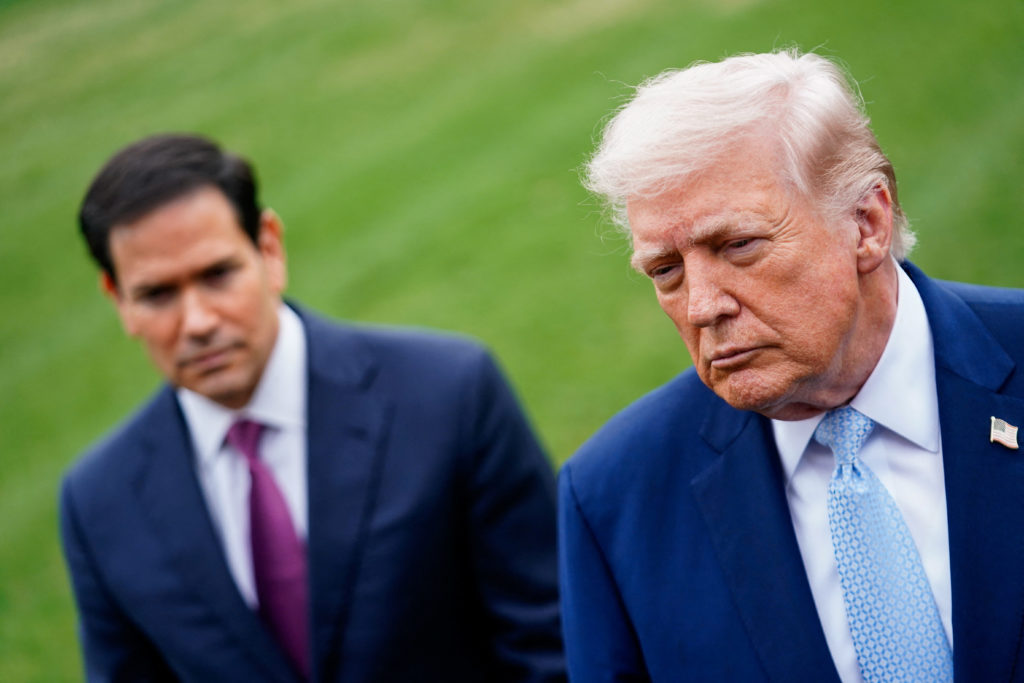
WATCH: Trump says 'we don't need' Strait of Hormuz after allies won't help U.S. escort ships
#Trump #Strait of Hormuz #oil transit #allies #ship escort #U.S. foreign policy #maritime security
📌 Key Takeaways
- Trump stated the U.S. does not need the Strait of Hormuz for oil transit.
- The remark followed allies' refusal to assist in escorting ships through the strait.
- The situation highlights tensions in U.S. foreign policy and alliance dynamics.
- It raises questions about global oil security and strategic maritime routes.
📖 Full Retelling
🏷️ Themes
Foreign Policy, Energy Security
📚 Related People & Topics

Strait of Hormuz
Strait between the Gulf of Oman and the Persian Gulf
The Strait of Hormuz ( Persian: تنگهٔ هُرمُز Tangeh-ye Hormoz , Arabic: مَضيق هُرمُز Maḍīq Hurmuz) is a strait between the Persian Gulf and the Gulf of Oman. It provides the only sea passage from the Persian Gulf to the open ocean and is one of the world's most strategically important choke points. ...

Donald Trump
President of the United States (2017–2021; since 2025)
Donald John Trump (born June 14, 1946) is an American politician, media personality, and businessman who is the 47th president of the United States. A member of the Republican Party, he served as the 45th president from 2017 to 2021. Born into a wealthy New York City family, Trump graduated from the...
Entity Intersection Graph
Connections for Strait of Hormuz:
Mentioned Entities
Deep Analysis
Why It Matters
This statement matters because it signals a potential shift in U.S. security commitments to one of the world's most critical maritime chokepoints, through which about 20% of global oil trade passes. It affects global energy markets, shipping companies, and U.S. allies who depend on secure transit through the strait. The comments could embolden Iran, which has threatened to close the waterway, and create uncertainty about America's willingness to maintain freedom of navigation. This development also impacts U.S. military strategy and relationships with traditional allies in the Middle East and beyond.
Context & Background
- The Strait of Hormuz is a narrow waterway between Oman and Iran that connects the Persian Gulf with the Gulf of Oman and Arabian Sea.
- The U.S. has maintained a naval presence in the region for decades to ensure freedom of navigation and protect oil shipments, especially after Iran threatened to close the strait during the 1979-81 hostage crisis.
- Tensions have escalated since 2019 when Iran seized tankers and the U.S. deployed additional forces to the region after attacks on shipping.
- The U.S. previously led international coalitions to protect shipping during the 1980s 'Tanker War' and more recently proposed a maritime security initiative in 2019.
- Approximately one-third of the world's seaborne oil passes through the strait, making it critical to global energy security and pricing.
What Happens Next
Allies may seek clarification on U.S. commitments while exploring alternative security arrangements, potentially through European-led initiatives or regional partnerships. Shipping insurance rates could increase if perceived security deteriorates. Iran may test U.S. resolve with limited provocations against commercial shipping. The U.S. military will likely continue monitoring the situation while adjusting force posture based on diplomatic developments. Energy markets will watch for any disruptions that could affect oil prices.
Frequently Asked Questions
The Strait of Hormuz is the world's most important oil transit chokepoint, with about 20-30% of global oil trade passing through daily. It's the only sea route for oil exports from major producers like Saudi Arabia, Iraq, UAE, Kuwait, and Qatar. Any disruption would immediately impact global energy prices and supply chains.
This suggests the U.S. might reduce its security commitment to keeping the strait open if allies won't share the burden. It could mean the U.S. would prioritize other interests or expect regional powers to take more responsibility. However, the U.S. Navy would likely still respond to major threats to freedom of navigation.
While not specified in this statement, previous U.S. efforts to form an international maritime security coalition in 2019 saw mixed responses. Traditional allies like Germany and Japan were reluctant to join, while the UK, Australia, and some Gulf states participated. European countries have been cautious about escalating tensions with Iran.
Any perceived reduction in security could increase the 'risk premium' in oil prices as markets price in higher disruption potential. If actual incidents occur, prices could spike significantly. However, current global oil inventories and alternative shipping routes might mitigate some price impacts.
Iran possesses anti-ship missiles, naval mines, small attack boats, and coastal defense systems that could harass or temporarily disrupt shipping. While Iran couldn't permanently close the strait against U.S. naval power, it could create significant disruptions through asymmetric warfare tactics that would challenge naval defenses.