
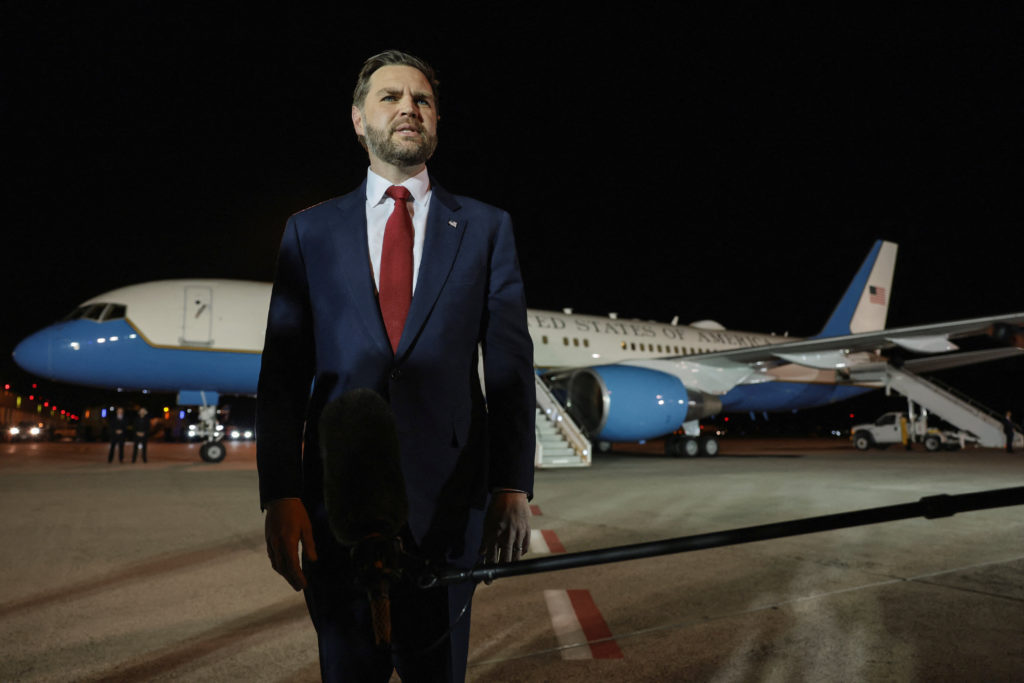
WATCH: Vance says 'ceasefires are always messy'
#J.D. Vance #ceasefire #Pakistan negotiations #diplomacy #US foreign policy #conflict #peace talks
📌 Key Takeaways
- Vice President J.D. Vance described ceasefires as inherently "messy" and prone to "choppiness."
- He made the remarks ahead of leading U.S. diplomatic negotiations in Pakistan this weekend.
- The comments aim to manage expectations for fragile peace processes in ongoing conflicts.
- The statement reflects a pragmatic diplomatic approach to complex international mediation.
📖 Full Retelling
🏷️ Themes
Diplomacy, Conflict Resolution, Foreign Policy
📚 Related People & Topics
Foreign policy of the United States
According to its 2025 National Security Strategy, the officially stated goals of the foreign policy of the United States of America are to ensure US preeminence in the Western Hemisphere, to "halt and reverse the ongoing damage that foreign actors inflict on the American economy while keeping the In...
Entity Intersection Graph
Connections for Foreign policy of the United States:
Mentioned Entities
Deep Analysis
Why It Matters
This news is significant because it outlines the U.S. administration's diplomatic strategy and realistic expectations regarding a volatile regional conflict involving Pakistan. It affects the parties involved in the hostilities, as well as international stakeholders who are wary of another failed peace process in the region. By framing potential violations as normal 'messiness,' Vance is attempting to insulate the negotiations from premature criticism and maintain political momentum. This approach lowers the risk of the administration being blamed if the initial stages of the ceasefire prove unstable.
Context & Background
- Diplomatic euphemisms like 'choppiness' or 'messiness' are frequently used by officials to describe violations of ceasefires without assigning immediate blame or derailing talks.
- Pakistan is a strategic nexus in South Asia, often involved in diplomatic efforts regarding conflicts in neighboring Afghanistan or Kashmir.
- Historically, ceasefires in long-standing conflicts are prone to collapse within the first few days due to mistrust and lack of communication on the ground.
- Vice Presidents often serve as high-level envoys in sensitive negotiations, signaling the importance the administration places on the outcome.
- Managing expectations is a critical component of modern statecraft, used to prevent public opinion from turning against a peace deal during inevitable rough patches.
What Happens Next
Vance will proceed to Pakistan this weekend for the scheduled negotiations. Following his remarks, the immediate focus will be on whether a temporary halt to hostilities can be agreed upon and if the predicted 'choppiness'—such as sporadic skirmishes—occurs. Analysts will watch to see if the administration's pragmatic framing helps sustain the peace process despite these expected initial challenges.
Frequently Asked Questions
Vance used the term to realistically describe the inherent difficulties in implementing truces, such as sporadic violations and logistical challenges, to prepare the public for imperfections.
He is traveling to participate in high-stakes diplomatic negotiations aimed at brokering a temporary halt to hostilities in a major regional conflict.
He used this phrase as a diplomatic euphemism for the breaches in communication, isolated skirmishes, and accusations of bad faith that often happen when a ceasefire begins.
By lowering expectations, Vance's comments provide political cover for negotiators, allowing them to work through initial setbacks without the immediate declaration of failure.