
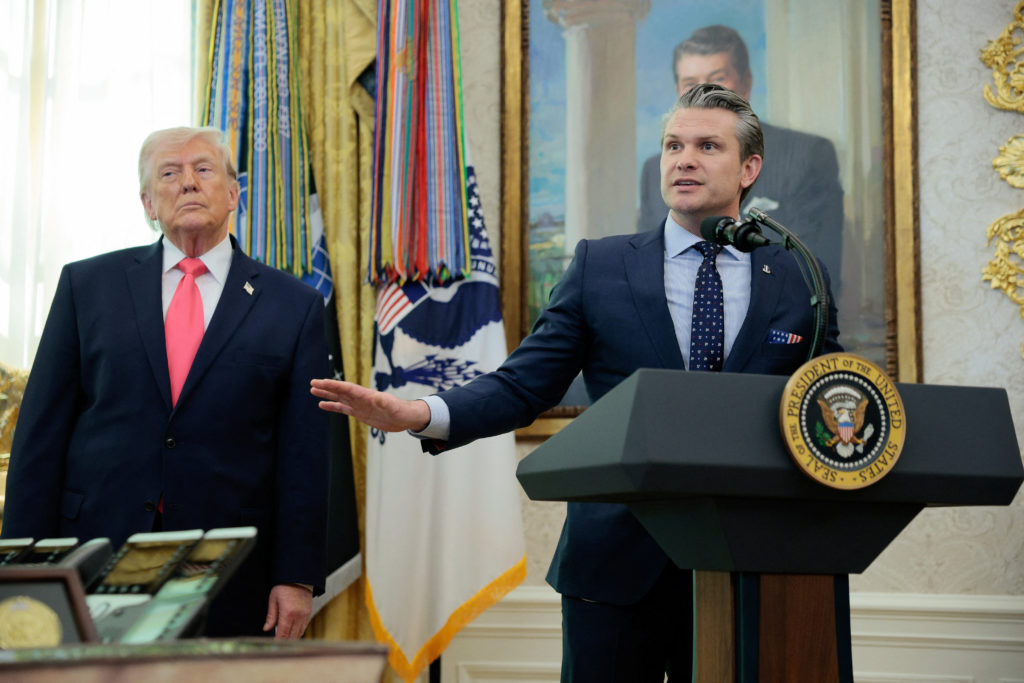
WATCH: 'We negotiate with bombs,' Hegseth says of U.S. air campaign in Iran
#Pete Hegseth #U.S. air campaign #Iran #negotiation #military strikes #foreign policy #tensions
📌 Key Takeaways
- Pete Hegseth claims U.S. uses military strikes as a primary negotiation tool with Iran.
- The statement references a specific U.S. air campaign against Iranian targets.
- The remark suggests a hardline, coercive approach to foreign policy.
- The context implies ongoing or recent military tensions between the U.S. and Iran.
📖 Full Retelling
🏷️ Themes
Foreign Policy, Military Action
📚 Related People & Topics

Pete Hegseth
American government official and television personality (born 1980)
Peter Brian Hegseth (born June 6, 1980) is an American government official and former television personality who has served as the 29th United States secretary of defense since 2025. Hegseth studied politics at Princeton University, where he was the publisher of The Princeton Tory, a conservative st...

Iran
Country in West Asia
# Iran **Iran**, officially the **Islamic Republic of Iran** and historically known as **Persia**, is a sovereign country situated in West Asia. It is a major regional power, ranking as the 17th-largest country in the world by both land area and population. Combining a rich historical legacy with a...
Entity Intersection Graph
Connections for Pete Hegseth:
Mentioned Entities
Deep Analysis
Why It Matters
This statement reflects a significant shift in U.S. foreign policy rhetoric toward Iran, potentially signaling a more aggressive military posture. It matters because it could escalate tensions in a region already volatile due to Iran's nuclear program and proxy conflicts. The approach affects international diplomacy, regional stability, and could influence oil markets and global security arrangements. Military families, diplomats, and citizens in conflict zones would be directly impacted by any escalation.
Context & Background
- The U.S. and Iran have had no formal diplomatic relations since the 1979 Iranian Revolution and hostage crisis.
- Iran has been under various U.S. sanctions for decades, particularly intensified since the U.S. withdrawal from the 2015 nuclear deal (JCPOA) in 2018.
- Iran supports proxy groups across the Middle East, including Hezbollah in Lebanon and Houthi rebels in Yemen, which the U.S. designates as terrorist organizations.
- The U.S. has conducted limited military strikes against Iranian-backed militias in Iraq and Syria in recent years, but avoided direct conflict with Iran's military.
What Happens Next
If this rhetoric translates to policy, we may see increased U.S. airstrikes against Iranian targets or proxies in the coming months. Iran would likely respond through asymmetric warfare via its regional proxies, potentially targeting U.S. assets. The situation could escalate around key dates like the anniversary of the U.S. killing of Iranian General Qasem Soleimani (January 2025) or during nuclear negotiation deadlines.
Frequently Asked Questions
Pete Hegseth is a Fox News host and former Army officer whose commentary often reflects hawkish conservative viewpoints. His statement gains significance because it echoes sentiments within certain political circles advocating for more confrontational approaches toward Iran, potentially influencing public opinion and policy debates.
This phrase suggests using military force as the primary tool of diplomacy rather than traditional negotiations. In practice, it could mean conducting airstrikes to compel Iranian concessions on issues like nuclear development or support for militant groups, essentially using destruction as leverage instead of dialogue.
Iran would likely retaliate through its network of proxy forces across the Middle East, potentially attacking U.S. bases or allies. They might also accelerate their nuclear program and conduct cyber attacks, while avoiding direct military confrontation that would favor U.S. conventional superiority.
The main risks include triggering a wider regional war, destabilizing global oil markets, and causing significant civilian casualties. It could also undermine diplomatic efforts with European allies who still support the nuclear deal and potentially strengthen hardline factions within Iran's government.