
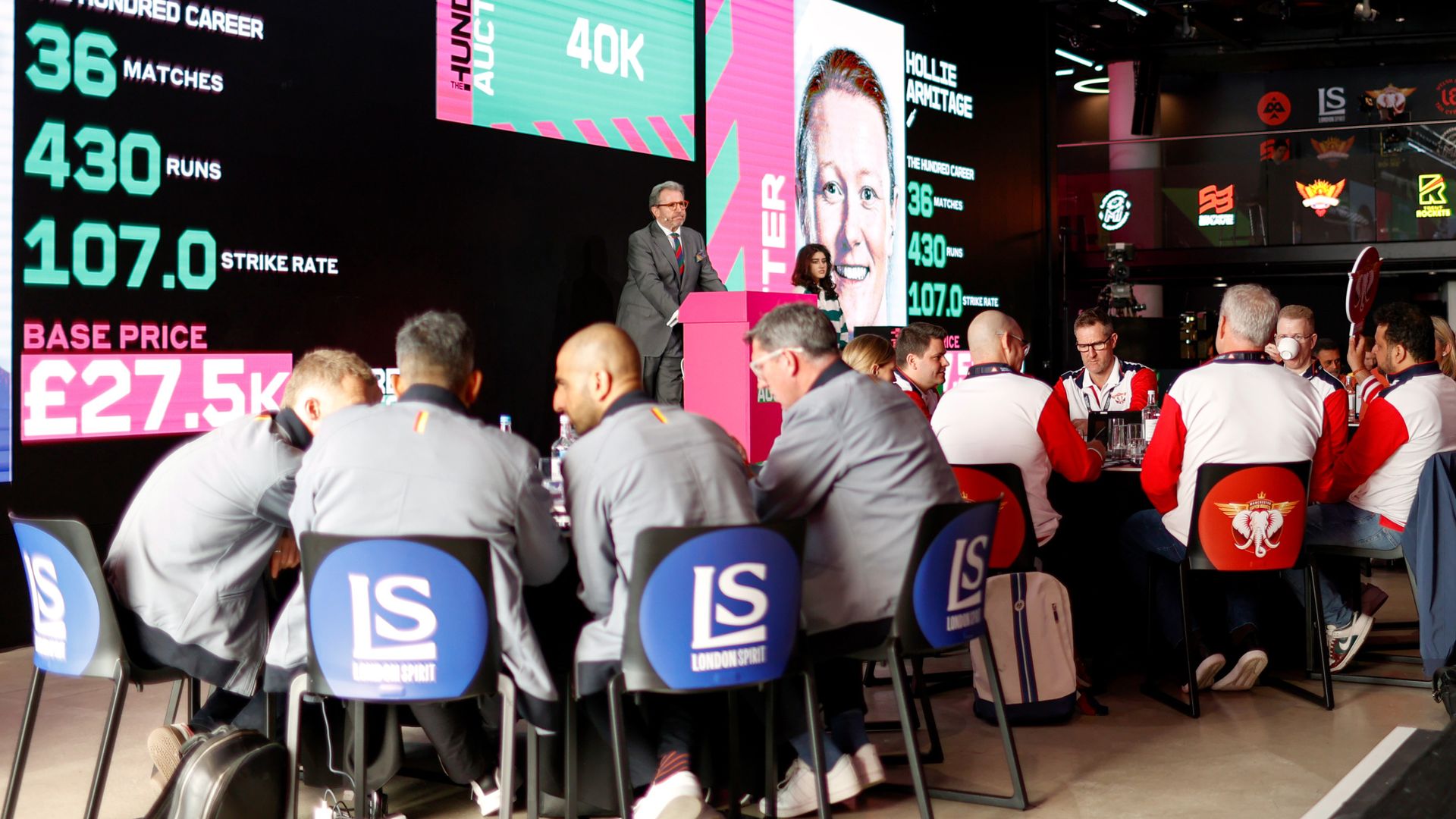
What challenges does The Hundred face after cash splashed in auction?
#The Hundred #player auction #financial challenges #cricket tournament #franchise spending #profitability #viewership #sponsorship
📌 Key Takeaways
- The Hundred cricket tournament faces financial sustainability questions after high-spending player auctions.
- Franchises invested heavily in marquee players, raising concerns about long-term profitability.
- Balancing star power with team budgets is a key challenge for organizers.
- The tournament must attract consistent viewership and sponsorship to justify costs.
- Competition with established cricket formats adds pressure to prove its market viability.
🏷️ Themes
Financial Sustainability, Cricket Innovation
📚 Related People & Topics
Entity Intersection Graph
Connections for The 100:
Mentioned Entities
Deep Analysis
Why It Matters
The Hundred's high-stakes auction and financial commitments highlight the tournament's critical juncture in establishing itself as a sustainable global cricket product. This matters to cricket boards, investors, and players as it tests whether short-format leagues can justify massive spending while attracting audiences. The outcome affects the financial ecosystem of cricket, potentially reshaping player salaries and league valuations worldwide. If successful, it could solidify England's position in the lucrative T20 market; if not, it may signal overexpansion risks in cricket's franchise landscape.
Context & Background
- The Hundred is a 100-ball cricket tournament launched by the England and Wales Cricket Board (ECB) in 2021, aiming to attract new audiences with shorter match durations.
- Franchise cricket leagues like the IPL (India) and Big Bash (Australia) have driven up player salaries and created global competition for talent, increasing pressure on newer leagues to spend heavily.
- The ECB has invested significantly in marketing The Hundred as a family-friendly event with simplified rules, but it faced initial skepticism from traditional cricket fans.
- Previous editions of The Hundred have seen mixed success in attendance and TV ratings, with the league striving to carve a niche amid crowded summer sports schedules in the UK.
- The auction system mirrors those used in other T20 leagues, where teams bid for players, often leading to inflated prices for star athletes to drive commercial interest.
What Happens Next
Teams will finalize squads and begin pre-tournament preparations, with the 2024 season likely scheduled for July-August. Key metrics to watch include ticket sales, broadcast viewership, and commercial partnerships in the coming months. The ECB may review financial sustainability after the season, potentially adjusting auction caps or team budgets if revenue falls short. Player performance and fan engagement during the tournament will influence future auction strategies and league expansion plans.
Frequently Asked Questions
The high spending aims to secure top-tier international and domestic players, boosting the league's competitiveness and star power to attract fans and broadcast deals. It reflects the ECB's strategy to compete with established global leagues like the IPL.
Risks include over-reliance on broadcast revenue, potential shortfalls in ticket sales or sponsorships, and unsustainable player salaries if the league fails to grow its audience. This could strain the ECB's finances and affect long-term viability.
The Hundred uses a 100-ball format instead of 120 balls (T20), with simplified rules and strategic timeouts to speed up play. It focuses heavily on entertainment and family attendance, distinct from more traditional cricket-centric leagues.
Top cricketers gain from higher salaries, while teams aim to build winning squads for commercial success. The ECB benefits if increased star power drives revenue, but fans ultimately benefit from watching elite players in a condensed format.
Yes, if successful, its fast-paced, simplified format could inspire innovations in other sports seeking to attract younger audiences. However, failure might caution against drastic changes to traditional sports structures.