
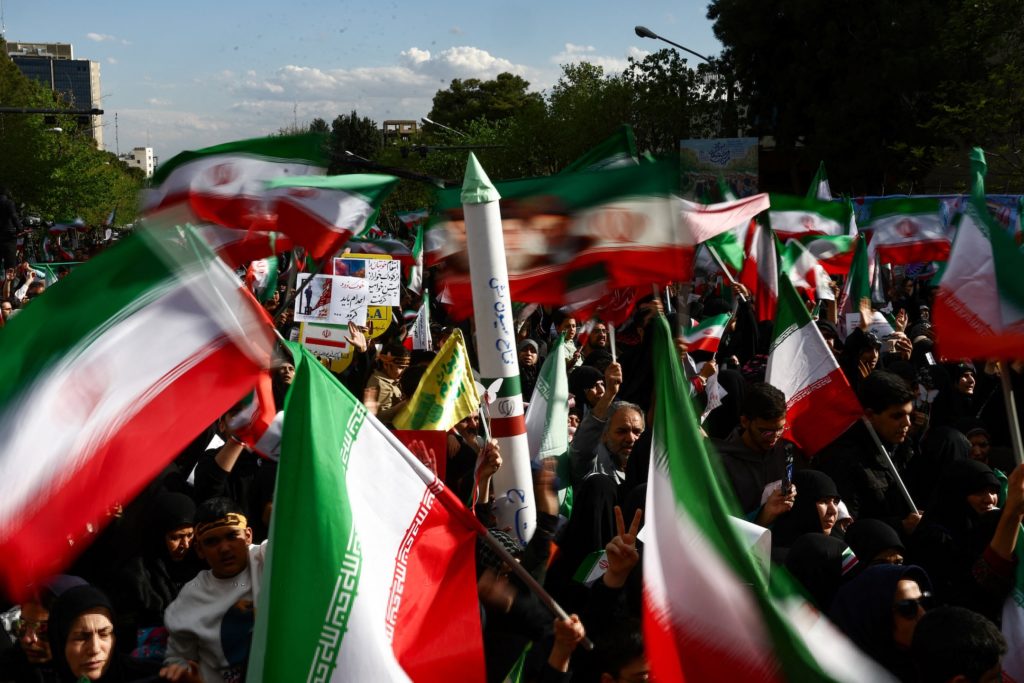
What people in Iran are saying about the war and their government
#Iran public opinion #U.S.-Iran ceasefire #Strait of Hormuz #economic sanctions #regional proxies #Iranian domestic policy #Middle East tensions
📌 Key Takeaways
- Iranian public shows war-weariness and economic frustration despite government's militant rhetoric
- Significant disconnect exists between regime's regional policies and citizens' domestic priorities
- External pressures and internal dissatisfaction create complex challenges for Iranian leadership
- Understanding civilian perspectives is essential for assessing regional stability
📖 Full Retelling
Geoff Bennett of PBS NewsHour interviewed Iran analyst Holly Dagres in Washington recently to explore Iranian public sentiment regarding regional conflicts and their government's policies, amid ongoing tensions including a fragile U.S.-Iran ceasefire, Strait of Hormuz incidents, and Israeli strikes in Lebanon. The discussion aimed to highlight perspectives often overlooked in Western media coverage, focusing on ordinary Iranians who directly experience the consequences of these geopolitical confrontations.
Dagres, who spent her formative years in Tehran and now curates the influential newsletter "The Iranist," provided nuanced insights into domestic Iranian views. She reported that while official state media portrays strong support for proxy groups and anti-Western rhetoric, many citizens express war-weariness and economic frustration. The population, grappling with severe inflation and international sanctions, often prioritizes domestic stability and economic relief over regional military engagements, creating a complex disconnect between government actions and public priorities.
This internal sentiment analysis reveals significant pressure points for the Iranian regime. Dagres suggested that continued external pressures, combined with internal dissatisfaction, could influence Tehran's strategic calculations. However, she cautioned that external threats often consolidate nationalist sentiment temporarily, making public opposition unpredictable. The interview underscored that understanding Iranian civilian perspectives is crucial for accurately assessing the sustainability of current policies and potential shifts in the regional power dynamic.
🏷️ Themes
Geopolitics, Public Sentiment, Regional Conflict
📚 Related People & Topics

Strait of Hormuz
Strait between the Gulf of Oman and the Persian Gulf
The Strait of Hormuz ( Persian: تنگهٔ هُرمُز Tangeh-ye Hormoz , Arabic: مَضيق هُرمُز Maḍīq Hurmuz) is a strait between the Persian Gulf and the Gulf of Oman. It provides the only sea passage from the Persian Gulf to the open ocean and is one of the world's most strategically important choke points. ...
Entity Intersection Graph
Connections for Strait of Hormuz:
🌐
Price of oil
15 shared
🌐
List of wars involving Iran
11 shared
🌐
Iran
6 shared
🌐
Nuclear program of Iran
4 shared
Mentioned Entities
Original Source
In recent days, the focus has been on the fragile U.S.-Iran ceasefire, tensions in the Strait of Hormuz, and Israel's continued strikes in Lebanon. But less attention has been paid to the people inside Iran, those who have borne the brunt of U.S. and Israeli attacks. For that perspective, Geoff Bennett spoke with Holly Dagres. She spent her teenage years in Tehran and now curates "The Iranist."
Read full article at source