
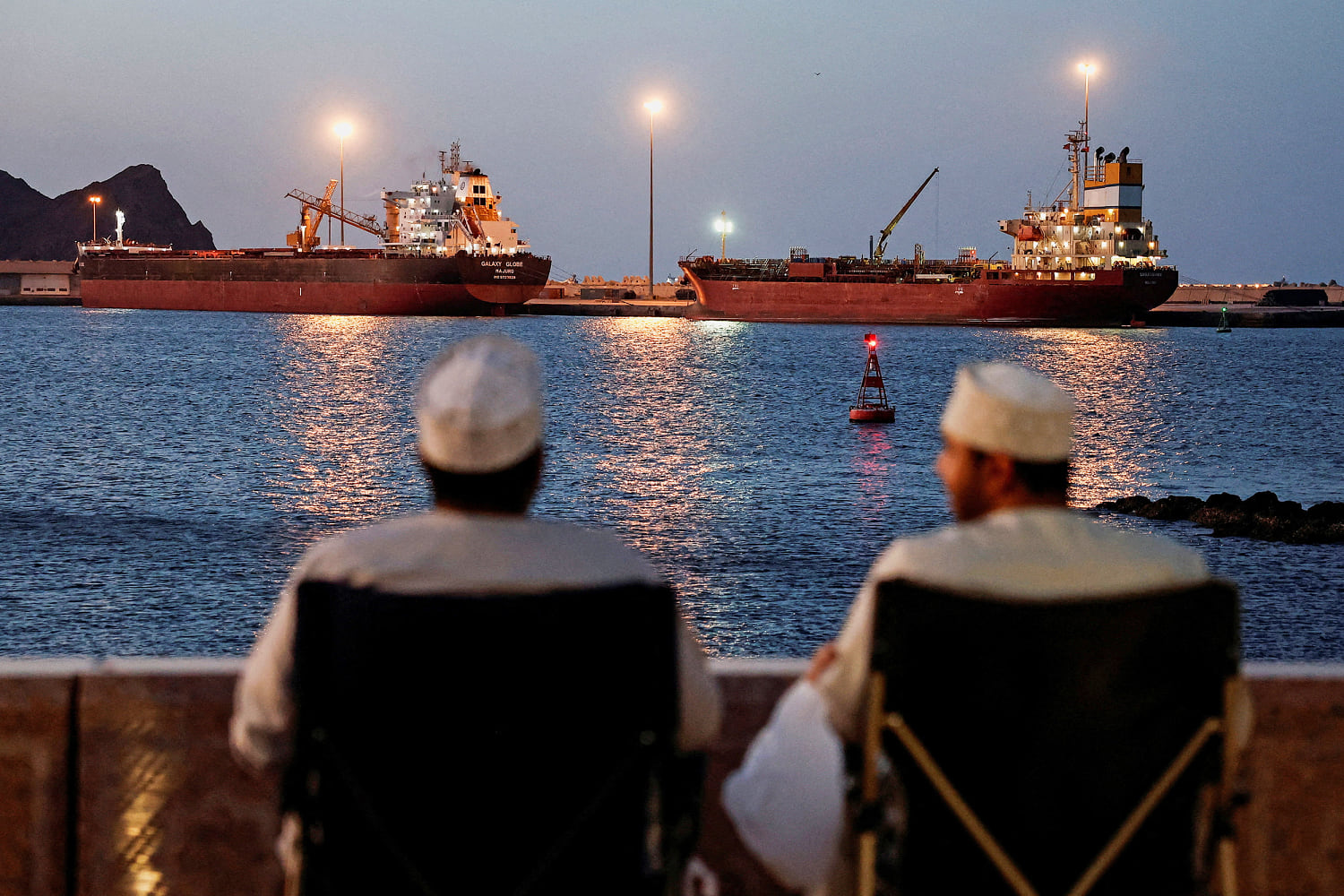
Why it's so hard to get oil through the Strait of Hormuz right now
#Strait of Hormuz #oil shipments #maritime security #geopolitical risk #energy chokepoint #shipping disruption #global oil supply
📌 Key Takeaways
- Heightened tensions in the Strait of Hormuz are disrupting global oil shipments.
- Attacks on commercial vessels and threats from regional actors are increasing risks.
- The strait is a critical chokepoint for about 20% of the world's oil supply.
- Shipping insurance costs and freight rates have surged due to the instability.
- The situation threatens global energy security and could lead to higher oil prices.
📖 Full Retelling
🏷️ Themes
Geopolitical Tensions, Energy Security, Maritime Trade
📚 Related People & Topics

Strait of Hormuz
Strait between the Gulf of Oman and the Persian Gulf
The Strait of Hormuz ( Persian: تنگهٔ هُرمُز Tangeh-ye Hormoz , Arabic: مَضيق هُرمُز Maḍīq Hurmuz) is a strait between the Persian Gulf and the Gulf of Oman. It provides the only sea passage from the Persian Gulf to the open ocean and is one of the world's most strategically important choke points. ...
Entity Intersection Graph
Connections for Strait of Hormuz:
Mentioned Entities
Deep Analysis
Why It Matters
The Strait of Hormuz is the world's most critical oil transit chokepoint, with about 20% of global oil consumption passing through daily. Disruptions here directly impact global energy prices, affecting everything from gasoline costs to inflation rates worldwide. This matters to consumers, businesses, and governments globally as energy security becomes increasingly fragile in a volatile geopolitical environment.
Context & Background
- The Strait of Hormuz is a narrow waterway between Oman and Iran, only 21 miles wide at its narrowest point
- Approximately 21 million barrels of oil pass through daily, representing about 21% of global petroleum liquids consumption
- Iran has repeatedly threatened to close the strait during tensions with Western nations, most notably during the 2019 tanker attacks and seizures
- The U.S. Fifth Fleet is based in Bahrain and regularly patrols the area to ensure freedom of navigation
- Major oil producers including Saudi Arabia, Iraq, UAE, Kuwait, and Qatar depend on the strait for their export routes
What Happens Next
Increased naval patrols by Western and regional powers will likely continue through 2024. Insurance premiums for tankers transiting the area may rise significantly. Alternative pipeline routes bypassing the strait (such as UAE's Habshan-Fujairah pipeline) may see increased utilization. Diplomatic efforts between Iran and Western nations could intensify to prevent escalation.
Frequently Asked Questions
Asian economies like China, India, Japan and South Korea are most vulnerable as they import the majority of their oil through the strait. European nations also face significant impacts, though they have more diversified energy sources including pipelines from Russia and Norway.
Closing the strait would trigger immediate military response from the U.S. and allies, potentially leading to open conflict. Iran also depends on the strait for its own oil exports and imports, making complete closure economically self-destructive despite being technically possible.
Limited alternatives exist including Saudi Arabia's East-West Pipeline and UAE's pipeline to Fujairah, but these have limited capacity. The Bab el-Mandeb strait near Yemen presents another chokepoint for redirected traffic, creating different security challenges.
Vessels typically travel in convoys with naval escorts, maintain high alert status, and often hire private security. Many register with maritime security centers that monitor threats and recommend safe transit windows based on intelligence.
Prices typically spike immediately by 5-15% on disruption news due to supply fears. The impact depends on duration and severity, with prolonged closures potentially causing price increases of 50% or more as global inventories deplete.