
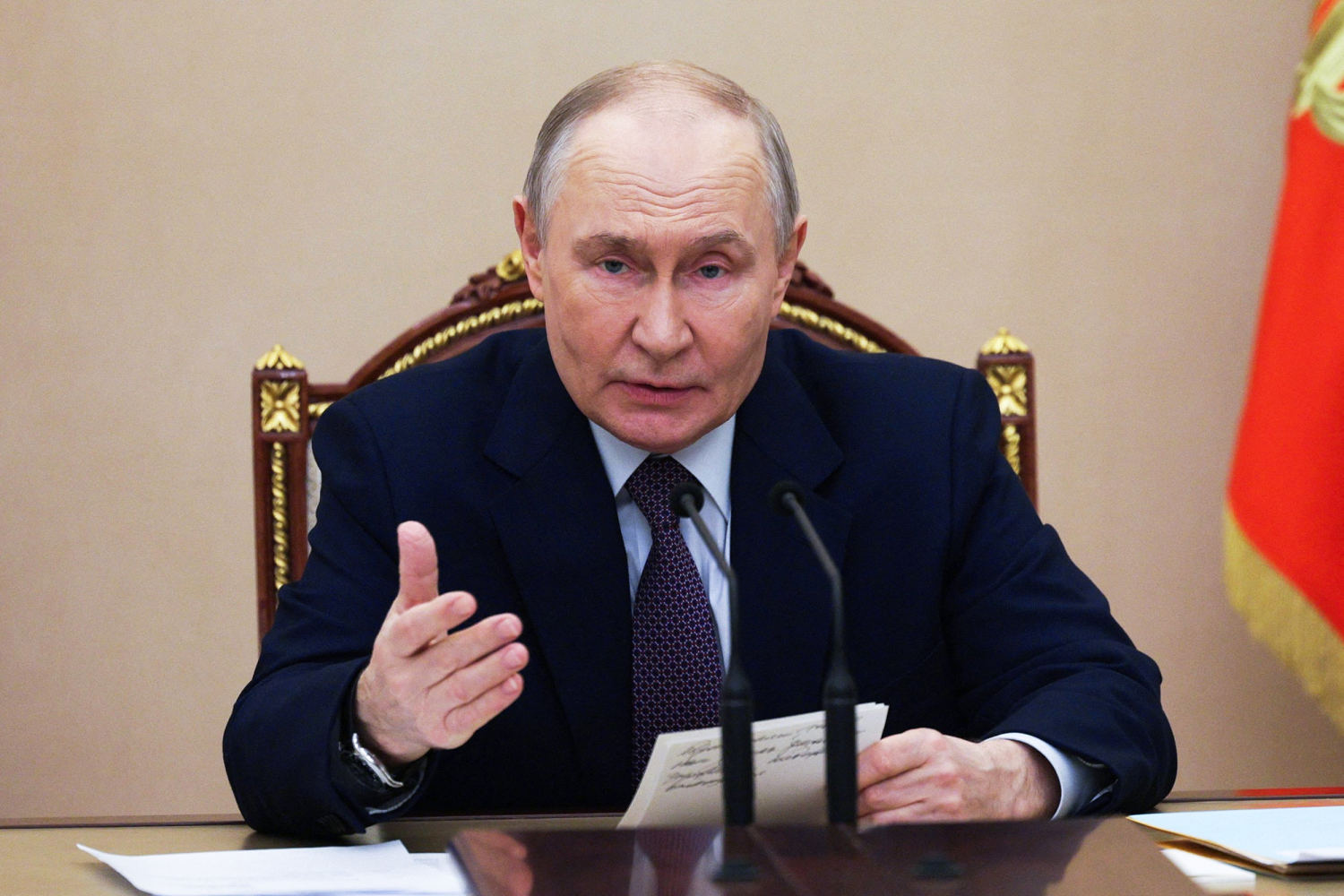
Why Vladimir Putin may be the big winner from Trump's Iran war
#Vladimir Putin #Donald Trump #Iran war #Russia #geopolitics #Middle East #U.S. foreign policy
📌 Key Takeaways
- Trump's potential conflict with Iran could strengthen Putin's geopolitical influence.
- Russia may gain economically by selling arms and energy to Iran and its allies.
- A U.S.-Iran war could divert American attention from Russia's actions in Eastern Europe.
- Putin could exploit regional instability to expand Russian military and diplomatic presence.
📖 Full Retelling
🏷️ Themes
Geopolitics, International Conflict
📚 Related People & Topics

Russia
Country in Eastern Europe and North Asia
Russia, or the Russian Federation, is a country in Eastern Europe and North Asia. It is the largest country in the world, spanning eleven time zones and sharing land borders with fourteen countries. With a population of over 140 million, Russia is the most populous country in Europe and the ninth-mo...

Middle East
Transcontinental geopolitical region
The Middle East is a geopolitical region encompassing the Arabian Peninsula, Egypt, Iran, Iraq, the Levant, and Turkey. The term came into widespread usage by Western European nations in the early 20th century as a replacement of the term Near East (both were in contrast to the Far East). The term ...

Vladimir Putin
President of Russia (2000–2008; since 2012)
Vladimir Vladimirovich Putin (born 7 October 1952) is a Russian politician and former intelligence officer who has served as President of Russia since 2012, having previously served from 2000 to 2008. Putin also served as Prime Minister of Russia from 1999 to 2000 and again from 2008 to 2012. He has...
List of wars involving Iran
This is a list of wars involving the Islamic Republic of Iran and its predecessor states. It is an unfinished historical overview.

Donald Trump
President of the United States (2017–2021; since 2025)
Donald John Trump (born June 14, 1946) is an American politician, media personality, and businessman who is the 47th president of the United States. A member of the Republican Party, he served as the 45th president from 2017 to 2021. Born into a wealthy New York City family, Trump graduated from the...
Entity Intersection Graph
Connections for Russia:
Mentioned Entities
Deep Analysis
Why It Matters
This analysis matters because it highlights how geopolitical conflicts can create unexpected beneficiaries, potentially shifting global power dynamics. It affects international relations between major powers like Russia, the US, and Iran, as well as global energy markets and regional stability in the Middle East. The analysis suggests that escalating tensions could undermine American influence while strengthening Russia's strategic position through arms sales, energy deals, and diplomatic leverage.
Context & Background
- Russia and Iran have maintained strategic cooperation since the 1990s, particularly in nuclear energy and military technology
- The US has maintained sanctions against Iran since the 1979 hostage crisis, with varying intensity across administrations
- Russia has positioned itself as a mediator in Middle Eastern conflicts, including Syria where both Russian and Iranian forces support the Assad government
- Global oil markets are sensitive to Middle Eastern instability, with Russia being a major energy exporter alongside Middle Eastern producers
- The 2015 Iran nuclear deal (JCPOA) created tensions between the US and European allies who sought to preserve the agreement
What Happens Next
If US-Iran tensions escalate further, Russia may increase military and economic cooperation with Iran while positioning itself as a diplomatic alternative to US leadership. European nations may seek Russian mediation to prevent regional conflict. Global oil prices could spike, benefiting Russian energy exports while potentially straining relations between Russia and US allies in the Middle East like Israel and Saudi Arabia.
Frequently Asked Questions
Russia could benefit through increased arms sales to Iran, strengthened diplomatic influence as a mediator, and higher energy prices that boost its oil and gas revenues. Conflict could also divert US attention from other regions where Russia has interests.
Russia maintains strategic cooperation with Iran including military sales, nuclear energy projects, and coordination in Syria. They share interests in countering US influence but have differing goals in some regional matters.
Conflict in the Persian Gulf could disrupt oil shipments through the Strait of Hormuz, potentially spiking prices. Russia as a major exporter would benefit from higher prices, though global economic slowdown from oil shocks could eventually reduce demand.
Yes, by positioning itself as a stable alternative to unpredictable US policy, Russia could expand influence with regional powers. This could come at the expense of traditional US allies who might seek Russian protection or mediation.
European nations would likely seek to preserve the Iran nuclear deal and prevent conflict, potentially turning to Russia as a diplomatic channel. This could create divisions in transatlantic relations and NATO cohesion.