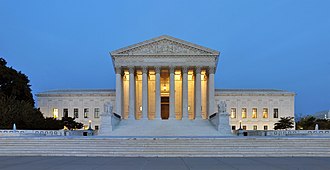
Supreme Court ruled Trump's 'reciprocal' tariffs unconstitutional in 6-3 decision
Section 232 tariffs targeting national security remain in effect
Automotive, pharmaceutical, furniture industries still face higher tariffs
Some countries have negotiated lower auto tariffs with the US administration
📖 Full Retelling
The Supreme Court on Friday ruled that President Donald Trump's country-specific so-called 'reciprocal' tariffs are unconstitutional, delivering a win for many consumer companies facing higher import costs. The decision, which came in a 6-3 vote, determined that the International Emergency Economic Powers Act of 1977 (IEEPA) does not authorize the President to impose tariffs, marking the first time the act had been used by a president for this purpose. The ruling, however, does not cover all sectors, as tariffs enacted under Section 232 of the Trade Expansion Act of 1962 remain in effect. These national security-focused duties target specific products that threaten U.S. security, including steel, semiconductors, aluminum and other imports. This means that while Trump's broad country-specific tariffs have been invalidated, several key industries continue to face higher levies despite the Supreme Court's decision. The automotive industry, for instance, continues to face billions of dollars in tariff costs depending on where imported parts or vehicles originate. Last year, the Trump administration implemented 25% tariffs on vehicles and certain auto parts, though some countries like the UK, Japan, and South Korea have negotiated lower rates. Major automakers like General Motors expect between $3 billion and $4 billion in tariff costs this year, while Ford Motor anticipates roughly flat year-over-year costs at $2 billion in 2026. Similarly, the pharmaceutical industry faces uncertainty, with Trump having threatened tariffs that could reach up to 250% on drug imports, though multi-year deals have prevented immediate implementation. The furniture industry, hit with approximately 25% tariffs last fall, will see those rates potentially increase to 50% in 2027, with smaller companies particularly vulnerable to these increased costs.
In international relations and treaties, the principle of reciprocity states that favors, benefits, or penalties that are granted by one state to the citizens or legal entities of another, should be returned in kind.
For example, reciprocity has been used in the reduction of tariffs, the grant of co...
In most legal jurisdictions, a supreme court, also known as a court of last resort, apex court, high (or final) court of appeal, and court of final appeal, is the highest court within the hierarchy of courts. Broadly speaking, the decisions of a supreme court are binding on all other courts in a nat...
Economic conflict using tariffs or other trade barriers
# Trade War
A **trade war** is an economic conflict typically resulting from extreme protectionism. It occurs when sovereign states implement or escalate tariffs and other trade barriers against one another as a component of their commercial policies. These actions are generally retaliatory, functi...
National security, or national defence (national defense in American English), is the security and defence of a sovereign state, including its citizens, economy, and institutions, which is regarded as a duty of government. Originally conceived as protection against military attack, national security...
The Supreme Court on Friday ruled that President Donald Trump's country-specific so-called "reciprocal" tariffs are unconstitutional , delivering a win for many consumer companies facing higher import costs. But the ruling doesn't cover all sectors. The Supreme Court reviewed tariffs enacted under the International Emergency Economic Powers Act of 1977, or IEEPA, which the Trump administration used to justify the sweeping tariff agenda. The act had never before been used by a president to impose tariffs. In a 6-3 decision, the Supreme Court ruled that IEEPA "does not authorize the President to impose tariffs." Still, the Supreme Court's ruling does not cover tariffs enacted under Section 232 of the Trade Expansion Act of 1962. Those duties are intended to target specific products that threaten national security, and remain in effect after Friday's ruling. Separate from his country-specific rates, Trump has raised tariffs on imports of steel, semiconductors, aluminum and other products deemed to impair national security. Here are the sectors still facing higher levies even after the Supreme Court decision. Autos It's not immediately clear how much the decision will impact the U.S. and global automotive industry. The industry continues to face billions of dollars in tariff costs , depending on where an imported auto part or vehicle originates. The Trump administration last year broadly implemented 25% tariffs on vehicles and certain auto parts imported into the U.S., citing national security risks. It has since struck independent deals to lower the levies to 10% to 15% with countries such as the United Kingdom and Japan. Others, such as South Korea, have also struck deals for lower rates, but it's unclear if those changes have actually taken effect. America's largest automaker, General Motors , last month said it expects between $3 billion and $4 billion in tariff costs this year, and Ford Motor earlier this month said its net tariff impact is expected to be roughly f...