
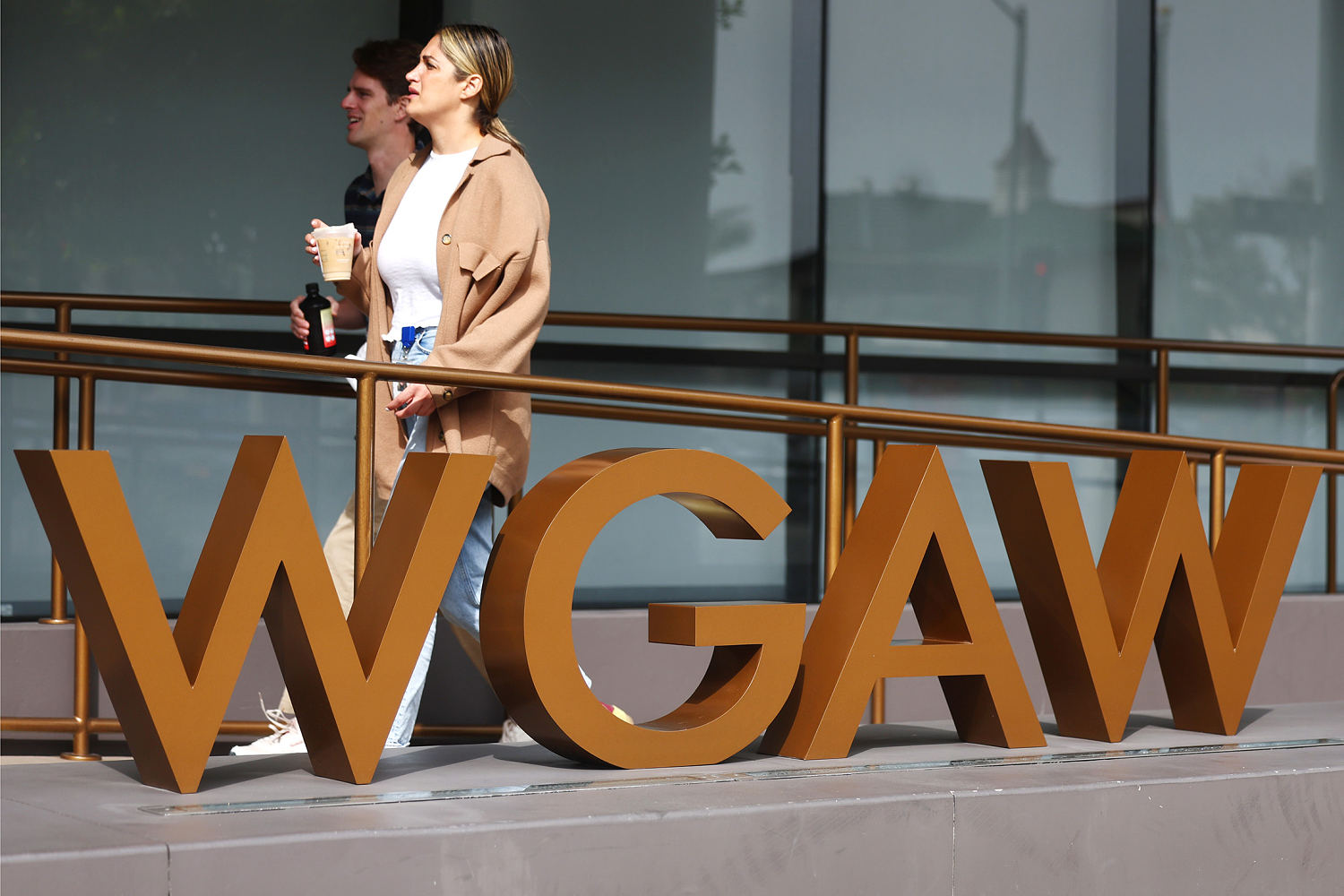
Writers Guild of America strikes tentative deal with studios
#Writers Guild of America #strike #tentative deal #streaming #artificial intelligence #Hollywood #labor agreement
📌 Key Takeaways
- The Writers Guild of America (WGA) has reached a tentative agreement with major studios and streaming services.
- The deal ends a 146-day strike that halted film and TV production across the U.S.
- The agreement addresses key issues including AI usage, streaming residuals, and minimum staffing.
- WGA members must still vote to ratify the contract before it becomes official.
📖 Full Retelling
🏷️ Themes
Labor Strike, Entertainment Industry
📚 Related People & Topics

Writers Guild of America
US TV and film writer labor unions
The Writers Guild of America (WGA) is the name of two American labor unions representing writers in film, television, radio, and online media: The Writers Guild of America East (WGAE) is headquartered in New York City and is affiliated with the AFL-CIO national trade union center The Writers Guil...
Entity Intersection Graph
Connections for Hollywood:
Mentioned Entities
Deep Analysis
Why It Matters
This tentative deal is crucial because it could end a historic strike that has halted film and TV production for months, affecting thousands of writers, crew members, and related industries. It addresses key issues like fair compensation in the streaming era, AI usage in writing, and residual payments, setting precedents for labor negotiations in the entertainment sector. The resolution impacts not only writers but also actors, studios, and audiences, potentially allowing production to resume and stabilizing the entertainment economy.
Context & Background
- The Writers Guild of America (WGA) represents over 11,000 film, television, and other media writers in the U.S.
- The strike began on May 2, 2023, after the WGA's contract with the Alliance of Motion Picture and Television Producers (AMPTP) expired without a new agreement.
- Key demands included higher wages, better residuals from streaming services, regulations on the use of artificial intelligence in writing, and improved working conditions.
- This was the first WGA strike since 2007-2008, which lasted 100 days and cost the California economy an estimated $2.1 billion.
- The strike coincided with a separate strike by the Screen Actors Guild-American Federation of Television and Radio Artists (SAG-AFTRA), amplifying industry-wide disruptions.
What Happens Next
The tentative deal must be ratified by the WGA membership through a vote, which could take several weeks. If approved, writers are expected to return to work, allowing stalled productions to gradually resume. Attention will then shift to resolving the ongoing SAG-AFTRA strike, as both unions' issues are interconnected, with full industry recovery likely taking months even after agreements are reached.
Frequently Asked Questions
The primary issues included demands for higher pay, especially for streaming content, increased residuals from streaming platforms, protections against the use of artificial intelligence to replace or undermine writers, and better working conditions such as minimum staffing for TV shows.
The deal could pave the way for ending production halts, benefiting crew members, actors, and studios, while also influencing future labor negotiations, including with SAG-AFTRA. It may lead to changes in how streaming services compensate creators, potentially reshaping industry economics.
If members reject the deal, the strike would likely continue, prolonging production delays and economic losses. This could lead to renewed negotiations or further disruptions, impacting the timeline for resolving the SAG-AFTRA strike and industry recovery.
The deal includes provisions to regulate AI, such as preventing studios from using AI to write or rewrite scripts without proper compensation or credit for writers. This sets a precedent for protecting creative jobs in the face of technological advancements.
Writers may return to work soon after the tentative deal is announced, even before ratification, as a sign of good faith, but full resumption of duties depends on the final vote. Studios could start greenlighting projects once the deal is finalized.
The strike delayed TV show seasons, film productions, and release schedules, leading to gaps in programming and postponed premieres. With a deal, viewers can expect a gradual return to normalcy, though some disruptions may persist into 2024.