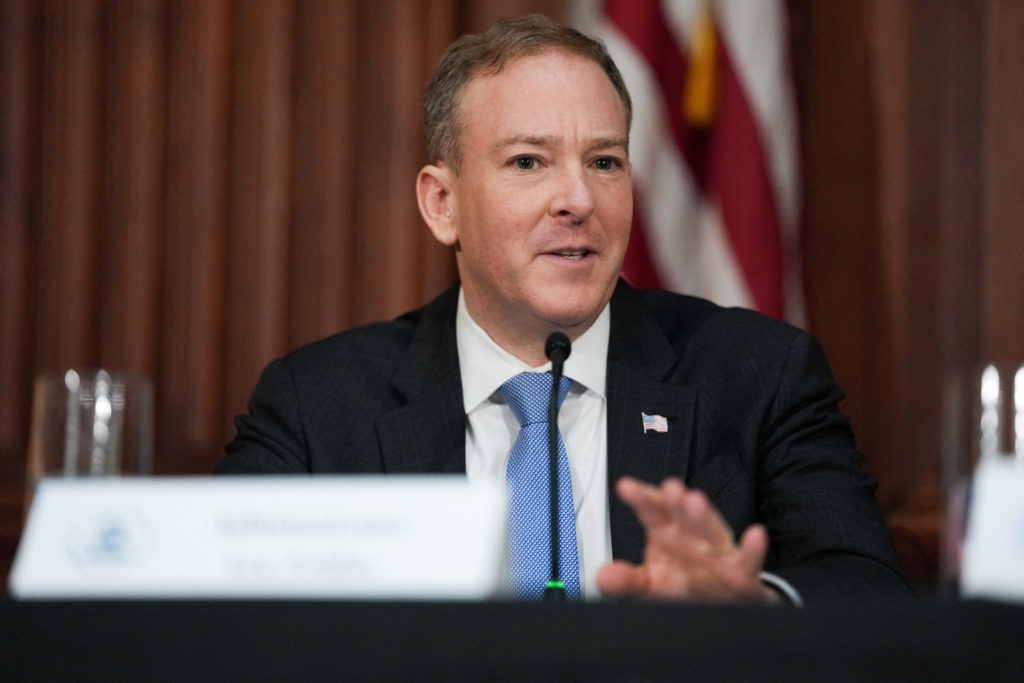
Zeldin tells climate skeptics to 'celebrate vindication' after repeal of baseline climate rule
#EPA#Andrew Zeldin#Endangerment Finding#climate change regulations#Clean Air Act#deregulation#legal challenge#environmental policy
📌 Key Takeaways
EPA Administrator Andrew Zeldin repealed the 2009 Endangerment Finding, the legal basis for federal climate rules.
Zeldin told climate change skeptics to 'celebrate vindication' following the decision.
The repeal removes the primary legal mandate for the EPA to regulate greenhouse gases under the Clean Air Act.
The action is a major policy reversal that will likely trigger significant legal challenges from environmental groups.
📖 Full Retelling
EPA Administrator Andrew Zeldin defended his agency's repeal of the foundational legal determination underpinning federal climate regulations during a press briefing in Washington D.C. on Wednesday, prompting him to tell climate change skeptics they should 'celebrate vindication.' The action formally rescinds the 2009 Endangerment Finding, a scientific and legal conclusion that greenhouse gases threaten public health and welfare, which has served as the cornerstone for nearly all federal climate rules for over a decade. Zeldin's defense and celebratory remarks frame the repeal as a correction of regulatory overreach and a victory for energy independence, a central pillar of the current administration's agenda.
The repeal of the Endangerment Finding represents one of the most significant environmental policy reversals in recent U.S. history. Originally established under the Obama administration following a Supreme Court directive, the finding obligated the EPA to regulate carbon dioxide and other heat-trapping pollutants under the Clean Air Act. This legal mandate led to landmark regulations on vehicle emissions, power plants, and methane leaks. By dismantling this foundational pillar, the administration effectively removes the primary legal justification for such rules, making future federal climate regulations far more difficult to enact and defend in court.
Environmental groups and many legal experts have condemned the move as scientifically indefensible and legally precarious. They argue it ignores overwhelming consensus on climate science and could face immediate legal challenges, potentially reaching the Supreme Court. Proponents, including industry groups and lawmakers aligned with the administration, have praised the decision as a necessary rollback of burdensome regulations they claim stifle economic growth. The repeal signals a profound shift in federal environmental policy, prioritizing deregulation and energy sector autonomy over mandated emissions reductions, and sets the stage for a protracted legal and political battle over the federal government's role in addressing climate change.
🏷️ Themes
Environmental Policy, Deregulation, Political Conflict
The Endangerment Finding is the 2009 United States Environmental Protection Agency (EPA) finding that six key greenhouse gases (GHGs) constitute "air pollution" under Section 202(a)(1) of the Clean Air Act ("CAA" or "Act"), as they threaten both the public health and the public welfare of current an...
The Environmental Protection Agency (EPA) is an independent agency of the United States government tasked with environmental protection matters. President Richard Nixon proposed the establishment of EPA on July 9, 1970; it began operation on December 2, 1970, after Nixon signed an executive order. T...
The head of the Environmental Protection Agency on Wednesday defended his decision to repeal the legal determination that serves as the basis for federal rules to slow climate change.