
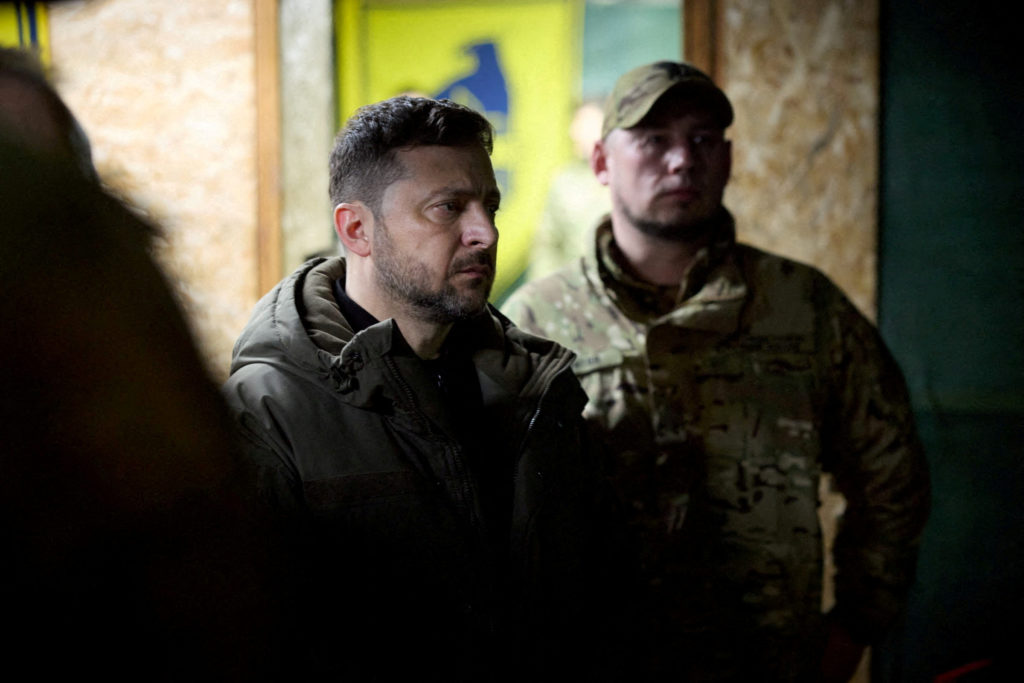
Zelenskyy says Ukraine is waiting on U.S. and Russia to set the next round of peace talks
#Zelenskyy #Ukraine #peace talks #U.S. #Russia #diplomacy #negotiation
📌 Key Takeaways
- Ukraine is awaiting U.S. and Russia to schedule the next round of peace talks.
- President Zelenskyy emphasizes the need for external parties to initiate the dialogue.
- The statement highlights Ukraine's reliance on international diplomatic engagement.
- The call for talks underscores ongoing efforts to resolve the conflict through negotiation.
📖 Full Retelling
🏷️ Themes
Diplomacy, Conflict Resolution
📚 Related People & Topics

Russia
Country in Eastern Europe and North Asia
Russia, or the Russian Federation, is a country in Eastern Europe and North Asia. It is the largest country in the world, spanning eleven time zones and sharing land borders with fourteen countries. With a population of over 140 million, Russia is the most populous country in Europe and the ninth-mo...

Volodymyr Zelenskyy
President of Ukraine since 2019
Volodymyr Oleksandrovych Zelenskyy (born 25 January 1978) is a Ukrainian politician and former entertainer who has served as the sixth president of Ukraine since 2019. He took office five years after the start of the Russo-Ukrainian War with Russia's annexation of Crimea and invasion of the Donbas, ...

Ukraine
Country in Eastern Europe
# Ukraine **Ukraine** is a country located in Eastern Europe. It is the second-largest country in Europe by area, after Russia. Known for its extensive fertile plains, the nation serves as a critical global exporter of grain and is considered a middle power in international affairs. ## Geography a...
Entity Intersection Graph
Connections for Russia:
Mentioned Entities
Deep Analysis
Why It Matters
This news matters because it reveals Ukraine's dependence on external powers to facilitate peace negotiations with Russia, highlighting the complex geopolitical dynamics at play. It affects Ukrainian citizens who continue to endure the humanitarian and economic consequences of the ongoing conflict, as well as international stakeholders invested in regional stability. The statement underscores the challenges of achieving a diplomatic resolution when key parties have divergent interests and levels of influence.
Context & Background
- The Russia-Ukraine war began with Russia's full-scale invasion in February 2022, following years of tension over Crimea's annexation in 2014 and eastern Ukraine's separatist movements.
- Previous peace talks have occurred intermittently, including early negotiations in Belarus and Turkey, but have failed to produce a lasting ceasefire or political settlement.
- The United States and other Western allies have provided substantial military and economic aid to Ukraine, positioning themselves as crucial supporters in both the conflict and potential diplomatic efforts.
What Happens Next
The next steps likely involve diplomatic consultations between the U.S., Russia, and Ukraine to agree on terms for renewed talks, possibly mediated by a neutral party. Key issues to address will include ceasefire conditions, territorial disputes, and security guarantees. The timing remains uncertain, as it depends on military developments and political will from all sides.
Frequently Asked Questions
Ukraine likely seeks U.S. involvement to ensure its interests are represented and to balance Russia's influence, while Russia may require U.S. participation to address broader geopolitical concerns. This reflects the reality that both major powers hold significant sway over the conflict's trajectory and potential outcomes.
Primary obstacles include disagreements over territorial sovereignty, security guarantees for Ukraine, and the status of Crimea and eastern regions. Additionally, mistrust between Russia and Ukraine, coupled with competing international interests, complicates the negotiation process.
The U.S. could act as a mediator, facilitator, or guarantor of any agreements, leveraging its diplomatic and military support for Ukraine. Its involvement may help bridge gaps between the parties but also risks further entangling the conflict in broader U.S.-Russia tensions.