
Drones have created a new energy security landscape
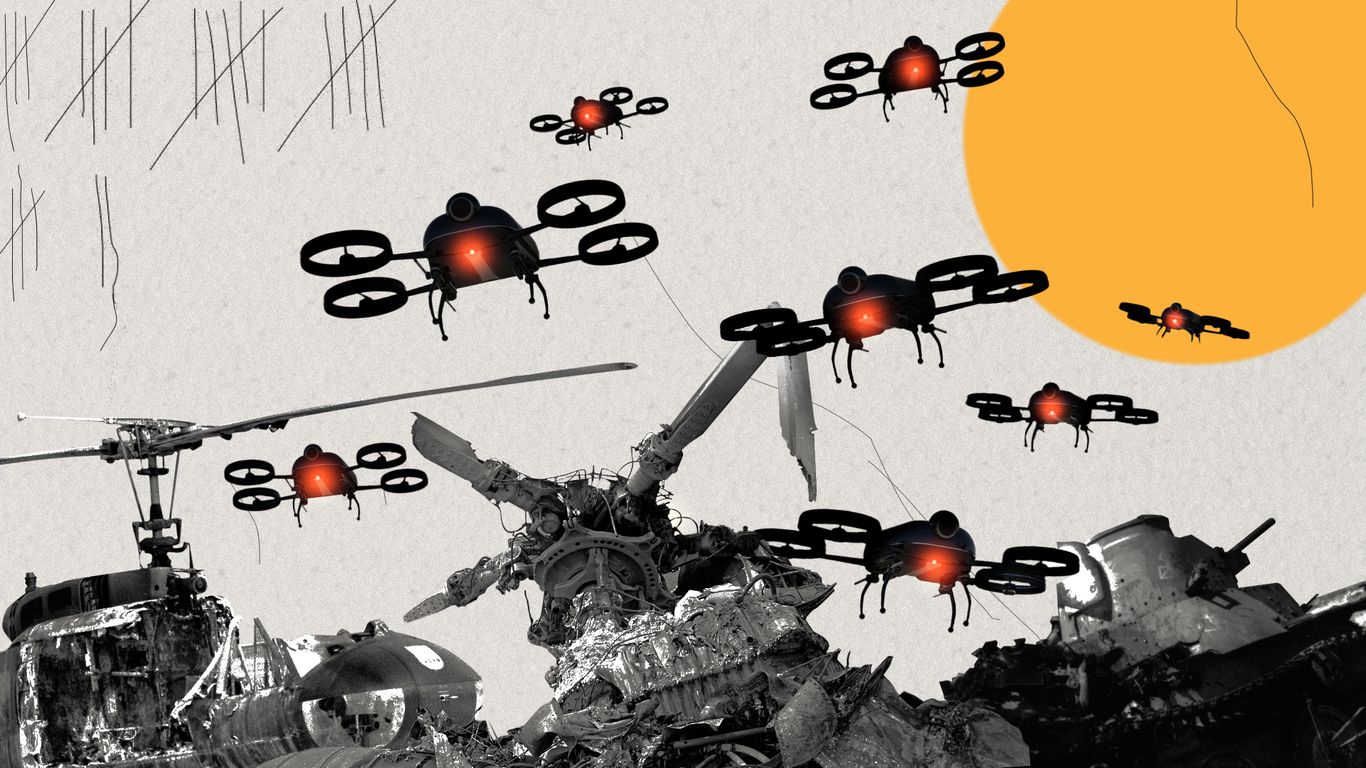
The wars in Iran and Ukraine show how the drone tech revolution makes it easier — and cheaper — to interrupt energy supplies by striking refineries and oil tankers.Why it matters: It's an important reason why oil traded at $100 per barrel this week and gasoline and diesel fuel are so expensive these days.Looking ahead, the way drones are reshaping modern warfare has high stakes for how policymakers and companies view new and existing power grids, pipelines, liquefied natural gas ports and plenty in between.The big picture: "Anyone building energy infrastructure in any area where kinetic conflict is even remotely possible is going to have to think about drone defense," said Gregory Brew, an analyst with the Eurasia Group, a political risk consulting firm.Catch up quick: Ukraine has increasingly carried out effective drone strikes against multiple Russian refineries from great distances, and Russian crude infrastructure in and around the Black Sea.Iran has used drones to attack shipping in and around the Strait of Hormuz, deterring oil, refined products and LNG transit despite the overwhelming U.S. military advantage.Iran has also used drones, not just missiles, to attack other regional energy sites, including Qatar's main LNG export hub."A localized conflict in the region effectively triggers global economic shockwaves by taking oil and gas production offline via cheap, massed drone attacks," notes an article this month via West Point's Modern War Institute.State of play: Tatiana Mitrova, a fellow at Columbia's Center on Global Energy Policy, said planning now requires "completely different thinking" around electricity and fuels.One lesson, she said, is the usefulness of more distributed energy networks — even if that means cost tradeoffs.Ukrainian forces have already been employing more mobile, on-site power sources in response to Russian attacks on the country's grid systems, she said."For many decades, like for the whole previous century, the idea was about concentration and economy of scale," she said.
Reported by 1 outlet — Axios. See all sources ↓
The wars in Iran and Ukraine show how the drone tech revolution makes it easier — and cheaper — to interrupt energy supplies by striking refineries and oil tankers.Why it matters: It's an important reason why oil traded at $100 per barrel this week and gasoline and diesel fuel are so expensive these days.Looking ahead, the way drones are reshaping modern warfare has high stakes for how policymakers and companies view new and existing power grids, pipelines, liquefied natural gas ports and plenty in between.The big picture: "Anyone building energy infrastructure in any area where kinetic conflict is even remotely possible is going to have to think about drone defense," said Gregory Brew, an analyst with the Eurasia Group, a political risk consulting firm.Catch up quick: Ukraine has increasingly carried out effective drone strikes against multiple Russian refineries from great distances, and Russian crude infrastructure in and around the Black Sea.Iran has used drones to attack shipping in and around the Strait of Hormuz, deterring oil, refined products and LNG transit despite the overwhelming U.S. military advantage.Iran has also used drones, not just missiles, to attack other regional energy sites, including Qatar's main LNG export hub."A localized conflict in the region effectively triggers global economic shockwaves by taking oil and gas production offline via cheap, massed drone attacks," notes an article this month via West Point's Modern War Institute.State of play: Tatiana Mitrova, a fellow at Columbia's Center on Global Energy Policy, said planning now requires "completely different thinking" around electricity and fuels.One lesson, she said, is the usefulness of more distributed energy networks — even if that means cost tradeoffs.Ukrainian forces have already been employing more mobile, on-site power sources in response to Russian attacks on the country's grid systems, she said."For many decades, like for the whole previous century, the idea was about concentration and economy of scale," she said. "But now, the bigger the target, the bigger the damage."That puts a premium on more "modular" infrastructure, she said — "small scale, faster to build, cheaper to build, cheaper to move."Zoom out: Lots of key infrastructure has fixed and known locations, like pipelines.Countermeasures will vary depending on the type of energy infrastructure that needs defending.There are some existing anti-drone tools, ranging from netting to lasers and electronic jamming, as well as missile systems.Yes, but: Some analysts say U.S. and other military planners must be more responsive to the evolution of drone attacks on electricity and oil and gas supplies.Missile interceptor systems are expensive and can't realistically cover all critical infrastructure.What we're watching: The Modern War Institute's analysis, which is mostly focused on electricity, calls for "rethinking energy defense" in the age of cheap drones and missiles.
Read the full report at Axios ↗
Why it matters
A world story we're tracking; its significance and source trust firm up as more outlets confirm it.
- What's the story?
- The wars in Iran and Ukraine show how the drone tech revolution makes it easier — and cheaper — to interrupt energy supplies by striking refineries and oil tankers.Why it matters: It's an important reason why oil traded at $100 per barrel this week and gasoline and diesel fuel are so expensive these days.Looking ahead, the way drones are reshaping modern warfare has high stakes for how policymakers and companies view new and existing power grids, pipelines, liquefied natural gas ports and plenty in between.The big picture: "Anyone building energy infrastructure in any area where kinetic conflict is even remotely possible is going to have to think about drone defense," said Gregory Brew, an analyst with the Eurasia Group, a political risk consulting firm.Catch up quick: Ukraine has increasingly carried out effective drone strikes against multiple Russian refineries from great distances, and Russian crude infrastructure in and around the Black Sea.Iran has used drones to attack shipping in and around the Strait of Hormuz, deterring oil, refined products and LNG transit despite the overwhelming U.S. military advantage.Iran has also used drones, not just missiles, to attack other regional energy sites, including Qatar's main LNG export hub."A localized conflict in the region effectively triggers global economic shockwaves by taking oil and gas production offline via cheap, massed drone attacks," notes an article this month via West Point's Modern War Institute.State of play: Tatiana Mitrova, a fellow at Columbia's Center on Global Energy Policy, said planning now requires "completely different thinking" around electricity and fuels.One lesson, she said, is the usefulness of more distributed energy networks — even if that means cost tradeoffs.Ukrainian forces have already been employing more mobile, on-site power sources in response to Russian attacks on the country's grid systems, she said."For many decades, like for the whole previous century, the idea was about concentration and economy of scale," she said.
- How widely is it covered?
- 1 outlet, average source rating 7.0/10.
- When was it last updated?
- 15m ago.
How outlets are framing the same story
Here's how each outlet is covering the story — compare their headlines and timing at a glance.
- Coverage card1 outlet1CoverageScouting report
Drones have created a new energy security landscape
Sources1TypeCoverageAxios