
These painted e-tattoos could be the future of wearable biosensors
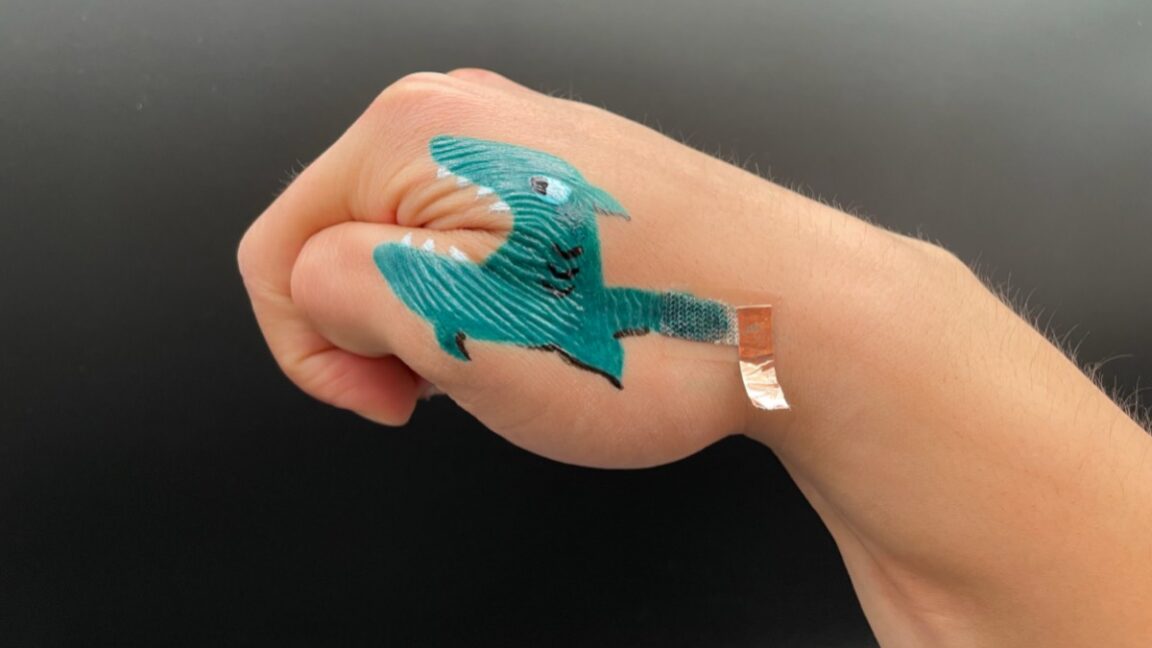
Scientists at Pennsylvania State University have developed a novel conductive ink that can be painted directly onto the skin in colorful custom designs, turning into a functional electrode for biomonitoring after drying. They described their work in a new paper published in the Proceedings of the National Academy of Sciences (PNAS).
Reported by 1 outlet — Ars Technica. See all sources ↓
Scientists at Pennsylvania State University have developed a novel conductive ink that can be painted directly onto the skin in colorful custom designs, turning into a functional electrode for biomonitoring after drying. They described their work in a new paper published in the Proceedings of the National Academy of Sciences (PNAS). As previously reported, epidermal electronics attached to the skin via temporary tattoos (e-tattoos) have been around for more than a decade. So-called e-tattoos connect to skin without adhesives, are practically unnoticeable, and are typically attached via temporary tattoo, allowing electrical measurements (and other measurements, such as temperature and strain) using ultra-thin polymers with embedded circuit elements.
Read the full report at Ars Technica ↗
Why it matters
A world story we're tracking; its significance and source trust firm up as more outlets confirm it.
- What's the story?
- Scientists at Pennsylvania State University have developed a novel conductive ink that can be painted directly onto the skin in colorful custom designs, turning into a functional electrode for biomonitoring after drying. They described their work in a new paper published in the Proceedings of the National Academy of Sciences (PNAS).
- How widely is it covered?
- 1 outlet, average source rating 7.0/10.
- When was it last updated?
- 7m ago.
How outlets are framing the same story
Here's how each outlet is covering the story — compare their headlines and timing at a glance.
- Coverage card1 outlet1CoverageScouting report
These painted e-tattoos could be the future of wearable biosensors
Sources1TypeCoverageArs Technica