
#Immigration Policy
Immigration policy shapes nations by managing who can enter, live, and work. It's a complex balance of economic needs, national security, and human rights.
Articles (30)
-
 🇺🇸 Trump shares video of a brutal Florida killing allegedly by Haitian immigrant
[USA]
🇺🇸 Trump shares video of a brutal Florida killing allegedly by Haitian immigrant
[USA]
President Donald Trump shared a video of a deadly attack allegedly by a Haitian immigrant accused of bludgeoning a woman with a hammer at a Florida gas station, portraying the killing as justification...
Related: #Political Campaigning, #Media Ethics -
🇺🇸 Months after the ICE shootings in Minnesota, a federal probe remains elusive
[USA]
Officials in Minnesota have sued the Trump administration, saying federal officials are withholding evidence in the killings of U.S. citizens Alex Pretti and Renee Macklin Good by immigration agents i...
Related: #Government Accountability, #Law Enforcement -
 🇺🇸 Judge Declines to Order Trump Administration to Adjust Somali Deportation Policies
[USA]
🇺🇸 Judge Declines to Order Trump Administration to Adjust Somali Deportation Policies
[USA]
Acknowledging that the government may have recently stepped up the pace of removal proceedings, a federal judge wrote that he could not immediately intervene.
Related: #Judicial Review, #Executive Authority -
 🇺🇸 Sen. Scott's SAFE KIDS Act moves to shut down Beijing's surrogacy pipeline
[USA]
🇺🇸 Sen. Scott's SAFE KIDS Act moves to shut down Beijing's surrogacy pipeline
[USA]
Sen. Rick Scott says China has found a way to "weaponize" America's birthright citizenship policy by arranging to have babies born in the U.S. -- earning automatic citizenship -- then raised abroad, w...
Related: #National Security, #U.S.-China Relations -
 🇺🇸 The Mass Purge of Immigration Judges, and Melania Trump’s Surprise Epstein Remarks
[USA]
🇺🇸 The Mass Purge of Immigration Judges, and Melania Trump’s Surprise Epstein Remarks
[USA]
Plus, your Friday news quiz.
Related: #Judicial Reform, #Political Commentary -
 🇺🇸 Trump’s Changes Lock Some Employers Out of H-1B Visa Program
[USA]
🇺🇸 Trump’s Changes Lock Some Employers Out of H-1B Visa Program
[USA]
Since imposing a $100,000 fee on new visas in September, the Trump administration has upended the skilled worker program.
Related: #Labor Market, #Government Regulation -
🇺🇸 The Next Phase of the Immigration Crackdown Is Quieter — and More Destabilizing
[USA]
Self-deportation is an idea with deep roots. It’s making a comeback.
Related: #Historical Precedent, #Social Impact -
🇺🇸 Judge bars Trump administration from nixing protected status for Ethiopians
[USA]
Ruling marks legal setback for administration's efforts to roll back protections for various groups of immigrants.
Related: #Legal Challenges, #Executive Power -
 🇺🇸 DHS says border calm is 'the new normal'
[USA]
🇺🇸 DHS says border calm is 'the new normal'
[USA]
The Border Patrol in March posted its 11th straight month without a single catch-and-release of an illegal immigrant at the southwestern boundary, leading officials to declare the record levels of cal...
Related: #Border Security, #Political Narrative -
 🇺🇸 Top GOP senators to meet with Trump on DHS funding
[USA]
🇺🇸 Top GOP senators to meet with Trump on DHS funding
[USA]
Senate Republican Whip John Barrasso (Wyo.) said he and House Budget Committee Chair Lindsey Graham (R-S.C.) will meet with President Trump at the White House on Friday to discuss the path forward on ...
Related: #Partisan Politics, #Government Funding -
 🇺🇸 Blanche rises, Noem falls, China exploits birthright chaos
[USA]
🇺🇸 Blanche rises, Noem falls, China exploits birthright chaos
[USA]
Todd Blanche is positioning himself for the permanent AG job, Rick Scott is sounding alarms over China exploiting U.S. birthright law through surrogacy, and Kristi Noem's ouster has DHS staff bracing ...
Related: #National Security, #Political Appointments -
 🇺🇸 ICE buys Kristi Noem's luxury jet for deportations, Cabinet officials
[USA]
🇺🇸 ICE buys Kristi Noem's luxury jet for deportations, Cabinet officials
[USA]
Former Homeland Security Secretary Kristi Noem's leased $70 milion jet will reportedly stay with the Trump administration even after she was fired.
Related: #Government Procurement, #Administrative Continuity -
 🇺🇸 Judge halts Trump administration move to end protections for Ethiopians
[USA]
🇺🇸 Judge halts Trump administration move to end protections for Ethiopians
[USA]
A federal judge blocked the Trump administration from ending temporary deportation protections for thousands of Ethiopians, ruling on Wednesday that it likely disregarded the rules Congress set up for...
Related: #Judicial Review, #Executive Power -
 🇺🇸 Minnesota districts, teachers ask for restoration of immigration enforcement limits near schools
[USA]
🇺🇸 Minnesota districts, teachers ask for restoration of immigration enforcement limits near schools
[USA]
Two school districts in Minnesota and a teachers union went to court Wednesday to challenge the Trump administration’s lift on a ban that kept immigration officials away from school grounds. The law...
Related: #Education, #Legal Challenge -
 🇺🇸 In a Deep Red Town In Pennsylvania, Locals Vent Over a Planned ICE Detention Center
[USA]
🇺🇸 In a Deep Red Town In Pennsylvania, Locals Vent Over a Planned ICE Detention Center
[USA]
The Tremont, Pa., area has roughly 2,000 residents and limited resources. The Trump administration plans to convert a warehouse there to hold nearly four times as many people.
Related: #Local Opposition, #Infrastructure Strain -
🇺🇸 How Trump Purged Immigration Judges to Speed Up Deportations
[USA]
Judges are ordering an unprecedented number of people deported after coming under significant pressure from the administration to do so or risk losing their jobs.
Related: #Judicial Independence, #Executive Power -
 🇺🇸 Judge blocks DHS from canceling deportation amnesty for Ethiopians
[USA]
🇺🇸 Judge blocks DHS from canceling deportation amnesty for Ethiopians
[USA]
A federal judge put a halt Wednesday to Homeland Security's plan to shut down a deportation amnesty for nearly 5,000 Ethiopian migrants, chastising the government for being too harsh toward them.
Related: #Judicial Review, #Executive Power -
🇺🇸 Judge postpones termination of TPS for Ethiopians in U.S.
[USA]
It's the latest setback for the Trump administration on the issue, which has sought to terminate the TPS designation for 13 countries as part of the president's crackdown on immigration.
Related: #Legal Challenges, #Humanitarian Protection -
 🇺🇸 Ava DuVernay, Jodie Foster, Spike Lee & More Join Call For Trump & DHS To Close Texas Detention Facility That Holds Kids
[USA]
🇺🇸 Ava DuVernay, Jodie Foster, Spike Lee & More Join Call For Trump & DHS To Close Texas Detention Facility That Holds Kids
[USA]
(Updated from March 30 with more signatories) Days after another round of No Kings! protests brought Robert De Niro, Jana Fonda, Jimmy Kimmel, Bruce Springsteen and millions more out on the streets to...
Related: #Celebrity Advocacy -
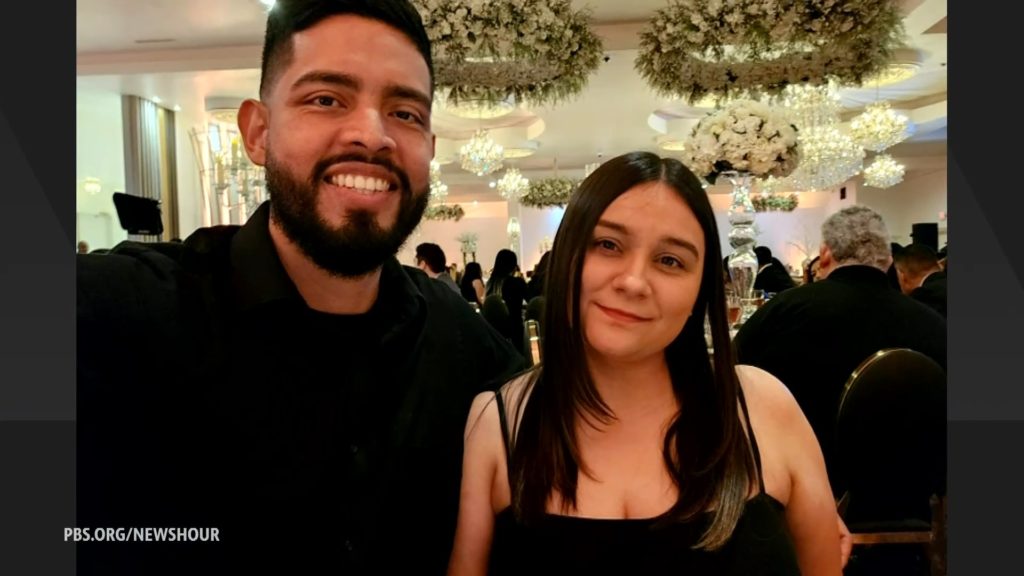 🇺🇸 DACA recipient detained by ICE while delivering milk to premature daughter in NICU
[USA]
🇺🇸 DACA recipient detained by ICE while delivering milk to premature daughter in NICU
[USA]
Deferred Action for Childhood Arrivals is a program created to protect undocumented immigrants from deportation if they were brought to the U.S. as children. But since January 2025, ICE has detained m...
Related: #Human Rights, #Law Enforcement -
🇺🇸 She paid into Medicare for years. Trump's immigration policy will end her coverage
[USA]
Rosa María Carranza has worked and paid taxes for more than two decades, but a provision in the GOP's One Big Beautiful Bill Act will make her and an estimated 100,000 other lawfully present immi...
Related: #Healthcare Access -
🇺🇸 Trump’s birthright citizenship ban may fail — but the administration already got too far
[USA]
On Wednesday morning, the Supreme Court heard arguments in Trump v. Barbara, a case challenging President Donald Trump's 2025 executive order banning birthright citizenship. Justices seemed skeptical ...
Related: #Constitutional Law -
🇺🇸 Federal judge rules DHS illegally stripped immigration status from thousands who entered through CBP One App
[USA]
Tuesday's ruling reinstates the immigration status of those who came via CBP One and whose status was terminated.
Related: #Legal Ruling -
 🇺🇸 The Birthright Con
[USA]
🇺🇸 The Birthright Con
[USA]
Trump wants to find out just how weak this Supreme Court is.
Related: #Constitutional Law, #Judicial Power -
🇺🇸 Trump’s MAGA allies have a new plan for mass deportations. It could splinter the coalition. [USA]
Surpassing 1 million deportations this year hinges on worksite enforcement — which would enrage farm and construction groups (and possibly voters).
Related: #Political Strategy -
🇺🇸 DHS resumes asylum decisions. And, Iran's strike injures over 12 U.S. personnel
[USA]
The Department of Homeland Security has lifted its ban on reviewing asylum applications. And, NPR has confirmed that an Iranian strike injured over a dozen U.S. personnel.
Related: #Military Conflict -
🇺🇸 Babies are an afterthought in the birthright citizenship case, advocates say
[USA]
An end to birthright citizenship would mean a new layer of bureaucracy for all babies born in the U.S., and could cause delays for health insurance and other benefits.
Related: #Child Welfare -
 🇺🇸 No Kings! No ICE Holding Kids! Pedro Pascal, Wunmi Mosaku, Natasha Lyonne, ‘Gilded Age’ Stars & More Demand Closure Of Texas Detention Facility
[USA]
🇺🇸 No Kings! No ICE Holding Kids! Pedro Pascal, Wunmi Mosaku, Natasha Lyonne, ‘Gilded Age’ Stars & More Demand Closure Of Texas Detention Facility
[USA]
Days after another round of No Kings! protests brought Robert De Niro, Jana Fonda, Jimmy Kimmel, Bruce Springsteen and millions more out on the streets to rally against Donald Trump, some of the same ...
Related: #Celebrity Activism, #Political Protest -
 🇺🇸 How the Homeland Security deal unraveled and split Republican leaders in Congress
[USA]
🇺🇸 How the Homeland Security deal unraveled and split Republican leaders in Congress
[USA]
For several hours Friday, in the stillness before dawn, the Senate appeared to have finally figured out how to fund most of the Department of Homeland Security before it faced the longest partial shut...
Related: #Government Shutdown, #Republican Division, #Congressional Gridlock -
 🇬🇧 How Trump’s deportation campaign has changed tack after deep unpopularity
[United Kingdom]
🇬🇧 How Trump’s deportation campaign has changed tack after deep unpopularity
[United Kingdom]
<p>Kristi Noem was replaced by Markwayne Mullin as DHS secretary and Gregory Bovino was demoted, signally a change in tone even as arrests have continued</p><p>Throughout last year, Donald Trump deliv...
Related: #Political Strategy, #Government Personnel Changes
Key Entities (34)
- Presidency of Donald Trump (10 news)
- Donald Trump (4 news)
- United States Immigration and Customs Enforcement (4 news)
- Temporary protected status (4 news)
- TPS (4 news)
- Kristi Noem (4 news)
- United States Department of Homeland Security (3 news)
- Ethiopia (3 news)
- Supreme court (2 news)
- Rick Scott (2 news)
- Presidency of Joe Biden (2 news)
- Homeland security (2 news)
- Immigration (1 news)
- Deferred Action for Childhood Arrivals (1 news)
- Neonatal intensive care unit (1 news)
- The Dreamers (1 news)
- Education Minnesota (1 news)
- China (1 news)
- United States Citizenship and Immigration Services (1 news)
- Border Patrol (1 news)
- John Barrasso (1 news)
- Lindsey Graham (1 news)
- Todd Blanche (1 news)
- Killing of Alex Pretti (1 news)
- Immigration detention (1 news)
- No Kings protests (1 news)
- Melania Trump (1 news)
- Jeffrey Epstein (1 news)
- Executive Office for Immigration Review (1 news)
- The Next Phase (1 news)
About the topic: Immigration Policy
Immigration policy is the set of rules and laws a country uses to control who can cross its borders. Since no specific recent news is available, this analysis covers the fundamental, ongoing aspects of this critical topic. It's a delicate balancing act between several key factors. Governments must weigh their economic needs against national security concerns, while also considering their humanitarian responsibilities to people fleeing danger. ### Core Pillars of Immigration Policy The debate around immigration often revolves around three main pillars. The focus on each pillar can change dramatically depending on the country and its current political climate. **Chart: Key Drivers of Immigration Policy** (Relative importance varies by nation and government) Economic Needs: ████████▓▓░░ National Security: ███████████▓ Humanitarian Duty: ██████▓▓▒▒░░ **1. Economic Impact** Immigrants often fill crucial labor shortages, from agriculture to technology. They also start businesses at a higher rate than native-born citizens. However, debates persist about their impact on wages for low-skilled workers and the cost of social services. > *"Nearly all of the U.S. workforce growth in the coming decades is projected to come from immigrants and their U.S.-born children."* - Pew Research Center **Interesting Fact:** In the United States, immigrants are more than twice as likely to start a business as people born in the country. **2. National Security & Border Control** Controlling who enters a country is a basic function of a sovereign state. This involves visa systems, border patrols, and security screenings to prevent threats. Striking the right balance is key. > *"A nation that cannot control its borders is not a nation."* - Ronald Reagan This quote highlights the importance many place on strong border enforcement as a cornerstone of national identity and safety. **3. Humanitarian Concerns** International law, including the 1951 Refugee Convention, outlines a country's duty to protect those fleeing persecution. This creates a distinction between different types of migrants. **Chart: Understanding Migrant Status** Economic Migrant (Seeks opportunity): ████████████ Asylum Seeker (Fears persecution): ████████▓▓ Refugee (Status confirmed): ██████▓▓▒▒ An asylum seeker is someone who has applied for protection as a refugee and is awaiting a decision. A refugee has already been granted this status. This humanitarian aspect is often the most emotionally charged part of the immigration debate, involving deeply held moral and ethical beliefs. > *"Remember, remember always, that all of us... are descended from immigrants and revolutionists."* - Franklin D. Roosevelt ### Important URLs for Further Research * **UNHCR (The UN Refugee Agency):** https://www.unhcr.org/ * **International Organization for Migration (IOM):** https://www.iom.int/ * **U.S. Citizenship and Immigration Services (USCIS):** https://www.uscis.gov/ * **Pew Research Center - Immigration & Migration:** https://www.pewresearch.org/topic/immigration-migration/