
#Market Volatility
Market volatility measures the speed of price changes in financial markets. Understand what drives it and how to manage investment risk in uncertain times.
Articles (30)
-
 🇺🇸 Eric Swider resigns from Trump Media board
[USA]
Related: #Corporate Governance, #Executive Resignation
🇺🇸 Eric Swider resigns from Trump Media board
[USA]
Related: #Corporate Governance, #Executive Resignation
-
🇺🇸 Battery recycler Ascend Elements files for bankruptcy
[USA]
Ascend Elements said that it will be filing for Chapter 11 bankruptcy in the wake of a canceled government grant and a challenging market for lithium-ion batteries.
Related: #Bankruptcy, #Clean Technology, #Supply Chain -
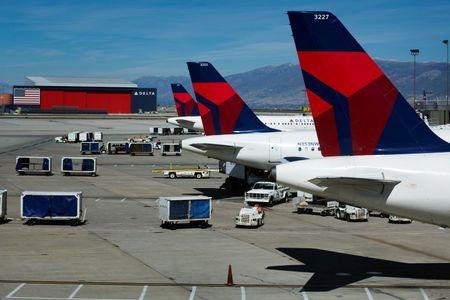 🇺🇸 Airline stocks: what happens after oil peaks?
[USA]
Related: #Energy Economics, #Corporate Finance
🇺🇸 Airline stocks: what happens after oil peaks?
[USA]
Related: #Energy Economics, #Corporate Finance
-
 🇺🇸 H.C. Wainwright cuts EDAP TMS stock price target on margin headwinds
[USA]
Related: #Financial Analysis, #Healthcare Technology
🇺🇸 H.C. Wainwright cuts EDAP TMS stock price target on margin headwinds
[USA]
Related: #Financial Analysis, #Healthcare Technology
-
 🇺🇸 Markets Waver Ahead of Cease-Fire Talks and U.S. Inflation Report
[USA]
🇺🇸 Markets Waver Ahead of Cease-Fire Talks and U.S. Inflation Report
[USA]
A temporary cease-fire in the war on Iran faces multiple hurdles and investors are watching the release of U.S. government data on inflation.
Related: #Geopolitical Risk, #Energy Economics -
 🇺🇸 Consumer Spending, Engine of the U.S. Economy, Is Under Strain
[USA]
🇺🇸 Consumer Spending, Engine of the U.S. Economy, Is Under Strain
[USA]
Higher fuel costs are raising food and travel prices, while a shaky stock market tamps down free spenders.
Related: #Consumer Economics, #Inflation -
 🇺🇸 Polls in Hungary and Peru next in key election year for world markets
[USA]
Related: #Global Elections, #Political Risk, #Commodity Security
🇺🇸 Polls in Hungary and Peru next in key election year for world markets
[USA]
Related: #Global Elections, #Political Risk, #Commodity Security
-
 🇺🇸 Stocks shaky as Israeli attacks on Lebanon tests Iran ceasefire
[USA]
Related: #Geopolitical Risk, #Energy Security
🇺🇸 Stocks shaky as Israeli attacks on Lebanon tests Iran ceasefire
[USA]
Related: #Geopolitical Risk, #Energy Security
-
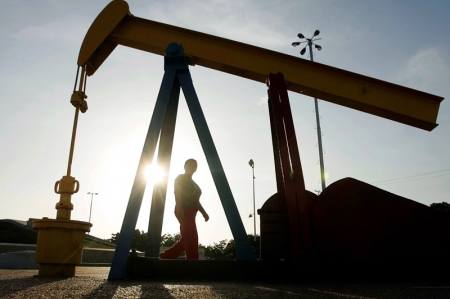 🇺🇸 Saudi Arabia loses 600,000 barrels daily in attacks on oil sites
[USA]
Related: #Energy Security, #Geopolitical Conflict
🇺🇸 Saudi Arabia loses 600,000 barrels daily in attacks on oil sites
[USA]
Related: #Energy Security, #Geopolitical Conflict
-
🇺🇸 Tenable stock hits 52-week low at $15.85
[USA]
Related: #Finance, #Technology
-
 🇺🇸 Texas Pacific Land stock tumbles 16% after board member dies
[USA]
Related: #Corporate Governance, #Energy Sector
🇺🇸 Texas Pacific Land stock tumbles 16% after board member dies
[USA]
Related: #Corporate Governance, #Energy Sector
-
🇺🇸 Caution still prevails even during second-day rally following explosive gains Wednesday
[USA]
Expect more choppiness ahead, analysts warned, as investors try and discern how the U.S.-Iran ceasefire might play out.
Related: #Financial Markets, #Geopolitics -
🇺🇸 Earnings call transcript: Nanalysis Scientific misses Q4 2025 revenue expectations
[USA]
Related: #Corporate Earnings, #Technology Sector
-
🇺🇸 Cantor Fitzgerald lowers Goosehead Insurance stock price target on margin delays
[USA]
Related: #Financial Analysis, #Corporate Performance
-
🇺🇸 Why high oil prices are good for oil companies — until they aren't
[USA]
Yes, higher crude oil prices mean a multibillion-dollar cash infusion to the oil industry. But volatility is bad for business, and sustained high prices come with very serious drawbacks.
Related: #Energy Economics, #Strategic Risk -
 🇺🇸 European shares pause after rally as US-Iran truce shows signs of strain
[USA]
Related: #Geopolitical Risk, #Investor Sentiment
🇺🇸 European shares pause after rally as US-Iran truce shows signs of strain
[USA]
Related: #Geopolitical Risk, #Investor Sentiment
-
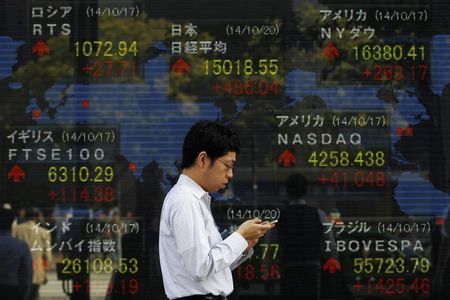 🇺🇸 Asia stocks skittish amid doubts over US-Iran ceasefire
[USA]
Related: #Geopolitical Risk, #Investor Sentiment
🇺🇸 Asia stocks skittish amid doubts over US-Iran ceasefire
[USA]
Related: #Geopolitical Risk, #Investor Sentiment
-
🇺🇸 Stock futures are little changed after Dow posts best day since April 2025 following ceasefire deal: Live updates
[USA]
The latest reading of the personal consumption expenditure price index, the Fed's favored inflation gauge, is due out at 8:30 a.m. ET Thursday morning.
Related: #Geopolitical Risk, #Macroeconomic Data -
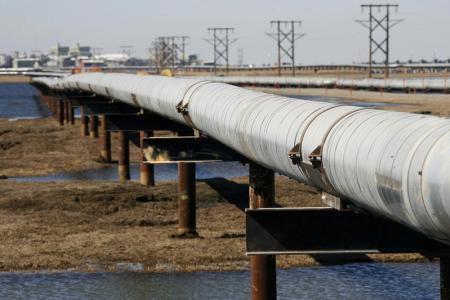 🇺🇸 After-hours movers: Constellation Brands, Applied Digital, STAAR Surgical, New Era Energy & Digital
[USA]
Related: #Earnings Reports, #After-Hours Trading
🇺🇸 After-hours movers: Constellation Brands, Applied Digital, STAAR Surgical, New Era Energy & Digital
[USA]
Related: #Earnings Reports, #After-Hours Trading
- 🇺🇸 European real estate stocks near 2009 lows in March selloff, Goldman says [USA] Related: #Financial Crisis, #Real Estate, #Economic Policy
-
 🇺🇸 U.S. Stocks Have Their Biggest Drop Since Start of Iran War
[USA]
🇺🇸 U.S. Stocks Have Their Biggest Drop Since Start of Iran War
[USA]
The S&P 500 tumbled 1.7 percent on Thursday and oil prices continued rising as investors fret about when the war would end.
Related: #Geopolitical Risk, #Energy Markets -
 🇺🇸 Oil prices ease, stocks jump after Trump says Iran is talking with the U.S., despite Iran's denials
[USA]
🇺🇸 Oil prices ease, stocks jump after Trump says Iran is talking with the U.S., despite Iran's denials
[USA]
Relief is rippling through financial markets Monday after President Trump said the United States has talked with Iran about a possible end to their war. Oil prices are easing, and stock prices are jum...
Related: #Geopolitics -
🇺🇸 Blue Owl Capital still a buy but will remain choppy through Labor Day, TD Cowen says
[USA]
TD Cowen reiterated a buy rating on Blue Owl Capital, while lowering its 12-month price target to $14 from $16, according to a report out Monday.
Related: #Investment Rating -
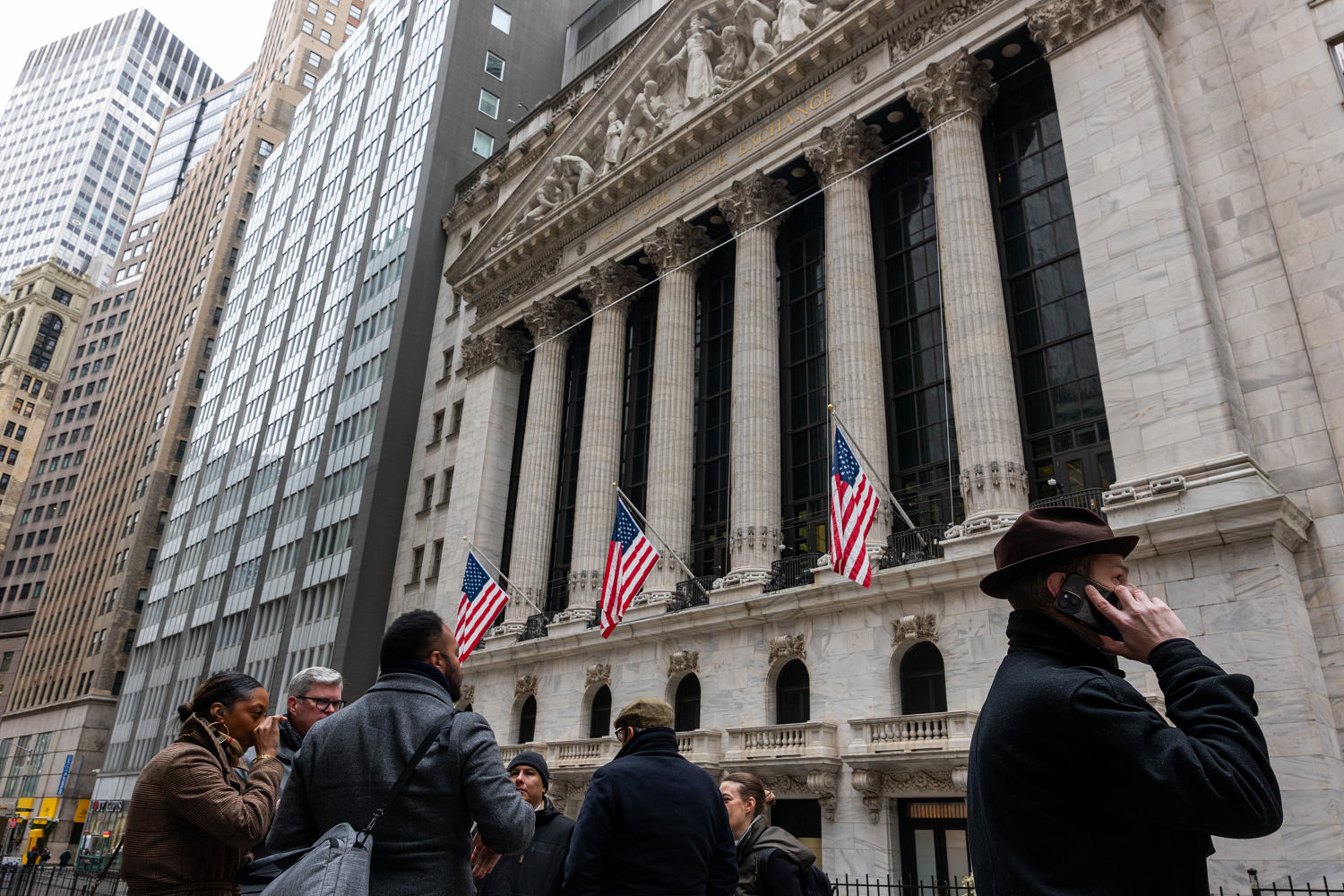 🇺🇸 Markets rally, then pull back after Trump and Iran give conflicting reports of talks
[USA]
🇺🇸 Markets rally, then pull back after Trump and Iran give conflicting reports of talks
[USA]
U.S. stocks were set to surge and oil fell after Trump and Iran gave conflicting reports about talks between the U.S. and Iran.
Related: #Geopolitical Tensions -
 🇺🇸 Dubai stocks tumble as Iran warns of infrastructure strikes
[USA]
Related: #Geopolitical Risk
🇺🇸 Dubai stocks tumble as Iran warns of infrastructure strikes
[USA]
Related: #Geopolitical Risk
-
 🇺🇸 Technogym shares down to 3-month low as UBS downgrade ends record-breaking rally
[USA]
Related: #Stock Downgrade
🇺🇸 Technogym shares down to 3-month low as UBS downgrade ends record-breaking rally
[USA]
Related: #Stock Downgrade
- 🇺🇸 Wolfe sees these two tech stocks holding the course amid sector volatility [USA] Related: #Tech Stocks
- 🇺🇸 Gold miners slide sharply as bullion extends steep losses on rate fears [USA] Related: #Economic Policy
-
 🇺🇸 US stock futures fall as escalating Iran conflict dims rate-cut hopes
[USA]
Related: #Geopolitical Risk
🇺🇸 US stock futures fall as escalating Iran conflict dims rate-cut hopes
[USA]
Related: #Geopolitical Risk
-
🇺🇸 Worried about a shaky stock market? This is what financial advisers suggest you do
[USA]
Their answer depends on how soon you need to tap into your funds — and it might simply be "do nothing."
Related: #Investment Strategy
Key Entities (40)
- Iran (4 news)
- Strait of Hormuz (3 news)
- Donald Trump (3 news)
- Federal Reserve (2 news)
- List of wars involving Iran (2 news)
- Constellation Brands (1 news)
- Permian Basin (1 news)
- Texas Pacific Land Corporation (1 news)
- Dow Jones (1 news)
- Technogym (1 news)
- UBS (1 news)
- Consumer price index (1 news)
- Wood Mackenzie (1 news)
- JD Vance (1 news)
- Trump Media & Technology Group (1 news)
- SEC filing (1 news)
- Truth Social (1 news)
- Cantor Fitzgerald (1 news)
- TD Cowen (1 news)
- Blue Owl Capital (1 news)
- Labor Day (1 news)
- Israeli Air Force (1 news)
- Lebanon (1 news)
- Middle East (1 news)
- Dubai (1 news)
- Saudi Aramco (1 news)
- Houthis (1 news)
- Saudi Arabia (1 news)
- Yemen war (1 news)
- Focused ultrasound (1 news)
About the topic: Market Volatility
Market volatility is a term used to describe when a market or a security experiences periods of unpredictable, and sometimes sharp, price movements. While it can be unsettling, it is a natural part of investing. The most common measure of stock market volatility is the CBOE Volatility Index, or VIX, often called the 'fear index'. What Causes Market Volatility? Several factors can cause the market to swing: * **Economic Data:** Reports on inflation, employment, and economic growth can shift investor sentiment instantly. * **Geopolitical Events:** Elections, conflicts, and international trade disputes create uncertainty. * **Central Bank Policies:** Changes in interest rates by institutions like the Federal Reserve have a major impact. * **Market Sentiment:** Widespread fear or greed can drive prices away from their fundamental values. As the legendary investor Warren Buffett said, it's wise to "be fearful when others are greedy and greedy when others are fearful." This highlights how volatility can present opportunities for disciplined investors. **Chart: Volatility Levels Explained** This chart shows a conceptual representation of different volatility environments as measured by the VIX. Low Volatility (VIX < 20): ▒▒▒▒░░░░░░ (Calm, steady gains) Med Volatility (VIX 20-30):▓▓▓▓▓▓▓░░░ (Increased uncertainty) High Volatility (VIX > 30): ██████████ (Fear, large price swings) **Interesting Fact:** The term 'Black Swan' event, popularized by Nassim Nicholas Taleb, refers to a rare, unpredictable event with severe consequences, such as the 2008 financial crisis. These events are primary drivers of extreme market volatility. **Navigating Volatile Markets** Instead of panicking, investors can use strategies to manage risk: 1. **Diversify:** Don't put all your eggs in one basket. Spread investments across different asset classes. 2. **Stay Long-Term:** Focus on your long-term financial goals and avoid knee-jerk reactions to short-term news. 3. **Dollar-Cost Average:** Invest a fixed amount of money at regular intervals, which can reduce the impact of volatility over time. **Chart: The Cycle of Investor Emotion** Volatility often triggers strong emotional responses that can lead to poor decisions. Market Peak (Euphoria): ██████████ Correction (Anxiety): ▓▓▓▓▓▓▓▓░░ Market Bottom (Despair): ▒▒▒░░░░░░░ Recovery (Hope): ▓▓▓▓▓▓░░░░ As Benjamin Graham noted, "The investor's chief problem—and even his worst enemy—is likely to be himself." **Important URLs:** * CBOE VIX Index: https://www.cboe.com/tradable_products/vix/ * Investopedia - Volatility: https://www.investopedia.com/terms/v/volatility.asp * Bloomberg Markets: https://www.bloomberg.com/markets